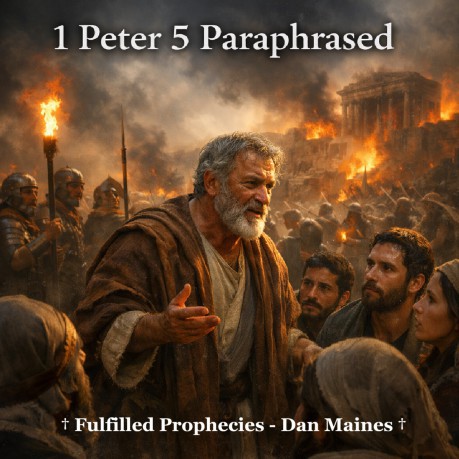
1 Peter 5 Paraphrased Introduction † Peter closes this letter by speaking directly
to leaders and believers who were living through pressure and
persecution. The message is simple, shepherd God's people faithfully,
stay humble, stay watchful, and trust that God will strengthen His
people. These instructions were written to first century believers
who were approaching the end of the Old Covenant age and the
persecution surrounding the destruction of Jerusalem. (1 Peter 4:7) † The apostles repeatedly warned the church
that the end of that age was near. Their encouragement was not about
events thousands of years away, but about remaining faithful during
the trials of their own generation. (Matthew 24:34) † Peter reminds leaders how to care for God's
people and reminds believers that God opposes pride but gives grace
to the humble. These truths continue to guide believers today. (James
4:6) 1 Peter 5:1 I speak now to the elders among you. I am an elder like you, a
witness of the sufferings of Christ, and one who shares in the glory
that is about to be revealed. † Peter identifies himself not as a distant
authority but as a fellow elder who personally witnessed Christ's
suffering. This connects the leadership of the early church directly
to those who saw Jesus. (Acts 1:21-22) † The glory Peter says is about to be revealed
refers to the coming judgment and vindication connected to the end of
the Old Covenant age, which Jesus said would happen in that
generation. (Matthew 16:27-28) † Peter repeatedly told believers that the end
of all things was near for them, reinforcing the immediate
expectation of fulfillment in their lifetime. (1 Peter 4:7) 1 Peter 5:2 Care for the flock of God that is among you. Watch over them
willingly, not because you are forced to, but because you want to
serve God. Do it eagerly, not because you want dishonest gain. † Church leaders were called shepherds because
they were responsible for caring for God's people just as Christ is
the Chief Shepherd. (John 21:16) † The language of shepherding echoes the Old
Testament rebuke of Israel's false shepherds who abused the people.
The apostles were called to do the opposite. (Ezekiel 34:2) † Leadership in the church was never meant to
be about profit or control but about serving and protecting God's
people. (Acts 20:28) 1 Peter 5:3 Do not rule over those entrusted to you, but be examples for the
flock. † Jesus taught the same principle when He
warned His disciples not to lead like the rulers of the nations who
exercised authority over others. (Matthew 20:25-26) † Christian leadership is based on example, not
domination. The early church followed leaders who lived the faith
they taught. (Hebrews 13:7) † Peter had personally learned this lesson
after Christ corrected the disciples' desire for power and status.
(Luke 22:24-26) 1 Peter 5:4 And when the Chief Shepherd appears, you will receive the crown of
glory that will never fade away. † The Chief Shepherd is Christ Himself, the
true shepherd over God's people. (John 10:11) † The appearing of Christ refers to His coming
in judgment and authority against the Old Covenant system, which
Jesus promised would occur in that generation. (Matthew 24:30-34) † The crown of glory symbolizes reward and
honor given to those who faithfully served God's people during the
time of persecution. (2 Timothy 4:8) 1 Peter 5:5 In the same way, you younger men must submit to the elders. All of
you clothe yourselves with humility toward one another, because God
opposes the proud but gives grace to the humble. † Peter quotes the Old Testament principle that
God resists pride but blesses humility. (Proverbs 3:34) † Humility was essential for unity within the
early church as believers faced persecution from both Jewish and
Roman authorities. (Philippians 2:3) † The entire Christian community was called to
serve one another with humility, following the example of Christ
Himself. (John 13:14) 1 Peter 5:6 Humble yourselves under God's mighty hand so that He will lift you
up at the right time. † The phrase God's mighty hand reflects Old
Testament language describing God's power to deliver His people.
(Exodus 13:3) † Peter encourages believers to trust God's
timing rather than trying to exalt themselves. (James 4:10) † Their exaltation would come when God
vindicated His people during the coming judgment upon Jerusalem and
the end of the Old Covenant age. (Luke 21:28) 1 Peter 5:7 Give all your worries to Him because He cares for you. † This echoes the teaching of Jesus about
trusting God instead of being consumed by anxiety. (Matthew 6:25) † The early church faced suffering and
persecution, so Peter reminds them that God was still watching over
them. (Philippians 4:6) † Trusting God in times of hardship was
essential for believers waiting for the promised deliverance. (Psalm
55:22) 1 Peter 5:8 Be clear minded and watchful. Your enemy the devil walks around
like a roaring lion looking for someone to destroy. † The image of a roaring lion reflects the
danger believers faced from persecution and deception during that
period. (Luke 22:31) † The devil works through opposition and
persecution to destroy faith if believers are not watchful.
(Ephesians 6:11) † Peter had personally experienced Satan's
attempt to destroy him before Christ restored him. (Luke 22:32) 1 Peter 5:9 Stand firm against him in faith, knowing that believers throughout
the world are suffering the same trials. † Christians across the Roman world were facing
persecution during the first century. (2 Timothy 3:12) † Peter reminds them that suffering for Christ
was not unique to them but was shared by believers everywhere. (Acts
14:22) † Faith and endurance were necessary to remain
faithful through those trials. (Hebrews 10:36) 1 Peter 5:10 After you have suffered for a little while, the God of all grace,
who called you into His eternal glory in Christ, will restore you,
strengthen you, and make you firm. † Peter describes their suffering as temporary
compared to the eternal glory promised through Christ. (Romans 8:18) † God Himself would strengthen believers who
endured through persecution and hardship. (2 Thessalonians 2:16-17) † This promise of restoration assured believers
that their suffering was not meaningless. (James 1:12) 1 Peter 5:11 To Him belongs power forever and ever. Amen. † This statement gives glory to God as the one
who holds all authority. (Jude 1:25) † Early Christians often ended letters and
prayers with praise to God for His eternal power. (Romans 16:27) † Even in persecution, believers recognized
that God remained sovereign over history. (Revelation 1:6) 1 Peter 5:12 Through Silvanus, whom I consider a faithful brother, I have
written briefly to encourage you and testify that this is the true
grace of God. Stand firm in it. † Silvanus, also called Silas, helped deliver
and likely assist in writing this letter. (Acts 15:40) † Peter's purpose was encouragement during
trials and confirmation that believers were standing in God's true
grace. (1 Peter 1:6) † Standing firm in faith was a repeated
instruction throughout the New Testament. (1 Corinthians 16:13) 1 Peter 5:13 She who is in Babylon, chosen together with you, sends greetings,
and so does my son Mark. † Babylon was a symbolic reference used by
early Christians to describe Rome. (Revelation 17:5) † Mark mentioned here is John Mark, a companion
of the apostles and author of the Gospel of Mark. (Acts 12:12) † The early church often used symbolic names
for hostile cities, especially those connected to persecution.
(Revelation 18:2) 1 Peter 5:14 Greet one another with a kiss of love. Peace to all of you who are
in Christ. † The kiss of love was a common greeting among
early Christians symbolizing unity and fellowship. (Romans 16:16) † Peter closes his letter with a blessing of
peace for all believers in Christ. (John 14:27) † Christian fellowship and unity were essential
for believers enduring persecution together. (Ephesians 4:3) Historical References † Eusebius recorded that Peter encouraged
believers to remain faithful during persecution under Roman
authority. (Eusebius, Ecclesiastical History 2.25) † Clement of Rome wrote that Peter endured
suffering and faithfully testified to Christ before his death.
(Clement of Rome, First Epistle to the Corinthians) † Tertullian confirmed that Peter ministered
and strengthened believers during the early persecutions of the
church. (Tertullian, Prescription Against Heretics) How It Applies To Us Today † Church leaders today are still called to
shepherd God's people faithfully and serve as examples rather than
rulers. † Believers are reminded to remain humble
because God gives grace to the humble and opposes pride. † Even when facing trials, Christians can trust
that God cares for them and will strengthen them. † The church must remain watchful and steadfast
in faith, just as the first century believers were called to do. Q & A Appendix Q: Who is the Chief Shepherd mentioned in this
chapter? Q: Why did Peter emphasize humility? Q: Why did Peter warn believers to be
watchful? Q: Why did Peter say their suffering was
temporary? Q: Why did Peter instruct elders to shepherd the
flock willingly? Q: What does it mean to humble ourselves under
God's mighty hand? Q: Why does Peter describe the devil as a roaring
lion? Q: What does it mean to stand firm in the true
grace of God? † This is the fulfilled perspective we proclaim at
Fulfilled Prophecies † Source Index † 1 Peter 4:7; Matthew 24:34; James 4:6; Acts
1:21-22; Matthew 16:27-28; John 21:16; Ezekiel 34:2; Acts 20:28;
Matthew 20:25-26; Hebrews 13:7; Luke 22:24-26; John 10:11; Matthew
24:30-34; 2 Timothy 4:8; Proverbs 3:34; Philippians 2:3; John 13:14;
Exodus 13:3; James 4:10; Luke 21:28; Matthew 6:25; Philippians 4:6;
Psalm 55:22; Luke 22:31; Ephesians 6:11; Luke 22:32; 2 Timothy 3:12;
Acts 14:22; Hebrews 10:36; Romans 8:18; 2 Thessalonians 2:16-17;
James 1:12; Jude 1:25; Romans 16:27; Revelation 1:6; Acts 15:40; 1
Peter 1:6; 1 Corinthians 16:13; Revelation 17:5; Acts 12:12;
Revelation 18:2; Romans 16:16; John 14:27; Ephesians 4:3 † Eusebius, Ecclesiastical History 2.25;
Clement of Rome, First Epistle to the Corinthians; Tertullian,
Prescription Against Heretics.
By Dan Maines
A: Jesus Christ is the Chief Shepherd
who leads and cares for His people. (John 10:11)
A:
Because God opposes pride but gives grace to the humble. (Proverbs
3:34)
A: Because the devil seeks to destroy
faith through deception and persecution. (Ephesians 6:11)
A: Because the glory promised
through Christ far outweighs present suffering. (Romans 8:18)
A: Because leadership in the
church was meant to reflect Christ's example of serving others, not
controlling them or seeking personal gain. (John 21:16; Acts 20:28)
A: It means trusting God's
authority and timing instead of trying to elevate ourselves, knowing
that He is the one who lifts up His people. (James 4:10)
A: Because believers were facing real
danger through persecution and deception, and they needed to stay
alert and firm in their faith. (Ephesians 6:11)
A: It means remaining faithful to
the gospel and the hope given through Christ despite trials or
pressure from the world. (1 Corinthians 16:13)
© Fulfilled Prophecies - Dan
Maines.
Links