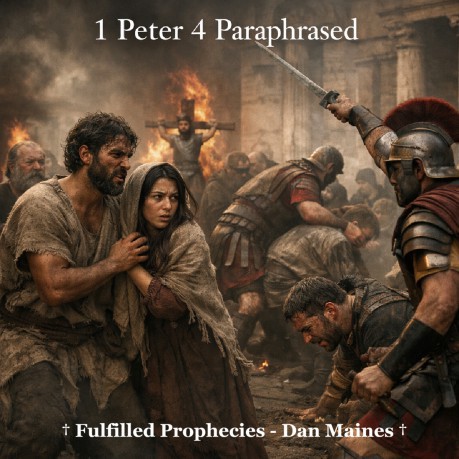
1 Peter 4 Paraphrased Introduction † Peter continues encouraging believers who
were facing suffering and pressure from the surrounding culture. He
reminds them that Christ's suffering marked the end of the old life
ruled by sin, and those who belong to Him must live differently now.
The focus is not escaping hardship, but living faithfully through it. † This chapter shows that suffering for doing
what is right is not a defeat but part of sharing in Christ's work.
Peter also reminds them that judgment was approaching that
generation, which fits the time leading up to the destruction of
Jerusalem. † The message is simple but powerful, once
Christ suffered and brought the old order to its end, believers must
live with a renewed mind and purpose. 1 Peter 4:1 Since Christ suffered in the body, arm yourselves with the same
way of thinking, because the one who has suffered in the body has
broken away from sin. † Peter calls believers to adopt the same
mindset Christ had, willingly enduring suffering rather than
returning to sin (Hebrews 12:2-3). † Suffering for righteousness often marks the
turning point where a person refuses to return to their former life
(Romans 6:6-7). † The early church understood suffering as part
of following Christ, not something strange or unexpected (Acts
14:22). 1 Peter 4:2 From now on, that person doesn't live the rest of their earthly
life chasing human desires, but instead lives for the will of God. † Once someone commits to Christ, their
direction changes from pleasing themselves to pleasing God (Romans
12:1-2). † Peter emphasizes a clear break with the past
lifestyle that once ruled them (Ephesians 4:22-24). † Living for God's will reflects the
transformation that comes with the new covenant life (Galatians
2:20). 1 Peter 4:3 You've already spent enough time in the past doing what the
nations like to do, living in immoral behavior, uncontrolled desires,
drunkenness, wild parties, drinking gatherings, and sinful idol
worship. † Peter reminds them that their former
lifestyle belonged to the pagan world around them (1 Corinthians
6:9-11). † Conversion meant leaving behind the patterns
of the Gentile culture that surrounded the early church (Ephesians
2:1-3). † The gospel didn't simply adjust behavior, it
replaced the old identity completely (Colossians 3:5-8). 1 Peter 4:4 Now those same people are surprised that you don't join them in
the same reckless lifestyle, and they speak against you. † When believers stop participating in sinful
culture, it often provokes hostility from those still living in it
(John 15:18-19). † The early Christians were frequently accused
and slandered because their lives no longer matched the surrounding
society (1 Peter 2:12). † Their refusal to participate in pagan
practices often caused misunderstanding and persecution (Acts
17:5-7). 1 Peter 4:5 But they will have to answer to the One who is ready to judge the
living and the dead. † Peter reminds believers that God will hold
everyone accountable for their actions (Romans 14:12). † The phrase ready to judge reflects the
nearness of the judgment that was approaching that generation (James
5:8-9). † Christ was already seated as judge, waiting
for the appointed time of covenant judgment (Matthew 16:27-28). 1 Peter 4:6 For this reason the gospel was preached even to those who are now
dead, so that though they were judged in the flesh as people are,
they might live in the spirit according to God. † The gospel had been preached to people who
later died physically but now lived spiritually because of Christ (1
Thessalonians 4:13-14). † Peter isn't teaching a second chance after
death, but reminding believers that those who died in Christ still
live (John 11:25-26). † The focus is on spiritual life granted
through Christ even when physical death occurred (2 Corinthians 5:1). 1 Peter 4:7 The end of all things is near, so be clear minded and self
controlled so you can pray. † Peter plainly says the end was near for his
audience, pointing to the approaching end of the old covenant system
(Matthew 24:34). † Because of that approaching crisis, believers
were urged to stay spiritually alert (Luke 21:36). † Clear thinking and prayer were essential for
navigating the turbulent events ahead (Colossians 4:2). 1 Peter 4:8 Above all, keep loving one another deeply, because love covers a
large number of sins. † Peter echoes the teaching of Proverbs about
love covering offenses (Proverbs 10:12). † Love within the Christian community was
critical during times of persecution (John 13:34-35). † Genuine love promotes forgiveness and unity
among believers (Colossians 3:13-14). 1 Peter 4:9 Show hospitality to one another without complaining. † Hospitality was vital for traveling believers
and persecuted Christians in the early church (Romans 12:13). † Peter stresses that hospitality should be
sincere, not done reluctantly (Hebrews 13:2). † Many early believers depended on fellow
Christians for shelter and support (Acts 2:44-45). 1 Peter 4:10 Each of you should use whatever gift you've received to serve
others, faithfully managing God's grace in its many forms. † Spiritual gifts were given to build up the
church community (1 Corinthians 12:7). † Peter emphasizes stewardship, believers were
responsible for how they used what God gave them (Romans 12:6-8). † Service within the body reflected God's grace
working through different people (Ephesians 4:11-12). 1 Peter 4:11 If anyone speaks, they should speak as one delivering the words of
God. If anyone serves, they should do it with the strength God
supplies, so that in everything God may be honored through Jesus
Christ. To Him belong glory and power forever. † Teaching and serving both require reliance on
God's strength, not human ability (2 Corinthians 4:7). † The goal of all ministry is that God receives
the glory (1 Corinthians 10:31). † Christ remains the source of authority and
power for the church (Ephesians 3:20-21). 1 Peter 4:12 Dear friends, don't be surprised by the fiery trial you're going
through, as if something unusual were happening to you. † Persecution was expected for believers living
in a hostile environment (John 16:33). † Peter reminds them that trials refine faith
just like fire refines metal (1 Peter 1:6-7). † These hardships were part of the testing that
strengthened the church (James 1:2-3). 1 Peter 4:13 Instead, rejoice that you share in Christ's sufferings, so that
you may also rejoice with great joy when His glory is revealed. † Sharing in Christ's suffering also means
sharing in His victory (Romans 8:17). † Peter points forward to the revealing of
Christ's glory in judgment and vindication (Matthew 24:30). † The faithful would rejoice when Christ was
revealed in power during that generation (Luke 21:27-28). 1 Peter 4:14 If you're insulted because of the name of Christ, you're blessed,
because the Spirit of glory and of God rests on you. † Being insulted for Christ's name was seen as
a mark of blessing (Matthew 5:11-12). † The presence of God's Spirit confirmed their
identity as God's people (Romans 8:16). † Early Christians often suffered public shame
but were honored by God (Acts 5:41). 1 Peter 4:15 Make sure none of you suffers as a murderer, thief, criminal, or
someone who interferes in other people's affairs. † Peter distinguishes suffering for
righteousness from suffering caused by wrongdoing (1 Peter 2:20). † Believers were called to live upright lives
before outsiders (1 Thessalonians 4:11-12). † True Christian suffering must never come from
sinful behavior (Romans 13:13). 1 Peter 4:16 But if anyone suffers as a Christian, they shouldn't be ashamed,
but should glorify God for carrying that name. † The name Christian originally came from
outsiders but became a badge of honor for believers (Acts 11:26). † Peter encourages believers to embrace their
identity in Christ even when persecuted (Philippians 1:29). † Suffering for Christ glorifies God when
endured faithfully (2 Timothy 2:12). 1 Peter 4:17 Because it's time for judgment to begin with the household of God,
and if it begins with us first, what will the outcome be for those
who refuse to obey the gospel of God? † Peter refers to the coming covenant judgment
that would begin with Israel (Ezekiel 9:6). † The household of God referred to the covenant
community experiencing purification first (Malachi 3:1-3). † This aligns with the approaching destruction
of Jerusalem, which began with the people who had received the
covenant (Matthew 23:35-36). 1 Peter 4:18 And if the righteous are saved with difficulty, what will become
of the ungodly and the sinner? † Peter quotes from Proverbs to emphasize how
serious God's judgment is (Proverbs 11:31). † If the faithful endured trials to be
delivered, the fate of the rebellious would be far worse (Luke
23:31). † The contrast highlights the danger of
rejecting the gospel (Hebrews 10:26-27). 1 Peter 4:19 So those who suffer according to God's will should entrust their
lives to a faithful Creator while continuing to do what is right. † Trusting God in suffering reflects the same
faith Christ showed on the cross (Luke 23:46). † Peter calls believers to continue doing good
even under pressure (Galatians 6:9). † Faithful endurance was the mark of true
discipleship in the early church (Revelation 14:12). Historical References † Eusebius recorded that many early Christians
faced persecution but continued faithfully, trusting God's promises
during the years leading up to Jerusalem's destruction. † Tacitus wrote about Christians being accused
and mistreated by Roman society, confirming the hostility believers
faced. † Clement of Rome described how the early
church endured suffering yet remained steadfast in faith and love. How It Applies To Us Today † Believers today are still called to leave
behind the lifestyle of the world and live according to God's will. † When people oppose us for following Christ,
it shouldn't surprise us because the same thing happened to the early
church. † Our responsibility is to stay faithful, love
one another, and trust God no matter what pressure comes. Q & A Appendix Q: Why does Peter say the end was near? A: Peter was speaking about the approaching end
of the old covenant system and the coming judgment on Jerusalem. Matthew 24:34 Q: What does it mean that judgment begins with
the household of God? A: God first judged the covenant people who had
received His law and prophets. Ezekiel 9:6 Q: Why were believers suffering? A: Their changed lives and loyalty to Christ put
them in conflict with the surrounding culture. John 15:18 Q: Why does Peter tell believers not to be
surprised by fiery trials? A: Because suffering for following Christ was
expected and part of sharing in His path. John 16:33 Q: What does it mean that love covers a large
number of sins? A: Genuine love leads believers to forgive and
overlook offenses instead of fueling division. Proverbs 10:12 Q: Why does Peter emphasize serving others with
the gifts God gives? A: Because every believer receives grace from God
to strengthen the body of Christ and help others. 1 Corinthians 12:7 Q: What does it mean to entrust our lives to a
faithful Creator? A: It means continuing to do what is right while
trusting God to care for us even during hardship. Psalm 37:5 † This is the fulfilled perspective we proclaim at
Fulfilled Prophecies † © Fulfilled Prophecies - Dan Maines. Source Index † 1 Peter 4; Matthew 24:34; Hebrews 12:2-3;
Romans 6:6-7; Romans 12:1-2; Ephesians 4:22-24; 1 Corinthians 6:9-11;
John 15:18-19; Romans 14:12; James 5:8-9; Matthew 16:27-28; 2
Corinthians 5:1; Luke 21:36; Proverbs 10:12; Colossians 3:13-14;
Romans 12:13; Hebrews 13:2; 1 Corinthians 12:7; Ephesians 4:11-12;
John 16:33; Romans 8:17; Matthew 5:11-12; Acts 5:41; Ezekiel 9:6;
Malachi 3:1-3; Luke 23:31; Hebrews 10:26-27; Revelation 14:12. † Eusebius, Ecclesiastical History; Tacitus,
Annals; Clement of Rome, First Epistle to the Corinthians.
By Dan Maines
Truly I say to you, this generation will not
pass away until all these things take place.
Utterly slay old men, young men, maidens, little
children, and women, but do not touch any man on whom is the mark,
and you shall start from My sanctuary.
If the world hates you, you know that it has hated
Me before it hated you.
These
things I have spoken to you, so that in Me you may have peace. In the
world you have tribulation, but take courage, I have overcome the
world.
Hatred
stirs up strife, But love covers all transgressions.
But
to each one is given the manifestation of the Spirit for the common
good.
Commit
your way to the LORD, Trust also in Him, and He will do it.
Links