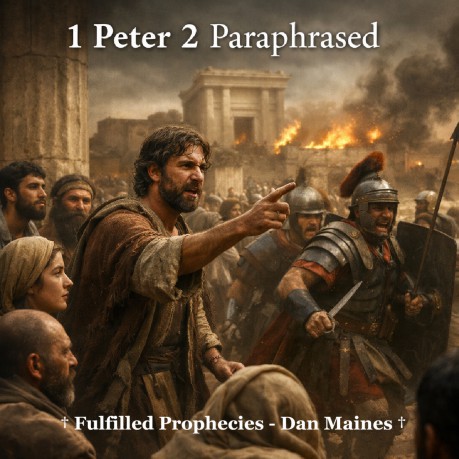
1 Peter 2 Paraphrased Introduction † Peter continues calling believers to live as
people who have been brought into God's new covenant family, leaving
behind the corruption of the old life and growing into the life
Christ established through His work. † This chapter explains how believers became
God's spiritual house, replacing the old temple system that was
judged and removed in the first century (Matthew 21:42-43). † Peter connects believers directly to Christ
as the cornerstone, showing that the covenant people of God are now
built on Him, not on the temple in Jerusalem (Ephesians 2:19-22). 1 Peter 2:1 † Peter begins with the transformation expected
of those who entered the new covenant community (Ephesians 4:31-32). † These sins described the corruption of the
old covenant leadership that persecuted Christ and the apostles
(Matthew 23:13-33). † The new covenant people were called to live
differently because the kingdom had come to them (Matthew 21:43). 1 Peter 2:2 † The pure teaching refers to the gospel
message preached by the apostles (Acts 2:42). † Spiritual growth came through hearing and
learning the truth about Christ's finished work (Romans 10:17). † Salvation here refers to the full covenant
deliverance that was reaching its completion in their generation
(Hebrews 9:28). 1 Peter 2:3 † Peter echoes the language of Psalm 34:8,
showing that the believers had already tasted the goodness of the
Lord through Christ. † Their faith wasn't theoretical, they had seen
God's work unfold through the gospel and the power of Christ's
resurrection (Acts 4:33). † This goodness was displayed through the mercy
given to both Jews and Gentiles entering the new covenant kingdom
(Ephesians 2:13-16). 1 Peter 2:4 † Christ was rejected by the leaders of Israel
when they crucified Him (Acts 4:10-11). † God exalted Him as the true foundation of the
new covenant temple (Isaiah 28:16). † Peter emphasizes that God's choice overturns
man's rejection. 1 Peter 2:5 † Believers collectively form the new temple of
God (Ephesians 2:20-22). † The priesthood is no longer limited to the
tribe of Levi but belongs to all who are in Christ (Revelation 1:6). † Spiritual sacrifices include praise,
obedience, and faithful living (Hebrews 13:15-16). 1 Peter 2:6 † Peter quotes Isaiah 28:16, pointing directly
to Christ as the cornerstone. † The cornerstone establishes the entire
structure of God's new covenant people (Ephesians 2:20). † Faith in Christ guarantees that believers
won't be put to shame when God's judgment came upon the old covenant
system (Luke 21:20-22). 1 Peter 2:7 † Peter repeats Psalm 118:22, which Jesus
Himself applied to the leaders of Israel (Matthew 21:42). † The builders represent the religious leaders
who rejected Christ (Acts 4:10-11). † Their rejection didn't stop God's plan, it
fulfilled prophecy. 1 Peter 2:8 † This language comes from Isaiah 8:14. † Many in Israel stumbled over Christ because
they trusted the law rather than faith (Romans 9:31-33). † Their stumbling led to the judgment that came
upon Jerusalem (Luke 19:41-44). 1 Peter 2:9 † Peter applies Exodus 19:5-6 to believers in
Christ. † The covenant identity once tied to national
Israel now belongs to the people gathered through Christ (Galatians
3:28-29). † The purpose of this calling is to proclaim
God's glory. 1 Peter 2:10 † Peter references Hosea 1:9-10 and Hosea 2:23. † The prophecy about restoring God's people
finds fulfillment in Christ bringing both Jews and Gentiles together
(Romans 9:24-26). † Mercy is now extended through the gospel. 1 Peter 2:11 † Believers were living in a world that opposed
their faith (John 15:18-19). † Peter reminds them their identity was now
tied to the heavenly kingdom established through Christ (Philippians
3:20). † Sinful desires destroy spiritual life and
must be resisted. 1 Peter 2:12 † Good conduct silences false accusations
(Titus 2:7-8). † God's visitation refers to His intervention
in judgment and salvation during that generation (Luke 19:44). † Faithful living points others toward God. 1 Peter 2:13 † Peter instructs believers to maintain order
and peace within society (Romans 13:1). † This teaching prevented unnecessary
persecution. † Christians were called to live responsibly
even under Roman rule. 1 Peter 2:14 † Government authorities existed to maintain
civil order. † Peter shows that believers should respect
lawful authority. † Doing good removes grounds for accusation. 1 Peter 2:15 † The early church was often slandered with
false accusations. † Consistent righteous behavior exposed those
lies. † God's will was for believers to reflect
Christ's character. 1 Peter 2:16 † Christian freedom isn't permission to sin
(Galatians 5:13). † True freedom is found in serving God
faithfully. † The gospel produces responsibility, not
lawlessness. 1 Peter 2:17 † Peter summarizes proper Christian conduct. † Honor and respect demonstrate humility and
love. † Fear of God keeps believers grounded in
obedience. 1 Peter 2:18 † Peter addresses servants living under
difficult authority. † Faithfulness in hardship reflects Christ's
example. † Submission here reflects endurance, not
approval of injustice. 1 Peter 2:19 † Enduring suffering for righteousness pleases
God. † Faithfulness during hardship reveals genuine
faith. † God sees and honors such endurance. 1 Peter 2:20 † Peter distinguishes deserved suffering from
unjust suffering. † The latter reflects Christ's path. † God values faithfulness under persecution. 1 Peter 2:21 † Christ's suffering is the model for
believers. † Following Him includes endurance and
faithfulness. † His example demonstrates perfect obedience. 1 Peter 2:22 † Peter quotes Isaiah 53:9. † Christ's innocence shows the injustice of His
suffering. † Yet His suffering brought redemption. 1 Peter 2:23 † Jesus responded to suffering with trust in
God. † His restraint reveals perfect faith. † Believers are called to follow this pattern. 1 Peter 2:24 † Peter again references Isaiah 53. † Christ's sacrifice ended the old covenant
system of sin and sacrifice (Hebrews 10:10-14). † His suffering brought spiritual healing. 1 Peter 2:25 † Peter reflects the imagery of Isaiah 53:6. † Christ gathers His people and protects them. † Believers now live under His care. Historical References † Irenaeus wrote that Christ became the
cornerstone of God's new temple made of believers, showing that the
church replaced the old temple system. † Justin Martyr explained that the people who
follow Christ are the true spiritual Israel and the new priesthood of
God. † Eusebius recorded that after Jerusalem's
destruction the church recognized the end of the old covenant temple
system. How It Applies To Us Today † Believers today are still called to live as
God's spiritual house built on Christ. † Our lives should reflect the character of the
kingdom Christ established. † The same call to holiness, humility, and
faithfulness still applies to us now. Q And A Appendix Q: Who is the cornerstone mentioned in this
chapter? Q: What is the spiritual house Peter
describes? Q: Why does Peter call believers a royal
priesthood? Q: What does Peter mean when he says believers
are living stones? Q: What are the spiritual sacrifices believers
offer to God? Q: What does it mean that believers were once not
a people but now are God's people? Q: Why does Peter emphasize good conduct among
the nations? † This is the fulfilled perspective we proclaim at
Fulfilled Prophecies † Source Index † 1 Peter 2; Isaiah 28:16; Isaiah 8:14; Isaiah
53:6, 9; Matthew 21:42-43; Luke 19:41-44; Luke 21:20-22; John
15:18-19; Acts 2:42; Acts 4:10-11; Romans 9:31-33; Romans 9:24-26;
Romans 13:1; Galatians 3:28-29; Galatians 5:13; Ephesians 2:19-22;
Ephesians 4:31-32; Philippians 3:20; Titus 2:7-8; Hebrews 9:28;
Hebrews 10:10-14; Hebrews 13:15-16; Revelation 1:6 † Justin Martyr, Dialogue with Trypho;
Irenaeus, Against Heresies; Eusebius, Ecclesiastical History.
By Dan Maines
So get rid of all hatred, all
deception, hypocrisy, jealousy, and every kind of harmful speech.
Like newborn children craving
milk, long for the pure teaching that helps you grow into the
salvation that has now come.
You have personally experienced
that the Lord is good.
Come to Him, the living stone
rejected by men but chosen and honored by God.
You also, like living stones,
are being built together as a spiritual house and a holy priesthood,
offering spiritual sacrifices that are acceptable to God through
Jesus Christ.
Scripture says that God placed a
chosen and precious cornerstone in Zion, and whoever trusts in Him
will never be disappointed.
To those who believe, He is
precious, but to those who refuse to believe, the stone that the
builders rejected has become the chief cornerstone.
He is also a stone that causes
people to stumble and a rock that makes them fall, because they
refuse to obey the message.
But you are a chosen people, a
royal priesthood, a holy nation, God's own possession, called to
declare the greatness of the One who brought you out of darkness into
His wonderful light.
You once were not a people, but
now you are God's people. Once you had not received mercy, but now
you have received mercy.
Dear friends, I urge you as
strangers and temporary residents to keep away from sinful desires
that wage war against your soul.
Live honorable lives among the
nations so that when they accuse you of wrongdoing, they may see your
good works and glorify God when He visits them.
Submit yourselves to every
human authority for the Lord's sake, whether to the emperor as the
highest authority.
Or to governors who are sent by
him to punish those who do wrong and praise those who do right.
For it is God's will that by
doing what is right you silence the ignorance of foolish people.
Live as free people, but don't
use your freedom as an excuse for wrongdoing. Instead live as
servants of God.
Honor everyone, love the
brotherhood, fear God, and respect the emperor.
Servants, submit yourselves to
your masters with respect, not only to the good and gentle but also
to those who are harsh.
For it is commendable if
someone bears up under pain while suffering unjustly because they are
conscious of God.
What credit is it if you endure
punishment for doing wrong? But if you suffer for doing what is right
and endure it, this finds favor with God.
You were called for this
purpose, because Christ also suffered for you, leaving you an example
to follow in His steps.
He committed no sin, and no
deception was found in His mouth.
When He was insulted, He didn't
return the insult. When He suffered, He didn't threaten revenge, but
entrusted Himself to the One who judges justly.
He carried our sins in His body
on the cross so that we would die to sin and live for righteousness.
By His wounds you were healed.
You were like sheep wandering
away, but now you have returned to the Shepherd and Guardian of your
souls.
A: Jesus Christ is the cornerstone
chosen by God, the foundation of God's people (Isaiah 28:16,
Ephesians 2:20).
A: The spiritual house is the
community of believers who together form God's temple (Ephesians
2:21-22).
A: Because through Christ all
believers now serve God directly, replacing the old covenant
priesthood (Revelation 1:6).
A: He means believers are
being built together as God's spiritual temple, with Christ as the
cornerstone and the people of God forming the structure (Ephesians
2:19-22).
A: Spiritual sacrifices include
praise, obedience, faithful living, and thanksgiving offered through
Christ (Hebrews 13:15-16, Romans 12:1).
A: Peter is
pointing to the fulfillment of Hosea's prophecy where those once
outside the covenant are brought into God's family through Christ
(Hosea 2:23, Romans 9:25-26).
A: Because righteous behavior
exposes false accusations and causes others to see God's work through
the lives of believers (Matthew 5:16, Titus 2:7-8).
© Fulfilled Prophecies - Dan
Maines.
Links