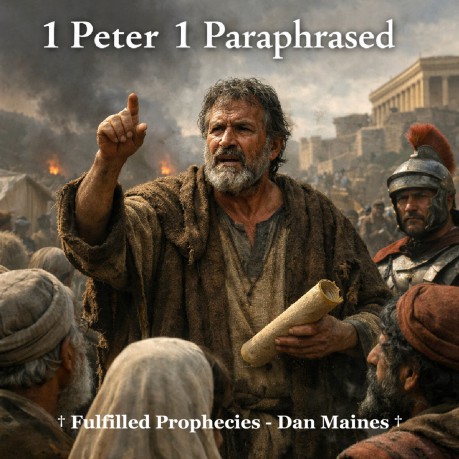
1 Peter 1 Paraphrased Introduction † Peter wrote this letter to believers
scattered throughout the Roman provinces during a time when the Old
Covenant world was nearing its end (Hebrews 8:13). † The chapter centers on the living hope
believers received through the resurrection of Jesus and the
salvation unfolding in their generation (Matthew 16:27-28). † From the fulfilled perspective, Peter was
encouraging believers who were living in the final transition from
the Old Covenant age to the established kingdom of Christ (Hebrews
9:26). 1 Peter 1:1 † These believers were scattered across Asia
Minor as the gospel spread outward from Jerusalem (Acts 2:9-11). † They were called strangers because their true
citizenship now belonged to the kingdom of Christ rather than to the
old covenant system (Philippians 3:20). † The church had become the gathered people of
God across the nations (Ephesians 2:19). 1 Peter 1:2 † God's foreknowledge shows that redemption
through Christ was planned long before the events of that generation
unfolded (Acts 2:23). † The cleansing through Christ's blood
fulfilled what the temple sacrifices could never permanently
accomplish (Hebrews 10:10-12). † Through the Spirit believers were set apart
as the new covenant people of God (2 Thessalonians 2:13). 1 Peter 1:3 † The resurrection confirmed that Christ had
defeated death and established the foundation of the new covenant
kingdom (Acts 2:24). † This living hope rested on the historical
reality of the resurrection witnessed by the apostles (1 Corinthians
15:3-8). † Through the new birth believers entered the
life promised through the prophets (Ezekiel 36:26). 1 Peter 1:4 † The inheritance promised to believers is the
kingdom secured by Christ rather than the land promises tied to the
old covenant nation (Galatians 3:29). † Unlike the temple and city that would soon
pass away, this inheritance cannot be destroyed (Hebrews 12:28). † The language of heaven emphasizes the
permanence and authority of God's kingdom (Matthew 6:20). 1 Peter 1:5 † The last time refers to the closing period of
the Old Covenant age that culminated in the judgment of Jerusalem
(Hebrews 1:2). † The salvation about to be revealed involved
deliverance from the judgment that was coming upon that generation
(Luke 21:22). † Peter expected this fulfillment within their
lifetime just as Jesus taught (Matthew 24:34). 1 Peter 1:6 † Early Christians experienced persecution from
both Jewish authorities and Roman rulers (Acts 8:1). † Their trials were temporary compared to the
glory that followed the end of the old covenant order (Romans 8:18). † Their suffering reflected the same rejection
Christ endured (John 15:20). 1 Peter 1:7 † Faith refined through suffering proved who
truly belonged to Christ (James 1:2-3). † The revealing of Christ refers to his
judgment presence in that generation (Matthew 16:27-28). † Just as gold is purified by fire, persecution
exposed the difference between true believers and those clinging to
the old system (Malachi 3:2-3). 1 Peter 1:8 † Their faith rested on the testimony of the
apostles who had seen the risen Christ (Acts 2:32). † The joy they experienced came from knowing
the kingdom promises were being fulfilled in their generation (Luke
10:23-24). † Christ ruled from heaven while his authority
was being revealed on earth (Acts 2:33-36). 1 Peter 1:9 † Salvation included deliverance from the
judgment that was about to fall upon Jerusalem (Luke 21:28). † Believers who trusted Christ would escape the
destruction that Jesus warned about (Luke 21:20-21). † Their faith secured their place in the
kingdom that could not be shaken (Hebrews 12:28). 1 Peter 1:10 † The prophets spoke of the coming salvation
but did not see the full timing of its fulfillment (Daniel 12:8-9). † Their writings pointed forward to the Messiah
and the new covenant blessings he would bring (Jeremiah 31:31). † Peter's readers were witnessing the
fulfillment of what the prophets anticipated (Luke 24:44). 1 Peter 1:11 † The prophets foretold both the suffering of
the Messiah and the glory that would follow (Isaiah 53:5). † Christ's suffering came first, then the glory
of his kingdom was revealed through the gospel (Luke 24:26). † The apostles lived in the period the prophets
longed to understand (1 Peter 1:12). 1 Peter 1:12 † The gospel fulfilled the promises spoken
through the prophets (Acts 3:24). † Even angels observed the unfolding of God's
plan of redemption (Ephesians 3:10). † The first century church witnessed the climax
of God's redemptive work (Hebrews 9:26). 1 Peter 1:13 † Peter urged believers to stay spiritually
alert because the end of the age was near (1 Peter 4:7). † The revelation of Christ refers to his
judgment coming in that generation (Luke 21:27). † Their hope was tied to the completion of
God's promises unfolding in their lifetime (Romans 13:11). 1 Peter 1:14 † The gospel called believers to turn away from
their former sinful lifestyles (Acts 3:19). † Both Jews and Gentiles were called into a
transformed life under the new covenant (Ephesians 4:22-24). † This new life stood in contrast to the fading
world of the old covenant order (2 Corinthians 5:17). 1 Peter 1:15 † God's people have always been called to
reflect his holiness (Leviticus 11:44). † Under the new covenant holiness comes from a
transformed heart (Hebrews 8:10). † The church became the holy people of God in
Christ (1 Peter 2:9). 1 Peter 1:16 † Peter quotes the law to show that God's
character and moral standard never change (Leviticus 19:2). † The moral call continues even though the
covenant system changed (Romans 7:6). † Holiness flows from the new birth believers
receive through Christ (John 3:3). 1 Peter 1:17 † God judges every person without favoritism
(Romans 2:11). † This warning was urgent during the years
leading to Jerusalem's destruction (Luke 21:36). † Believers were called to live faithfully
while the old age was passing away (1 Corinthians 7:31). 1 Peter 1:18 † Religious traditions without Christ could not
bring redemption (Mark 7:8). † Wealth and ritual offerings could never
purchase salvation (Psalm 49:7). † Christ's sacrifice replaced the ineffective
systems of the old covenant (Hebrews 9:12). 1 Peter 1:19 † Jesus fulfilled the role of the Passover lamb
who takes away sin (John 1:29). † His sacrifice ended the need for animal
offerings forever (Hebrews 10:18). † Through his blood the forgiveness promised in
the new covenant was secured (Matthew 26:28). 1 Peter 1:20 † God's plan of redemption existed before
creation itself (Ephesians 1:4). † Christ appeared during the last days of the
old covenant age (Hebrews 1:2). † Peter reminds his readers they were living in
that final transition period (1 Peter 4:7). 1 Peter 1:21 † The resurrection proved Jesus is the promised
Messiah (Acts 2:36). † Faith in Christ replaced dependence on the
temple system (John 4:21-23). † Christ now rules with full authority over
heaven and earth (Ephesians 1:20-22). 1 Peter 1:22 † Obedience to the gospel produces genuine love
among believers (John 13:34). † The church became a new family united through
Christ (Galatians 3:28). † Love is the evidence of true spiritual
transformation (1 John 3:14). 1 Peter 1:23 † The new birth comes through the gospel
message proclaimed by the apostles (James 1:18). † This new birth creates a spiritual family
beyond physical ancestry (John 1:12-13). † God's word establishes a kingdom that will
never fade away (Isaiah 40:8). 1 Peter 1:24 † Peter quotes Isaiah to remind readers how
temporary human glory is (Isaiah 40:6-7). † Even powerful systems and nations fade away
with time (Psalm 103:15). † The old covenant order itself was fading away
in their generation (Hebrews 8:13). 1 Peter 1:25 † The gospel message remains forever even when
earthly institutions pass away (Matthew 24:35). † Through that message believers entered the
everlasting kingdom promised by the prophets (Daniel 7:14). † Peter closes by reminding them that the
gospel they received fulfilled God's eternal plan (Acts 13:32-33). Historical References † Justin Martyr explained that the church had
inherited the covenant promises that once belonged to Israel's
system. † Irenaeus wrote that the apostles lived during
the time when the prophetic promises were coming to fulfillment. † Eusebius recorded that early Christians
understood the destruction of Jerusalem as the completion of the old
covenant order. How it applies to us today † Our hope rests in the finished work of Christ
rather than in a future earthly system. † The inheritance Peter spoke about belongs to
believers now because Christ has already established his kingdom. † We live as God's holy people by loving one
another and remaining faithful to the gospel that never fades. Q & A Appendix Q: What are the last times Peter mentioned? Q: What inheritance was Peter referring to? Q: What salvation was ready to be revealed? Q: What does Peter mean by being born again
through the word of God? Q: Why does Peter emphasize holiness in this
chapter? Q: What traditions was Peter referring to when he
spoke about empty traditions? Q: Why did Peter quote Isaiah about grass fading
and flowers falling? † This is the fulfilled perspective we proclaim at
Fulfilled Prophecies † Source Index † 1 Peter 1:1-25; Matthew 16:27-28; Hebrews
1:2; Luke 21:20-28; Acts 2:23-36; Galatians 3:29; Daniel 7:14;
Hebrews 12:28 † Justin Martyr, Dialogue with Trypho;
Irenaeus, Against Heresies; Eusebius, Ecclesiastical History.
By Dan Maines
Peter, an apostle of Jesus
Christ, writes to God's chosen people scattered as strangers
throughout Pontus, Galatia, Cappadocia, Asia, and Bithynia.
You were chosen according to the
foreknowledge of God the Father, set apart by the Spirit so that you
would obey Jesus Christ and be cleansed by his blood. May grace and
peace be multiplied to you.
Blessed be the God and Father of
our Lord Jesus Christ, who in his great mercy caused us to be born
again to a living hope through the resurrection of Jesus Christ from
the dead.
We were born again to receive an
inheritance that cannot decay, cannot be stained, and cannot fade
away, reserved in heaven for you.
You are being protected by God's
power through faith for a salvation ready to be revealed in the last
time.
Because of this you rejoice,
even though for a little while you have been distressed by various
trials.
These trials test your faith so
that it proves genuine, far more valuable than gold that perishes
even though it is refined by fire, and it will result in praise and
honor when Jesus Christ is revealed.
Though you have not seen him,
you love him. Even now, though you do not see him, you believe in him
and rejoice with a joy that cannot be fully expressed and is filled
with glory.
Because you are receiving the
result of your faith, the salvation of your lives.
The prophets searched carefully
and tried to understand this salvation as they spoke beforehand about
the grace that would come to you.
They were trying to understand
what time the Spirit of Christ within them was indicating when it
predicted the sufferings of Christ and the glories that would follow.
It was revealed to them that
they were serving not themselves but you, in the things now announced
to you through those who preached the gospel by the Holy Spirit sent
from heaven, things that even angels long to look into.
So prepare your minds for
action, stay alert, and place your hope fully on the grace that is
being brought to you at the revelation of Jesus Christ.
As obedient children, do not be
shaped by the desires you once followed when you lived in ignorance.
Instead, just as the One who
called you is holy, you also must be holy in everything you do.
Because it is written: You
shall be holy, for I am holy.
If you call on the Father who
judges each person's work without partiality, live your time here
with reverence.
You know that you were not
redeemed with things that decay, like silver or gold, from the empty
traditions passed down from your ancestors.
Instead you were redeemed with
the precious blood of Christ, like that of a spotless and perfect
lamb.
He was known before the
foundation of the world but was revealed in these last times for your
sake.
Through him you believe in God,
who raised him from the dead and gave him glory, so that your faith
and hope are in God.
Since you have purified your
lives by obeying the truth so that you have sincere love for one
another, love each other deeply from the heart.
You have been born again, not
from seed that perishes, but from seed that cannot perish, through
the living and enduring word of God.
For all flesh is like grass,
and all its glory is like the flower of the field. The grass dries up
and the flower falls.
But the word of the Lord
remains forever. And this word is the good news that was preached to
you.
A:
Hebrews 1:2 and 1 Peter 4:7 show that the apostles believed they were
already living in the final days of the Old Covenant age.
A:
Galatians 3:29 teaches that believers in Christ inherit the promises
given to Abraham.
A:
Luke 21:28 connects redemption with the approaching deliverance tied
to the events leading up to the destruction of Jerusalem.
A: James 1:18 explains
that God brought believers forth by the word of truth, meaning the
gospel message produced the new birth that created the new covenant
people.
A: Leviticus 11:44 and 1 Peter 1:15
show that God's people have always been called to reflect his
holiness, and under the new covenant that holiness comes from a
changed heart.
A: Mark 7:8-13
shows how religious traditions had replaced God's commands, and Peter
reminds believers that redemption did not come through those systems
but through Christ's sacrifice.
A: Isaiah 40:6-8 contrasts
the temporary nature of human systems with the enduring word of God,
and Peter used it to show that God's promises remain even while
earthly orders pass away.
© Fulfilled Prophecies - Dan
Maines.
Links