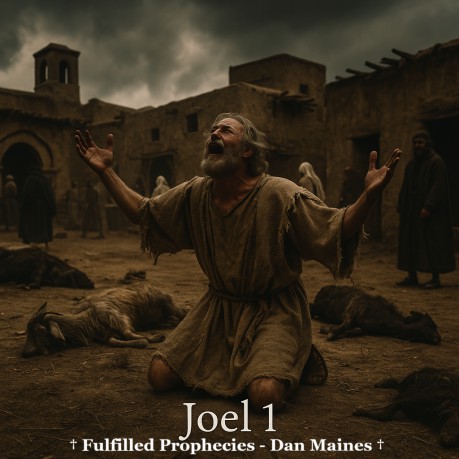
Joel 1 Joel 1:1 † The book begins with divine authority,
showing that Joel's message is not human but from the Lord Himself. Joel 1:2-3 † Joel calls the elders and people to
acknowledge an unprecedented calamity. Joel 1:4 † The four waves of locusts symbolize
successive judgments consuming everything not rooted in God. Joel 1:5-7 † The drunkards symbolize the careless and
complacent who ignored God's warnings. Joel 1:8-9 † The virgin's mourning expresses Judah's deep
sorrow for the loss of covenant fellowship. Joel 1:10-12 † The ruined field signifies Israel's covenant
collapse, as spiritual fruitfulness ceased. Joel 1:13-14 † The priests are called to lead repentance for
the nation's sin and rebellion. Joel 1:15 † Joel introduces the central theme of his
prophecy, the coming Day of the Lord. Joel 1:16-18 † The complete loss of sustenance reflects both
physical and spiritual desolation. Joel 1:19-20 † Joel ends the chapter in intercession, crying
out to God amid judgment. How it applies to us today † Joel 1 reminds us that God's judgments are
purposeful, leading to repentance and renewal. † This is the fulfilled perspective we proclaim at
Fulfilled Prophecies † Source Index
By Dan Maines
The word of the Lord that came to
Joel, the son of Pethuel.
†
Historically, Joel prophesied to Judah during a devastating locust
invasion that symbolized coming judgment.
†
Prophetically, the word of the Lord always arrives at the appointed
time to warn and restore His people.
† Jerome
said Joel's message was both literal and symbolic, reflecting the
devastation of sin and God's call to repentance.
†
In the fulfilled kingdom, the Word continues to speak through Christ,
who brings both warning and redemption.
Hear this, O elders, and listen,
all inhabitants of the land. Has anything like this happened in your
days or in your fathers' days? Tell your sons about it, and let your
sons tell their sons, and their sons the next generation.
†
Historically, the locust plague destroyed the nation's food supply
and symbolized total desolation.
†
Prophetically, this foreshadows the destruction of Jerusalem under
Rome, a judgment unparalleled in history.
†
Clement observed that the command to tell future generations reflects
how divine lessons endure through ages.
† In
the fulfilled kingdom, believers proclaim what Christ accomplished so
future generations understand fulfillment.
What the gnawing locust has left,
the swarming locust has eaten; and what the swarming locust has left,
the creeping locust has eaten; and what the creeping locust has left,
the stripping locust has eaten.
†
Historically, these represented stages of destruction that stripped
Judah bare.
† Prophetically, the locusts
mirror invading armies, ending with Rome's siege of Jerusalem.
†
Jerome compared these stages to the unfolding of divine wrath leading
to purification.
† In the fulfilled kingdom,
no further devastation remains, for Christ's reign restores all that
was lost.
Awake, drunkards, and weep; and
wail, all you wine drinkers, on account of the sweet wine that is cut
off from your mouth. For a nation has invaded my land, mighty and
without number; its teeth are the teeth of a lion, and it has the
fangs of a lioness. It has made my vine a waste and my fig tree
splinters. It has stripped them bare and cast them away; their
branches have become white.
†
Historically, the invading nation may describe locusts figuratively
or Babylon literally.
† Prophetically, this
points to Rome's destruction of the vine and fig tree — symbols of
Israel.
† Josephus recorded that Jerusalem
was left barren, fulfilling Joel's imagery in vivid reality.
†
In the fulfilled kingdom, the true vine, Christ, now flourishes
forever with His people as branches.
Wail like a virgin girded with
sackcloth for the bridegroom of her youth. The grain offering and the
drink offering are cut off from the house of the Lord. The priests
mourn, the ministers of the Lord.
†
Historically, temple sacrifices ceased when devastation overtook the
land.
† Prophetically, this foreshadows the
end of temple worship in AD 70 when the daily offerings ceased
forever.
† Jerome said that the cessation of
offerings pointed to the replacement of old sacrifices with Christ's
perfect one.
† In the fulfilled kingdom,
mourning turns to joy because true atonement has been made once for
all.
The field is ruined, the land
mourns; for the grain is ruined, the new wine dries up, fresh oil
fails. Be ashamed, O farmers, wail, O vinedressers, for the wheat and
the barley, because the harvest of the field is destroyed. The vine
dries up, and the fig tree fails; the pomegranate, the palm also, and
the apple tree, all the trees of the field dry up. Indeed, rejoicing
dries up from the sons of men.
†
Historically, famine and drought followed the plague, devastating all
produce.
† Prophetically, the withered vine
and fig tree represent Israel's judgment and loss of spiritual
vitality.
† Eusebius compared the ruined
harvest to the fading glory of the old covenant, replaced by the
gospel's abundance.
† In the fulfilled
kingdom, Christ restores the fruit of the Spirit, bringing joy and
life everlasting.
Gird yourselves with sackcloth
and lament, O priests; wail, O ministers of the altar! Come, spend
the night in sackcloth, O ministers of my God, for the grain offering
and the drink offering are withheld from the house of your God.
Consecrate a fast, proclaim a solemn assembly; gather the elders and
all the inhabitants of the land to the house of the Lord your God,
and cry out to the Lord.
†
Historically, fasting was a sign of humility and appeal for mercy
during divine judgment.
† Prophetically, the
solemn assembly prefigures the call to repentance before Jerusalem's
final desolation.
† Jerome noted that the
outward fast foreshadowed the inward repentance fulfilled through
Christ.
† In the fulfilled kingdom,
repentance leads not to fear but to restoration through the Spirit.
Alas for the day! For the day of
the Lord is near, and it will come as destruction from the Almighty.
†
Historically, this referred to God's imminent judgment through
invading armies or natural disaster.
†
Prophetically, this Day reached its climax in the destruction of
Jerusalem in AD 70.
† Eusebius identified the
Roman devastation as the complete fulfillment of Joel's warning.
†
In the fulfilled kingdom, the Day of the Lord is past, and His reign
of peace now endures eternally.
Has not food been cut off
before our eyes, gladness and joy from the house of our God? The
seeds shrivel under their clods; the storehouses are desolate, the
barns are torn down, for the grain is dried up. How the beasts groan!
The herds of cattle wander aimlessly because there is no pasture for
them; even the flocks of sheep suffer.
†
Historically, the famine that followed the locust invasion left man
and beast in anguish.
† Prophetically, this
depicts Israel's spiritual barrenness when separated from God.
†
Jerome said the groaning cattle signified creation's cry for
redemption fulfilled in Christ.
† In the
fulfilled kingdom, God's people no longer hunger or thirst, for
Christ is their provision.
To You, O Lord, I cry; for fire
has devoured the pastures of the wilderness, and the flame has burned
up all the trees of the field. Even the beasts of the field pant for
You; for the water brooks are dried up, and fire has devoured the
pastures of the wilderness.
† Historically, the
imagery of fire and drought portrays utter devastation across the
land.
† Prophetically, this points to the
consuming fire of divine wrath that ended the old covenant.
†
Jerome linked this cry to the plea of the remnant who awaited
redemption in Christ.
† In the fulfilled
kingdom, the fire of judgment is past, replaced by the living waters
of grace.
†
The locust plague symbolizes destruction that precedes restoration
through Christ.
† The end of temple
sacrifices prepared the way for the everlasting covenant.
†
The Day of the Lord, once a day of wrath, became our day of
redemption.
† Today, we rejoice in the
restoration of life in the fulfilled kingdom where Christ reigns
forever.
† The Holy
Bible, NASB
† Josephus, The Wars of the Jews,
Book 6
† Eusebius, Ecclesiastical History,
Book 3
† Jerome, Commentary on Joel
†
Clement of Rome, 1 Clement
† Tertullian,
Against Marcion, Book 4
† Hippolytus,
Commentary on Joel
Links