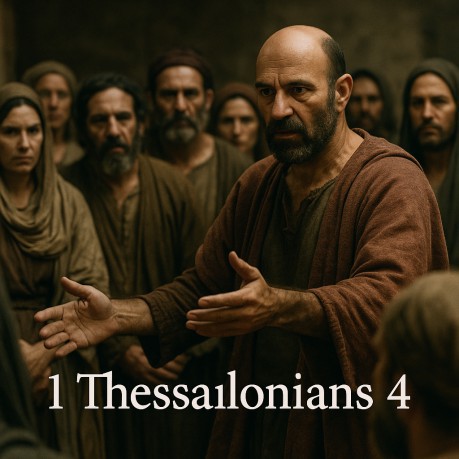
1 Thessalonians 4 1 Thessalonians 4:1-2 † Paul encourages them to continue growing in
obedience and holiness. 1 Thessalonians 4:3-5 † Sanctification means holiness in both conduct
and body. 1 Thessalonians 4:6-8 † Exploiting others, especially in matters of
sexual sin, is a grave offense. 1 Thessalonians 4:9-10 † Their brotherly love was already evident and
widespread. 1 Thessalonians 4:11-12 † The Christian life values humble diligence
and self-sufficiency. 1 Thessalonians 4:13-14 † Believers grieve differently, with hope
rooted in Christ's resurrection. 1 Thessalonians 4:15-17 † Paul assures them that the dead will not be
left behind. 1 Thessalonians 4:18 † The teaching of resurrection and Christ's
presence was for encouragement, not fear. How it applies to us today † This is the fulfilled perspective we proclaim at
Fulfilled Prophecies † Source Index
By Dan Maines
Finally then, brothers
and sisters, we request and urge you in the Lord Jesus, that as you
received instruction from us as to how you ought to walk and please
God, just as you actually do walk, that you excel even more. For you
know what instructions we gave you by the authority of the Lord
Jesus.
† Pleasing God is not
static, it calls for continual progress.
†
Clement of Rome (1 Clement 35) exhorted believers to excel in good
works, paralleling Paul's command.
For this is the will
of God, your sanctification, that is, that you abstain from sexual
immorality, that each of you know how to possess his own vessel in
sanctification and honor, not in lustful passion, like the Gentiles
who do not know God.
† Sexual immorality was rampant in
pagan culture, but Christians were called to purity.
†
Philo (On the Special Laws 3.7) condemned Gentile excess and lust,
reflecting the same moral divide.
And that no one
violate the rights and take advantage of his brother or sister in the
matter, because the Lord is the avenger in all these things, just as
we also told you previously and solemnly warned you. For God has not
called us for impurity, but in sanctification. Therefore, the one who
rejects this is not rejecting man, but the God who gives His Holy
Spirit to you.
† God Himself
is the avenger of such wrongs.
† Josephus
(Against Apion 2.199) contrasted the strict moral discipline of the
Jews with Gentile immorality, showing the seriousness of Paul's
command.
Now as to the love of
the brothers and sisters, you have no need for anyone to write to
you, for you yourselves are taught by God to love one another, for
indeed you practice it toward all the brothers and sisters who are in
all Macedonia. But we urge you, brothers and sisters, to excel even
more.
† Yet Paul still urged them to
grow even more in love.
† Ignatius (Letter to
the Smyrnaeans 6) also commended churches for excelling in love as
proof of discipleship.
And to make it your
ambition to lead a quiet life and attend to your own business and
work with your hands, just as we instructed you, so that you will
behave properly toward outsiders and not be in any need.
† Hard work was a
testimony to outsiders, preventing reproach.
†
The Didache (ch. 12) warned against idleness, confirming Paul's
teaching.
But we do not want
you to be uninformed, brothers and sisters, about those who are
asleep, so that you will not grieve as indeed the rest of mankind do,
who have no hope. For if we believe that Jesus died and rose from the
dead, so also God will bring with Him those who have fallen asleep
through Jesus.
† The
resurrection of Jesus guarantees the resurrection of His people.
†
Justin Martyr (Dialogue with Trypho 80) affirmed resurrection hope
against pagan despair.
For we say this to
you by the word of the Lord, that we who are alive and remain until
the coming of the Lord, will not precede those who have fallen
asleep. For the Lord Himself will descend from heaven with a shout,
with the voice of the archangel, and with the trumpet of God, and the
dead in Christ will rise first. Then we who are alive, who remain,
will be caught up together with them in the clouds to meet the Lord
in the air, and so we will always be with the Lord.
† The living and the dead in
Christ share in the same victory.
† The
imagery reflects covenantal language of God coming in judgment,
echoing Matthew 24:30-31.
† Josephus (Wars
6.5.3) described heavenly armies seen in the clouds before
Jerusalem’s fall, aligning with Paul's imagery of Christ's coming.
Therefore, comfort one
another with these words.
†
True hope brings comfort to the community of believers.
†
1 Thessalonians 4 reminds us that holiness, love, and diligence are
marks of true discipleship.
† The
resurrection hope was fulfilled in Christ's coming, assuring us of
life in Him.
† Today, in the fulfilled
kingdom, we live in holiness, work diligently, and comfort one
another in the eternal presence of Christ.
† Clement of
Rome, 1 Clement 35 - excelling in good works
†
Philo, On the Special Laws 3.7 - condemnation of Gentile lusts
†
Josephus, Against Apion 2.199 - contrast of Jewish morality and
Gentile immorality
† Ignatius, Letter to the
Smyrnaeans 6 - excelling in love
† The
Didache 12 - warning against idleness
†
Justin Martyr, Dialogue with Trypho 80 - resurrection hope
†
Josephus, Wars 6.5.3 - heavenly armies in the clouds
Links