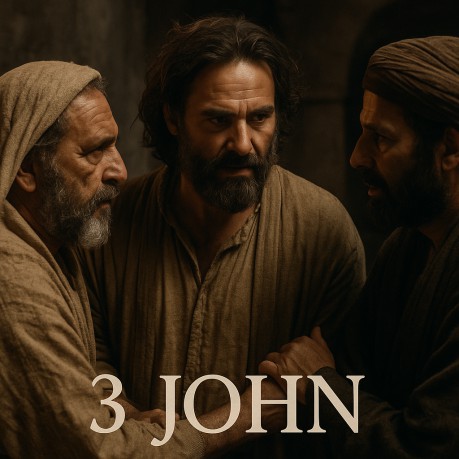
3 John 3 John 1 † John writes again as "the elder,"
showing his personal pastoral authority. 3 John 2 † John prays for both physical health and
spiritual health, showing holistic care. 3 John 3-4 † John's greatest joy is faithfulness to the
truth. 3 John 5-6 † Gaius showed hospitality to traveling
ministers of the gospel. 3 John 7-8 † Missionaries depended on the hospitality of
believers, not outsiders. 3 John 9-10 † Diotrephes is condemned for arrogance,
slander, and abuse of authority. 3 John 11 † John exhorts believers to follow godly
examples, not corrupt leaders. 3 John 12 † Demetrius is commended as a faithful servant,
a contrast to Diotrephes. 3 John 13-14 † John again prefers personal fellowship over
writing. How it applies to us today † This is the fulfilled perspective we proclaim at
Fulfilled Prophecies † Source Index
By Dan Maines
The elder to the beloved Gaius,
whom I love in truth.
†
Gaius is praised for walking in truth, a theme central to John's
letters.
† Clement of Rome (1 Clement 47)
also wrote personally to individuals within churches, confirming this
practice.
Beloved, I pray that in all
respects you may prosper and be in good health, just as your soul
prospers.
†
The prosperity here is spiritual first, then material.
For I was overjoyed when brothers
came and testified to your truth, that is, how you are walking in
truth. I have no greater joy than this, to hear of my children
walking in the truth.
† Walking in truth shows genuine
discipleship.
† Ignatius (Letter to Polycarp
1) expressed the same joy in hearing of believers walking faithfully.
Beloved, you are acting
faithfully in whatever you accomplish for the brothers and sisters,
and especially when they are strangers; and they have testified to
your love before the church. You will do well to send them on their
way in a manner worthy of God.
† To support gospel
workers is to participate in their mission.
†
The Didache (ch. 12) instructed churches on how to treat traveling
teachers, paralleling John's commendation.
For they went out for the sake of
the Name, accepting nothing from the Gentiles. Therefore we ought to
support such people, so that we may prove to be fellow workers with
the truth.
† Supporting them
made the church partners in the truth.
I wrote something to the church;
but Diotrephes, who loves to be first among them, does not accept
what we say. For this reason, if I come, I will call attention to his
deeds which he does, unjustly accusing us with wicked words; and not
satisfied with this, he himself does not receive the brothers either,
and he forbids those who want to do so and puts them out of the
church.
† He
rejected apostolic teaching and opposed true brothers.
†
Eusebius (Ecclesiastical History 3.31) recorded how false leaders
arose seeking power, paralleling John's rebuke.
Beloved, do not imitate what is
evil, but what is good. The one who does what is good is of God; the
one who does what is evil has not seen God.
† Good works
prove relationship with God.
Demetrius has received a good
testimony from everyone, and from the truth itself; and we add our
testimony, and you know that our testimony is true.
† Godly leaders are
recognized by their testimony in truth.
†
Polycarp (Letter to the Philippians 5) praised faithful leaders in
similar language.
I had many things to write to
you, but I do not want to write to you with pen and ink; but I hope
to see you shortly, and we will speak face to face. Peace be to you.
The friends greet you. Greet the friends by name.
† Greeting the friends by name shows
love and unity within the church.
†
3 John highlights the importance of supporting true workers of the
gospel and resisting arrogant false leaders.
†
We are called to imitate what is good, love the brethren, and partner
in truth.
† The fulfilled perspective reminds
us that the kingdom is built through truth, love, and fellowship in
Christ.
† Clement of
Rome, 1 Clement 47 - addressing individuals within churches
†
Ignatius, Letter to Polycarp 1 - joy in hearing of faithful
disciples
† The Didache 12 - instruction on
treatment of traveling teachers
† Eusebius,
Ecclesiastical History 3.31 - false leaders seeking power
†
Polycarp, Letter to the Philippians 5 - commendation of faithful
leaders
Links