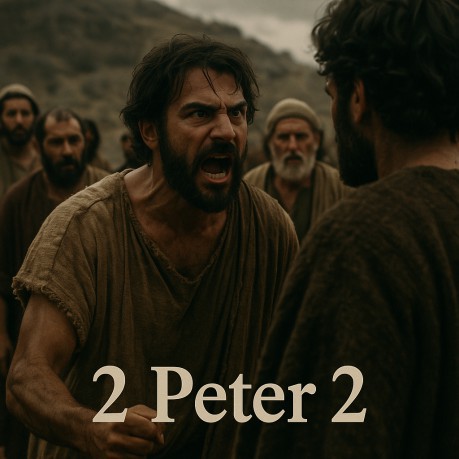
2 Peter 2 2 Peter 2:1 † Just as Israel had false prophets, the church
faced false teachers who denied Christ and spread destructive
heresies. 2 Peter 2:2 † The immorality of false teachers caused
outsiders to blaspheme the way of truth. 2 Peter 2:3 † Greed marks false teachers, who manipulate
with lies. 2 Peter 2:4 † Even angels were not spared when they sinned,
proving God's justice is impartial. 2 Peter 2:5 † God spared Noah and his family while judging
the ungodly with the flood. 2 Peter 2:6 † Sodom and Gomorrah were destroyed as examples
of divine judgment. 2 Peter 2:7-8 † Lot is presented as an example of God's
ability to rescue the righteous from corrupt societies. 2 Peter 2:9 † God rescues the godly but reserves the wicked
for judgment. 2 Peter 2:10 † False teachers were marked by indulgence,
rebellion, and arrogance. 2 Peter 2:11 † Even angels, though greater in power, do not
speak arrogantly against others, unlike false teachers. 2 Peter 2:12-13 † False teachers are compared to irrational
beasts, driven by instinct and destined for destruction. 2 Peter 2:14 † Their lustful eyes and greedy hearts reveal
their curse. 2 Peter 2:15-16 † Balaam is the archetype of greedy prophets,
rebuked even by his own donkey (Numbers 22:28). 2 Peter 2:17 † False teachers promise life but are empty,
like dry springs. 2 Peter 2:18-19 † Their words are arrogant and empty, luring
the weak into corruption. 2 Peter 2:20-21 † Apostasy is worse than ignorance. Turning
back after knowing Christ brings greater judgment. 2 Peter 2:22 † Apostates are like dogs returning to vomit or
pigs to the mire, showing the futility of their condition. How it applies to us today † This is the fulfilled perspective we proclaim at
Fulfilled Prophecies † Source Index
By Dan Maines
But false prophets also appeared
among the people, just as there will also be false teachers among
you, who will secretly introduce destructive heresies, even denying
the Master who bought them, bringing swift destruction upon
themselves.
† Their judgment was swift,
reflecting the urgency of Peter's warning.
†
Josephus (Wars 6.5.2) records how false prophets misled Jerusalem
before its fall, showing the reality of Peter's prophecy.
Many will follow their indecent
behavior, and because of them the way of the truth will be maligned.
†
Tacitus (Annals 15.44) mocked Christians because of rumors and
slander, worsened by the conduct of corrupt teachers.
And in their greed they will
exploit you with false words, their judgment from long ago is not
idle, and their destruction is not asleep.
† Philo (On the Special Laws 2.9)
condemned greedy teachers of the law, showing the same danger Peter
addressed.
† Judgment was already prepared
for them and would not delay.
For if God did not spare angels
when they sinned, but cast them into hell and committed them to pits
of darkness, held for judgment.
† Jude 6
records the same truth, showing apostolic agreement.
†
The Dead Sea Scrolls (1QH 6.12-13) reflect traditions of fallen
angels held in judgment.
And did not spare the ancient
world, but protected Noah, a preacher of righteousness, with seven
others, when He brought a flood upon the world of the ungodly.
† Josephus
(Antiquities 1.3.1) affirms the flood and Noah's role as a righteous
man preserved.
And if He condemned the cities
of Sodom and Gomorrah to destruction by reducing them to ashes,
having made them an example of what is coming for the ungodly.
† Philo (On Abraham 27)
described their sins as arrogance and corruption, aligning with
Peter's lesson.
And if He rescued righteous
Lot, who was oppressed by the perverted conduct of unscrupulous
people (for by what he saw and heard that righteous man, while living
among them, felt his righteous soul tormented day after day by their
lawless deeds).
†
Josephus (Antiquities 1.11.1) recounts Lot's story and the
destruction of Sodom, confirming the historical memory.
Then the Lord knows how to
rescue the godly from a trial, and to keep the unrighteous under
punishment for the day of judgment.
† This principle assures
believers that God's justice is sure.
And especially those who
indulge the flesh in its corrupt passion, and despise authority.
Reckless, self-centered, they speak abusively of angelic majesties
without trembling.
† Jude 8 records
the same traits, confirming this was a widespread issue.
Whereas angels who are greater
in might and power do not bring a demeaning judgment against them
before the Lord.
†
The humility of angels contrasts with the arrogance of men.
But these, like unreasoning
animals, born as creatures of instinct to be captured and killed,
using abusive speech where they have no knowledge, will in the
destruction of those creatures also be destroyed, suffering wrong as
the wages of doing wrong. They count it a pleasure to revel in the
daytime. They are stains and blemishes, reveling in their deceptions
as they feast with you.
†
Their corruption polluted the fellowship of believers, turning even
communal meals into occasions of deceit.
†
Tacitus (Histories 5.9) described feasts of the corrupt that ended in
chaos, much like Peter's picture.
Having eyes full of adultery
that never cease from sin, enticing unstable souls, having hearts
trained in greed, accursed children.
† Such teachers prey on the
weak, exploiting unstable believers.
Abandoning the right way,
they have gone astray, having followed the way of Balaam, the son of
Beor, who loved the reward of unrighteousness, but he received a
rebuke for his own offense, for a mute donkey, speaking with a human
voice, restrained the insanity of the prophet.
†
Peter compares false teachers to Balaam, driven by love of gain
rather than truth.
† Philo (On Rewards 43)
condemned Balaam's greed, echoing Peter's view.
These are springs without
water, and mists driven by a storm, for whom the black darkness has
been reserved.
† Their end is eternal
darkness, judgment without escape.
For, while speaking out
arrogant words of no value they entice by fleshly desires, by
indecent behavior, those who barely escape from the ones who live in
error, promising them freedom while they themselves are slaves of
corruption, for by what anyone is overcome, by this he is enslaved.
† They promise
freedom but are themselves enslaved to sin.
†
Josephus (Wars 4.6.1) described leaders in Jerusalem who promised
liberty but enslaved their followers to destruction.
For if, after they have
escaped the defilements of the world by the knowledge of the Lord and
Savior Jesus Christ, they are again entangled in them and are
overcome, the last state has become worse for them than the first.
For it would be better for them not to have known the way of
righteousness, than having known it, to turn away from the holy
commandment handed on to them.
†
Jesus taught in Luke 12:47-48 that greater knowledge
brings greater responsibility.
It has happened to them
according to the true proverb: "A dog returns to its own vomit,"
and, "A sow, after washing, returns to wallowing in the mire."
†
Proverbs 26:11 provides this vivid picture of folly.
†
Clement of Rome (1 Clement 53) warned against returning to sin after
cleansing, echoing Peter's proverb.
†
2 Peter 2 warns of false teachers driven by greed, lust, and
arrogance, who exploit and corrupt.
† God's
past judgments, angels, the flood, Sodom, and Balaam, prove He will
judge the ungodly while rescuing the righteous.
†
The church today must remain alert, discerning true teaching from
false, and living in holiness.
† Josephus,
Antiquities 1.3.1 - Noah and the flood
†
Josephus, Antiquities 1.11.1 - Lot and Sodom
†
Josephus, Wars 4.6.1 - leaders promising liberty but bringing ruin
†
Josephus, Wars 6.5.2 - false prophets in Jerusalem
†
Philo, On Abraham 27 - sins of Sodom
† Philo,
On Rewards 43 - Balaam's greed condemned
†
Philo, On the Special Laws 2.9 - greedy teachers
†
Tacitus, Annals 15.44 - slander of Christians
†
Tacitus, Histories 5.9 - corrupt feasts
†
Dead Sea Scrolls, 1QH 6.12-13 - fallen angels under judgment
†
Clement of Rome, 1 Clement 53 - warning against returning to sin
†
Numbers 22:28 - donkey rebukes Balaam
†
Proverbs 26:11 - dog returning to vomit
†
Luke 12:47-48 - greater judgment with greater knowledge
†
Jude 6, 8 - fallen angels and arrogant men
Links