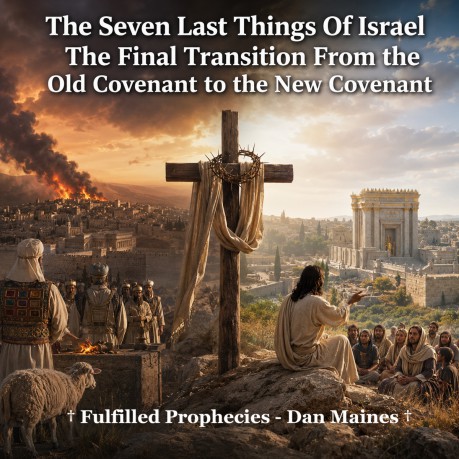
The Seven Last Things Of
Israel Introduction † The New Testament records a series of "last
things" that belonged to Old Covenant Israel. These weren't the
last things of the world, they were the last things of a covenant
that was ready to disappear. God brought the Old Covenant to its
appointed end exactly as He promised. Every priest, sacrifice, feast,
and temple pointed to Christ, and once their purpose was fulfilled,
they passed away. The generation that rejected its Messiah witnessed
the closing of the age and the full establishment of the New
Covenant. Last Passover Luke 22:15-16 And He said to them, "I have eagerly desired to eat this
Passover with you before I suffer; for I say to you, I shall not eat
it again until it is fulfilled in the kingdom of God." † Jesus knowingly celebrated Israel's final
meaningful Passover before His sacrifice. (Luke 22:15-16) † The Passover found its complete fulfillment
in Christ, the true Passover Lamb. (1 Corinthians 5:7) † After the cross, there was no longer a need
for another redemptive Passover because the reality had come. (John
1:29) John 19:30 Therefore when Jesus had received the sour wine, He said, "It
is finished!" And He bowed His head and gave up His spirit. † The final Passover reached its fulfillment at
the cross when Jesus completed the work the Passover had always
pointed toward. (John 19:30) † From that moment forward, redemption was
accomplished through Christ, not through another Passover lamb. (1
Corinthians 5:7) † The Old Covenant shadow gave way to the New
Covenant reality. (Colossians 2:16-17) Last High Priest Hebrews 7:23-24 The former priests, on the one hand, existed in greater numbers
because they were prevented by death from continuing; Jesus, on the
other hand, because He continues forever, holds His priesthood
permanently. † Israel's earthly high priesthood came to its
conclusion because Jesus became the eternal High Priest. (Hebrews
4:14-16) † The Levitical priesthood was temporary,
Christ's priesthood is permanent. (Hebrews 7:11-12) † There will never be another God-appointed
high priest because Jesus forever fulfills that office. (Hebrews
7:23-28) Hebrews 4:14-16 Therefore, since we have a great high priest who has passed
through the heavens, Jesus the Son of God, let's hold firmly to our
confession. For we do not have a high priest who cannot sympathize
with our weaknesses, but One who has been tempted in all things just
as we are, yet without sin. Therefore let's approach the throne of
grace with confidence, so that we may receive mercy and find grace
for help at the time of our need. † Believers now approach God directly through
Christ instead of an earthly high priest. (Hebrews 4:14-16) † Jesus permanently fulfills what every high
priest only pictured. (Hebrews 7:24-28) † There is no biblical expectation of another
Levitical priesthood. (Hebrews 10:19-22) Last Sacrifices Hebrews 10:11-14 Every priest stands daily ministering and offering time after time
the same sacrifices, which can never take away sins; but He, having
offered one sacrifice for sins for all time, sat down at the right
hand of God, waiting from that time onward until His enemies are made
a footstool for His feet. For by one offering He has perfected for
all time those who are sanctified. † Animal sacrifices could never permanently
remove sin. (Hebrews 10:1-4) † Christ's one sacrifice completed forever what
thousands of animal sacrifices never could accomplish. (Hebrews
10:11-14) † The destruction of the temple in AD 70
permanently ended the sacrificial system that had already become
obsolete before God. (Hebrews 8:13) John 1:29 The next day he saw Jesus coming to him, and said, "Behold,
the Lamb of God who takes away the sin of the world! † John identified Jesus as the final
sacrificial Lamb before His ministry even began. (John 1:29) † Every animal sacrifice pointed forward to
Christ's one perfect offering. (Hebrews 9:11-14) † Once the true Lamb was sacrificed, the
sacrificial system had fulfilled its purpose. (Hebrews 10:12) Last Temple Matthew 24:1-2 Jesus left the temple area and was going on His way when His
disciples came up to point out the temple buildings to Him. But He
responded and said to them, "Do you not see all these things?
Truly I say to you, not one stone here will be left upon another,
which will not be torn down." † Jesus announced the coming destruction of
Israel's last temple before His generation passed away. (Matthew
24:34) † God no longer dwells in temples made with
hands because His people are now His dwelling place. (Acts 7:48-50) † The temple's destruction publicly
demonstrated that the Old Covenant system had reached its end. (Luke
21:20-22) 1 Corinthians 3:16-17 Do you not know that you are a temple of God and that the Spirit
of God dwells in you? If anyone destroys the temple of God, God will
destroy that person; for the temple of God is holy, and that is what
you are. † God transferred His dwelling place from a
building into His people. (1 Corinthians 3:16-17) † The New Covenant temple isn't located in
Jerusalem but in the body of Christ. (Ephesians 2:19-22) † The destruction of the physical temple
confirmed what God had already established spiritually. (Acts 17:24) Last Feast Colossians 2:16-17 Therefore, no one is to act as your judge in regard to food and
drink, or in respect to a festival or a new moon, or a Sabbath day -
things which are only a shadow of what is to come; but the substance
belongs to Christ. † Israel's feast days were prophetic shadows
pointing forward to Christ. (Colossians 2:16-17) † Once Christ fulfilled what the feasts
anticipated, believers were no longer obligated to observe them as
covenant requirements. (Galatians 4:9-11) † The reality has arrived, making the shadow
unnecessary. (Hebrews 10:1) 1 Corinthians 5:7-8 Clean out the old leaven so that you may be a new lump, just as
you are in fact unleavened. For Christ our Passover also has been
sacrificed. Therefore let's celebrate the feast, not with old leaven,
nor with the leaven of malice and wickedness, but with the unleavened
bread of sincerity and truth. † Paul showed that believers now keep the feast
spiritually in Christ instead of through Old Covenant rituals. (1
Corinthians 5:7-8) † The focus shifted from ceremonial observance
to the reality found in Jesus. (Colossians 2:16-17) † Christ fulfills every feast that pointed to
Him. (Luke 24:44) Last Generation Matthew 24:34 Truly I say to you, this generation will not pass away until all
these things take place. † Jesus clearly identified the generation that
would witness the fulfillment of His prophecy. (Matthew 24:34) † The destruction of Jerusalem in AD 70
occurred within that generation exactly as Jesus declared. (Luke
21:20-24) † God's faithfulness is demonstrated because
every one of Christ's time statements came to pass. (Matthew
16:27-28) Luke 21:22 because these are days of punishment, so that all things which
have been written will be fulfilled. † Jesus declared that all covenant judgments
written concerning Jerusalem would be fulfilled during those days.
(Luke 21:22) † This directly connects the last generation
with the fulfillment of Old Covenant prophecy. (Matthew 24:34) † AD 70 completed the covenant judgment Jesus
predicted. (Luke 21:20-24) Last Covenant Hebrews 8:13 When He said, "A new covenant," He has made the first
obsolete. But whatever is becoming obsolete and growing old is about
to disappear. † The Old Covenant was already growing old
during the first century. (Hebrews 8:13) † The New Covenant replaced the Old because
Christ fulfilled everything the Law anticipated. (Jeremiah 31:31-34) † AD 70 marked the visible end of the Old
Covenant order, leaving the New Covenant standing alone. (Hebrews
12:26-28) 2 Corinthians 3:11 For if that which fades away was with glory, much more that which
remains is in glory. † Paul contrasted the covenant that was passing
away with the covenant that remains forever. (2 Corinthians 3:11) † The New Covenant isn't temporary, it is God's
abiding covenant through Christ. (Hebrews 13:20) † Nothing in Scripture teaches a return to the
Old Covenant system after its fulfillment. (Hebrews 8:13) Historical References † Josephus records the destruction of Jerusalem
and the temple in AD 70, describing the end of the sacrificial system
forever. (The Wars of the Jews, Book 6, Chapters 4-8) † Tacitus confirms the Roman destruction of
Jerusalem under Titus. (Histories, Book 5) † Eusebius records the fulfillment of Christ's
warnings concerning Jerusalem's destruction. (Ecclesiastical History,
Book 3, Chapter 5) How It Applies To Us Today † We don't live under an aging covenant but
under the everlasting New Covenant established by Christ. † We don't need earthly priests because Jesus
is our eternal High Priest. † We don't offer sacrifices because Christ's
one sacrifice is forever sufficient. † We are God's temple through the Holy Spirit. † We don't wait for another covenant because
God's final covenant is already here. Q & A Appendix Q: Why are these called the seven last things of
Israel? A: Because they represent the final Old Covenant
institutions that reached their fulfillment and end during the first
century, culminating in the destruction of Jerusalem in AD 70.
(Hebrews 8:13; Matthew 24:34) Q: Does "last" mean the end of the
physical world? A: No. These were the last things belonging to
Old Covenant Israel, not the end of human history. Jesus was speaking
about the end of that covenant age. (Matthew 24:3, 34; Luke 21:20-22) Q: Why is this important for believers today? A: It gives us confidence that Christ fulfilled
every promise concerning the Old Covenant and that we now live fully
under the New Covenant without waiting for those Old Covenant
institutions to return. (Hebrews 10:11-18; Hebrews 12:22-28) Q: Why didn't God preserve the temple after
Christ's resurrection? A: Because its purpose had been fulfilled. Once
Christ became the final sacrifice and eternal High Priest, the temple
was no longer God's dwelling place. Its destruction demonstrated that
the Old Covenant had ended. (Matthew 24:1-2; Hebrews 8:13) Q: Could the Old Covenant ever return? A: No. Hebrews teaches that the first covenant
became obsolete, and Christ established the everlasting New Covenant.
There is no biblical prophecy that restores the Old Covenant system.
(Hebrews 8:13; Hebrews † This is the fulfilled perspective we proclaim at
Fulfilled Prophecies † © Fulfilled Prophecies - Dan Maines. Source Index † Luke 22:15-16, John 19:30, Hebrews 7:23-24,
Hebrews 4:14-16, Hebrews 10:11-14, John 1:29, Matthew 24:1-2, 1
Corinthians 3:16-17, Colossians 2:16-17, 1 Corinthians 5:7-8, Matthew
24:34, Luke 21:22, Hebrews 8:13, 2 Corinthians 3:11 † Josephus, The Wars of the Jews, Book 6,
Chapters 4-8; Tacitus, Histories, Book 5; Eusebius, Ecclesiastical
History, Book 3, Chapter 5
By Dan Maines
The Final Transition From the Old
Covenant to the New Covenant
Links