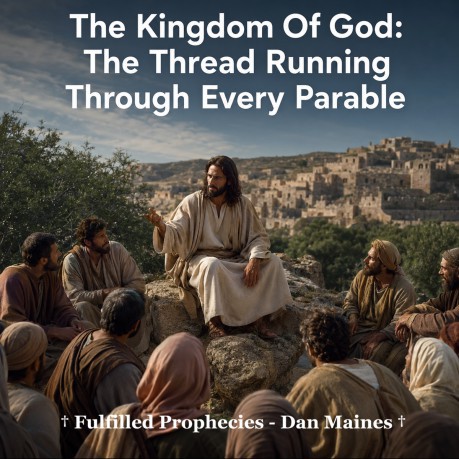
The Kingdom Of God: The
Thread Running Through Every Parable Introduction † When Jesus taught in parables, He wasn't
simply telling moral stories or giving lessons on personal
improvement. He was revealing the mystery of the Kingdom of God.
Every parable, in one way or another, points to the arrival, growth,
rejection, value, judgment, and ultimate establishment of God's
Kingdom. Matthew 13:11-13 And Jesus answered them, To you it has been granted to know the
mysteries of the kingdom of heaven, but to them it has not been
granted. For whoever has, to him more shall be given, and he will
have an abundance; but whoever does not have, even what he has shall
be taken away from him. Therefore I speak to them in parables;
because while seeing they do not see, and while hearing they do not
hear, nor do they understand. † Jesus explained that His parables revealed
Kingdom truths to believers while concealing them from hardened
Israel. Mark 4:26-29 And He was saying, "The kingdom of God is like a man who
casts seed upon the soil; and he goes to bed at night and gets up
daily, and the seed sprouts and grows-how, he himself does not know.
The soil produces crops by itself; first the stalk, then the head,
then the mature grain in the head. Now when the crop permits, he
immediately puts in the sickle, because the harvest has come." † The Kingdom didn't appear all at once. It
began during Christ's earthly ministry and continued growing
throughout the apostolic age. Matthew 13:31-32 He presented another parable to them, saying, "The kingdom of
heaven is like a mustard seed, which a person took and sowed in his
field; and this is smaller than all the other seeds, but when it is
fully grown, it is larger than the garden plants and becomes a tree,
so that the birds of the sky come and nest in its branches." † The Kingdom began with what appeared to be a
very small movement centered on Christ and His disciples. Luke 13:20-21 And again He said, "To what shall I compare the kingdom of
God? It is like leaven, which a woman took and hid in three sata of
flour until it was all leavened." † The Kingdom works from the inside out. Daniel 2:44 And in the days of those kings the God of heaven will set up a
kingdom which will never be destroyed, and that kingdom will not be
left for another people; it will crush and put an end to all these
kingdoms, but it will itself endure forever. † Jesus' Kingdom parables fulfilled Daniel's
prophecy of an everlasting Kingdom. Matthew 13:44 The kingdom of heaven is like a treasure hidden in the field,
which a man found and hid again; and from joy over it he goes and
sells everything that he has, and buys that field. † The Kingdom was worth giving up everything to
obtain. Luke 17:20-21 Now He was questioned by the Pharisees as to when the kingdom of
God was coming, and He answered them and said, "The kingdom of
God is not coming with signs that can be observed; nor will they say,
'Look, here it is!' or, 'There it is!' For behold, the kingdom of God
is in your midst." † The Kingdom was never presented as an earthly
political empire. Matthew 22:1-14 Jesus spoke to them again in parables, saying, "The kingdom
of heaven is like a king who held a wedding feast for his son. And he
sent his slaves to call those who had been invited to the wedding
feast, and they were unwilling to come. Again he sent other slaves,
saying, 'Tell those who have been invited, "Behold, I have
prepared my dinner; my oxen and my fattened cattle are all butchered
and everything is ready. Come to the wedding feast!"' But they
paid no attention and went their separate ways, one to his own farm,
another to his business, and the rest seized his slaves and treated
them abusively, and then killed them. Now the king was angry, and he
sent his armies and destroyed those murderers and set their city on
fire. Then he *said to his slaves, 'The wedding feast is ready, but
those who were invited were not worthy. So go to the main roads, and
invite whomever you find there to the wedding feast.' Those slaves
went out into the streets and gathered together all whom they found,
both bad and good; and the wedding hall was filled with dinner
guests. "But when the king came in to look over the dinner guests, he
saw a man there who was not dressed in wedding clothes, and he said
to him, 'Friend, how did you get in here without wedding clothes?'
And the man was speechless. Then the king said to the servants, 'Tie
his hands and feet, and throw him into the outer darkness; there will
be weeping and gnashing of teeth in that place.' For many are called,
but few are chosen." † The wedding feast pictured God's invitation
to Israel first, then to all who would believe. Luke 16:16 The Law and the Prophets were proclaimed until John came; since
that time the gospel of the kingdom of God has been preached, and
everyone is forcing his way into it. † Jesus marked a transition from the Old
Covenant administration to the proclamation of the Kingdom. Acts 28:30-31 Now Paul stayed two full years in his own rented lodging and
welcomed all who came to him, preaching the kingdom of God and
teaching things about the Lord Jesus Christ with all openness,
unhindered. † Paul's final recorded ministry was still
centered on the Kingdom of God. Historical References † Josephus records that Jerusalem was destroyed
in AD 70 after rejecting Christ, bringing the Old Covenant system to
its end. (The Jewish War, Book 6) How It Applies To Us Today † We aren't waiting for the Kingdom to arrive
because Christ established it. Q & A Appendix Q: Were all of Jesus' parables about the Kingdom
in some way? A: Yes. Whether directly or indirectly, every
parable reveals some aspect of God's Kingdom, its arrival, growth,
value, rejection, judgment, or fulfillment through Christ. (Matthew
13:10-17; Mark 4:33-34) Q: Why did Jesus use parables instead of speaking
plainly? A: Jesus revealed Kingdom truth to believing
disciples while concealing it from those who had hardened their
hearts. This fulfilled Isaiah's prophecy. (Matthew 13:11-15; Isaiah
6:9-10) Q: Has the Kingdom already been established? A: Yes. Jesus announced it was at hand, the
apostles proclaimed its arrival, and believers received the
unshakable Kingdom before the destruction of Jerusalem. (Mark
1:14-15; Colossians 1:13; Hebrews 12:28) Q: Why did Jesus preach the Kingdom more than any
other subject? A: Because the Kingdom was the fulfillment of
God's covenant promises and the central purpose of Christ's earthly
ministry. Everything He accomplished pointed to the establishment of
God's everlasting reign. (Matthew 4:17, 23; Luke 4:43) Q: Did the apostles continue preaching the
Kingdom after Jesus ascended? A: Yes. From Acts through Paul's final
imprisonment, the apostles continued proclaiming the Kingdom as their
primary message, showing it had not been replaced with another
gospel. (Acts 8:12; Acts 19:8; Acts 20:25; Acts 28:23, 31) † This is the fulfilled perspective we proclaim at
Fulfilled Prophecies † © Fulfilled Prophecies - Dan Maines. Source Index † Matthew 13:11-13; Mark 4:26-29; Matthew
13:31-32; Luke 13:20-21; Daniel 2:44; Matthew 13:44; Matthew 22:1-14;
Luke 16:16; Acts 28:30-31 † Josephus, The Jewish War, Book 6; Eusebius,
Ecclesiastical History, Book 3, Chapter 5; Irenaeus, Against
Heresies, Book 4
By Dan Maines
† Many sermons today focus on
current events or personal success, but Jesus centered His teaching
on the Kingdom. If we understand the Kingdom, we understand the heart
of Christ's ministry.
† The first century
audience wasn't waiting for the end of the physical world. They were
living through the end of the Old Covenant age and the establishment
of the everlasting Kingdom promised by the prophets.
† The mysteries weren't secrets about
events thousands of years away, they were God's unfolding plan to
replace the Old Covenant with the New Covenant Kingdom.
†
This fulfilled Isaiah's prophecy that many would hear but refuse to
understand. (Isaiah 6:9-10; Matthew 13:14-15)
† The harvest
pointed toward the close of the Old Covenant age when God gathered
His faithful people and judged unbelieving Israel. (Matthew 13:39-43;
Matthew 24:31)
† Every stage unfolded exactly
as God planned until the Kingdom stood complete.
†
Within one generation it spread throughout the Roman world just as
Jesus promised. (Colossians 1:6, 23)
† What
looked insignificant became the everlasting Kingdom foretold by
Daniel. (Daniel 2:44)
†
Christ's reign spread quietly but continually until the New Covenant
replaced the fading Old Covenant order.
†
Hebrews says the first covenant was becoming obsolete and ready to
disappear, exactly what happened before AD 70. (Hebrews 8:13)
† The
Kingdom wasn't postponed into the distant future, it was established
during the days of the Roman Empire exactly as Daniel foretold.
†
Every Kingdom parable points back to this Old Testament promise.
(Daniel 7:13-14; Mark 1:14-15)
† The first century believers endured
persecution because they understood they were receiving something far
greater than the earthly temple system.
†
Hebrews reminds believers they were receiving a Kingdom that could
never be shaken. (Hebrews 12:28)
† Christ taught that God's
reign was already present in their midst because the King Himself was
standing among them.
† This explains why the
Kingdom could grow quietly through the Gospel instead of by military
conquest. (John 18:36; Colossians 1:13)
†
Those who rejected the King's invitation faced judgment, while those
who accepted entered the New Covenant Kingdom.
†
The destruction that followed the rejection of the King fits the
judgment that came upon Jerusalem in that generation. (Matthew 22:7;
Matthew 24:34)
†
The Kingdom became the central message of Christ and His apostles.
†
This fits perfectly with the New Covenant replacing the Old. (Hebrews
8:13)
† The book of
Acts opens with the Kingdom and closes with the Kingdom.
†
This demonstrates that the Kingdom remained the primary message of
the apostolic church. (Acts 1:3)
† Eusebius
records that the believers remembered Christ's warnings and fled
Jerusalem before its destruction. (Ecclesiastical History, Book 3,
Chapter 5)
† Irenaeus affirmed that Christ
fulfilled the Law and established the New Covenant promised by the
prophets. (Against Heresies, Book 4)
† We live as
citizens of that everlasting Kingdom every day.
†
Every parable reminds us that Christ reigns now.
†
Our hope isn't in earthly kingdoms but in the Kingdom that cannot be
shaken.
† Instead of chasing headlines, we
should study the Kingdom because that's what Jesus spent so much of
His ministry teaching.
† If Jesus spent so
much of His ministry teaching the Kingdom, then our teaching should
do the same.
† The Church should be known for
proclaiming Christ's present reign instead of endlessly speculating
about future prophecy.
† Understanding the
Kingdom helps us read every parable within its proper covenant
context.
Links