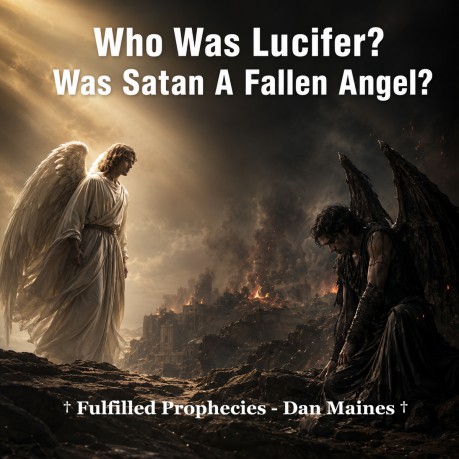
Who
Was Lucifer? Was Satan A Fallen Angel? Introduction The
Proverb Against The King Of Babylon
Isaiah
14:12-16 Falling
From Heaven As Judgment Language Ezekiel
32:7-8 Amos
8:9 Matthew
24:29 The
King Of Tyre And The Garden Imagery God
Created The Destroyer What
Scripture Clearly Says About Satan Luke
10:18 Ephesians
6:11-12 Revelation
20:2 Historical
References How
It Applies To Us Today † This
is the fulfilled perspective we proclaim at Fulfilled Prophecies † © Fulfilled
Prophecies - Dan Maines. Source
Index
By Dan Maines
†
Much
of what people believe about Lucifer comes from tradition rather than
from direct statements of Scripture. (Isaiah 14:4, 12-16)
†
The
Bible clearly teaches that Satan exists, opposes God, deceives
nations, and acts as an adversary. However, the Bible never directly
states that Satan was originally a holy angel named Lucifer who
rebelled in heaven. (Revelation 12:9; Ephesians 6:11-12)
†
Many
of the passages commonly used to teach that doctrine are actually
addressed to earthly kings and use prophetic judgment language that
was familiar throughout the Old Testament. (Isaiah 14:4; Ezekiel
28:12; Isaiah 13:10)
Isaiah 14:4
that
you will take up this taunt against the king of Babylon,
and say,
How the oppressor has ceased,
And
how the onslaught has ceased!
†
Isaiah
identifies the subject before the prophecy begins. The proverb is
directed against the king of Babylon. (Isaiah 14:4)
†
The
context never says the prophecy is about Satan. It specifically names
an earthly ruler. (Isaiah 14:4)
†
Sound
interpretation begins by allowing Scripture to identify its own
subject. (Isaiah 14:4)
How
you have fallen from heaven,
You star
of the morning, son of the dawn!
You
have been cut down to the earth,
You
who defeated the nations!
But
you said in your heart,
'I
will ascend to heaven;
I
will raise my throne above the stars of God,
And
I will sit on the mount of assembly
In
the recesses of the north.
I
will ascend above the heights of the clouds;
I
will make myself like the Most High.'
Nevertheless
you will be brought down to Sheol,
To
the recesses of the pit.
Those
who see you will stare at you,
They
will closely examine you, saying,
'Is
this the man who made the earth tremble,
Who
shook kingdoms,
†
The
Hebrew word translated Lucifer in older translations means shining
one or morning star. It is not presented as a personal name. (Isaiah
14:12)
† Modern
translations usually render the word as morning star or shining one
because that is its actual meaning. (Isaiah 14:12)
†
The
passage concludes by asking, Is this the man that made the earth
tremble? identifying the subject as a man. (Isaiah 14:16)
†
The
context remains focused on the king of Babylon throughout the
chapter. (Isaiah 14:4, 16)
Isaiah 13:10
For
the stars of heaven and their constellations
Will
not flash their light;
The sun
will be dark when it rises
And
the moon will not shed its light.
†
This
prophecy concerns the judgment of Babylon. (Isaiah 13:1, 10)
†
The
language describes heavenly bodies being darkened, yet it refers to
national judgment rather than the destruction of the physical
universe. (Isaiah 13:10)
†
Prophets
frequently used heavenly imagery to describe rulers, kingdoms, and
covenantal upheaval. (Isaiah 13:10; Genesis 37:9-10)
And
when I extinguish you,
I will cover the heavens and darken their
stars;
I will cover the sun with a cloud
And the moon will
not give its light.
All the shining lights in the heavens
I
will darken over you
And will set darkness on your
land,
Declares the Lord God.
†
Ezekiel
uses the same language concerning Egypt. (Ezekiel 32:2, 7-8)
†
No
one concludes that the physical stars literally went dark when Egypt
was judged. (Ezekiel 32:7-8)
†
The
imagery represents the fall of national power and glory. (Ezekiel
32:7-8)
And
it will come about on that day, declares the Lord God,
That I
will make the sun go down at noon,
And make the earth dark in
broad daylight.
† Amos
also used cosmic language to describe God's judgment upon Israel.
(Amos 8:9)
† This
demonstrates that falling from heaven and heavenly disturbances were
common prophetic expressions. (Isaiah 13:10; Ezekiel 32:7-8; Amos
8:9)
But
immediately after the tribulation of those days the sun will be
darkened, and the moon will not give its light, and
the
stars will fall from
the sky, and the powers of the heavens will be shaken.
†
Jesus
used the same prophetic language found in Isaiah, Ezekiel, and Amos.
(Matthew 24:29)
† This
confirms that heavenly disturbances were established covenantal
judgment language. (Isaiah 13:10; Ezekiel 32:7-8; Amos 8:9; Matthew
24:29)
† Scripture
repeatedly uses sun, moon, and stars imagery to describe the downfall
of rulers, nations, and covenant systems. (Genesis 37:9-10; Matthew
24:29)
Ezekiel 28:12
Son
of man, take up a song of mourning over the king of Tyre and say to
him, This is what the Lord God
says:
You
had the seal of perfection,
Full of wisdom and perfect in
beauty
† Ezekiel
clearly identifies the subject as the king of Tyre. (Ezekiel 28:12)
†
The
chapter addresses a human ruler who exalted himself in pride.
(Ezekiel 28:2, 5)
† While
symbolic imagery is used, the text itself never identifies the king
as Satan. (Ezekiel 28:12)
†
Just
as Isaiah used poetic language about Babylon, Ezekiel used symbolic
language concerning Tyre. (Isaiah 14:4; Ezekiel 28:12)
Isaiah 54:16
Behold,
I Myself have created the smith who blows on the fire of coals
And
produces a weapon for its work;
And I have created the destroyer
to inflict ruin.
† God
declares His sovereignty over all powers, including destructive
forces. (Isaiah 54:16)
†
Nothing
operates outside of God's authority and purpose. (Isaiah 45:7; Isaiah
54:16)
† Even
judgment ultimately serves God's righteous purposes. (Isaiah 54:16)
Revelation 12:9
And
the great dragon was thrown down, the serpent of old who is called
the devil and Satan, who deceives the whole world; he was thrown down
to the earth, and his angels were thrown down with him.
†
Scripture
identifies Satan as the dragon, the serpent, and the devil.
(Revelation 12:9)
† Satan
is presented as a real adversary and deceiver. (Revelation 12:9)
†
The
Bible is clear about Satan's opposition to God even if it does not
explain every detail about his origin. (Revelation 12:9)
And
He said to them, I watched Satan fall from heaven like lightning.
†
Jesus
spoke these words as the seventy returned rejoicing that demons were
subject unto them. (Luke 10:17-18)
†
The
context connects Satan's fall to the success of Christ's ministry and
the defeat of Satan's authority. (Luke 10:17-19)
†
The
passage does not state that Jesus was describing a prehistoric fall
before creation. (Luke 10:17-20)
†
The
disciples had just returned reporting victory over demonic powers,
and Jesus responded by saying He saw Satan fall like lightning from
heaven. (Luke 10:17-18)
† The
context points to the collapse of Satan's authority through the
advance of Christ's kingdom rather than a rebellion before creation.
(Luke 10:17-19)
† Nothing
in the passage identifies Satan as Lucifer or describes an original
angelic fall. (Luke 10:18-20)
Put
on the full armor of God, so that you will be able to stand firm
against the schemes of the devil. For our struggle is not against
flesh and blood, but against the rulers, against the powers, against
the world forces of this darkness, against the spiritual forces of
wickedness in the heavenly places.
†
Satan
and his forces are described as spiritual enemies. (Ephesians
6:11-12)
† The
passage identifies spiritual opposition but does not say Satan was
once a holy angel named Lucifer. (Ephesians 6:11-12)
†
We
should believe what Scripture clearly says and avoid building
doctrine on assumptions. (Deuteronomy 29:29; Ephesians 6:11-12)
And
he took hold of the dragon, the serpent of old, who is the devil and
Satan, and bound him for a thousand years;
†
Revelation
again identifies the dragon, serpent, devil, and Satan as the same
being. (Revelation 20:2)
† This
reinforces the biblical titles used for Satan rather than introducing
the name Lucifer. (Revelation 12:9; Revelation 20:2)
†
Scripture
is consistent in how it identifies Satan throughout Revelation.
(Revelation 12:9; Revelation 20:2)
† Jerome
translated Isaiah 14:12 using the Latin word lucifer, meaning light
bearer or morning star. (Isaiah 14:12)
†
Justin
Martyr discussed Satan as a spiritual adversary but did not establish
a universal interpretation of Isaiah 14 as Satan's origin. (Isaiah
14:4, 12-16)
† Tertullian
and Origen helped popularize connections between Isaiah 14 and Satan,
although the passage itself identifies the king of Babylon as its
subject. (Isaiah 14:4, 12-16)
†
Many
modern Hebrew scholars recognize that the immediate context concerns
the king of Babylon rather than a pre-creation fall of Satan. (Isaiah
14:4, 16)
†
We
should always allow Scripture to define its own subjects and context.
(Isaiah 14:4)
† Popular
traditions should be tested against the actual words of Scripture.
(Acts 17:11)
† Satan
is real and spiritual opposition is real, but we should not claim
certainty where Scripture remains silent. (Ephesians 6:11-12)
†
Our
confidence must rest in what God has revealed rather than in later
traditions. (Deuteronomy 29:29)
† Isaiah
14:4, Isaiah 14:12-16, Isaiah 13:10, Ezekiel 32:7-8, Amos 8:9,
Matthew 24:29, Ezekiel 28:12, Isaiah 54:16, Revelation 12:9, Luke
10:18, Ephesians 6:11-12, Revelation 20:2
†
Justin
Martyr, Tertullian, Origen, Jerome, Modern Hebrew Scholars
Links