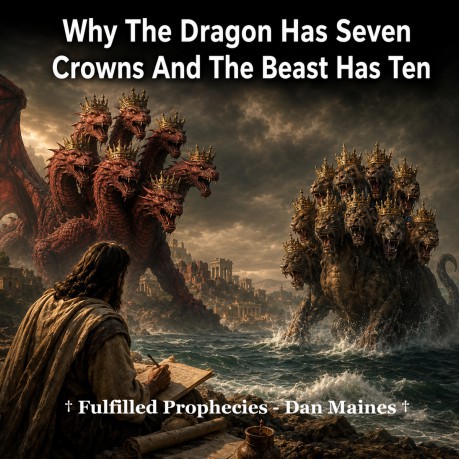
Why
The Dragon Has Seven Crowns And The Beast Has Ten Introduction † One of the
most overlooked details in Revelation is the difference between the
crowns of the dragon and the crowns of the beast. (Revelation 12:3;
Revelation 13:1) † Revelation
12 shows a great red dragon with seven heads, ten horns, and seven
crowns upon his heads. (Revelation 12:3) † Revelation
13 shows a beast rising from the sea with seven heads, ten horns, and
ten crowns upon his horns. (Revelation 13:1) † The numbers
are not accidental. The change in the location and number of the
crowns reveals a transfer of authority and helps identify the dragon
and the beast in their first century setting. (Revelation 13:2;
Revelation 17:9-12) Revelation 12:3 Then another sign appeared in heaven:
and behold, a great red dragon having seven heads and ten horns, and
on his heads were seven crowns.
† The dragon
is identified later in the chapter as Satan. (Revelation 12:9) † The seven
heads are identified as seven mountains and seven kings associated
with Rome. (Revelation 17:9-10) † At this
stage the crowns appear upon the heads because the focus is upon the
succession of ruling authority. (Revelation 17:10) † The dragon
stands behind the earthly kingdom and its rulers. (Revelation 13:2;
Ephesians 6:12) † The ten
horns are present, but they are not yet crowned in the vision.
(Revelation 12:3; Revelation 17:12) † The ten
horns had not yet received royal authority when the dragon is first
introduced. (Revelation 17:12) Revelation 12:9
And the great dragon was thrown down, the serpent of old who is
called the devil and Satan, who deceives the whole world; he was
thrown down to the earth, and his angels were thrown down with him. † John leaves
no doubt concerning the dragon's identity. (Revelation 12:9) † The dragon
is not Rome itself but the spiritual power working through Rome.
(Revelation 13:2) † Satan used
earthly governments to oppose God's covenant people. (Revelation
12:13; Revelation 13:7) Revelation 13:1 And the dragon stood on the sand of the
seashore. Then I saw a beast coming up out of the
sea, having ten horns and seven heads, and on his horns were ten
crowns, and on his heads were blasphemous names.
† The beast
receives its authority from the dragon. (Revelation 13:2) † The crowns
have moved from the heads to the horns. (Revelation 12:3; Revelation
13:1) † The vision
now emphasizes the exercise of power rather than the succession of
rulers. (Revelation 17:12-13) † The beast
represents the visible political power through which Satan operated.
(Revelation 13:2; Daniel 7:7) † The crowns
appear on the horns because the kings are now acting with the beast.
(Revelation 13:1; Revelation 17:12-13) Revelation 13:2
And the beast that I saw was like a leopard, and his feet were like
those of a bear, and his mouth like the mouth of a lion. And the
dragon gave him his power and his throne, and great authority. † Satan
delegated authority to the beastly Roman power. (Revelation 13:2) † The beast
combines characteristics of the kingdoms seen by Daniel. (Daniel
7:3-7) † Rome became
the final persecuting kingdom described in Daniel's vision. (Daniel
7:23-25) † The dragon
possessed the authority while the beast carried out the work on
earth. (Revelation 13:2; Revelation 17:13) Revelation 17:9-10
Here is the mind which has wisdom. The seven heads are seven
mountains upon which the woman sits, and they are seven kings; five
have fallen, one is, the other has not yet come; and when he comes,
he must remain a little while. † Revelation
itself explains the meaning of the seven heads. (Revelation 17:9-10) † The heads
represent kings associated with Rome. (Revelation 17:9-10) † Five had
fallen, one was reigning, and one was yet to come when John wrote.
(Revelation 17:10) † This places
the prophecy within the first century rather than thousands of years
later. (Revelation 1:1-3; Revelation 22:10) Revelation 17:12
The ten horns which you saw are ten kings who have not yet received a
kingdom, but they receive authority as kings with the beast for one
hour. † The ten
horns represent kings who received authority with the beast.
(Revelation 17:12) † Because the
horns represent ruling authority, the crowns appear upon the horns in
Revelation 13. (Revelation 13:1; Revelation 17:12) † The focus
has shifted from the heads to the rulers exercising power under the
beast. (Revelation 17:12-13) † The ten
crowned horns emphasize active governmental authority. (Revelation
17:12-13) Revelation 17:13-14 These have
one purpose, and they give their power and authority to the beast. These will wage war against the Lamb,
and the Lamb will overcome them because He is Lord of lords and King
of kings; and those who are with Him are the called and chosen and
faithful. † The ten
horns are not merely symbolic decorations but rulers who actively
support the beast. (Revelation 17:13) † Their crowns
in Revelation 13 emphasize their participation in the beast's
authority. (Revelation 13:1; Revelation 17:12-13) † Though
united against Christ, they could not overcome the Lamb. (Revelation
17:14) † Christ's
victory demonstrates that all earthly authority remains subject to
His rule. (Revelation 19:16; Matthew 28:18) Why Seven Crowns In
Revelation 12? † The dragon's
seven crowns emphasize authority connected to the seven heads.
(Revelation 12:3) † The focus is
on the succession of kings through whom Satan exercised influence.
(Revelation 17:10) † The dragon
is the source behind the empire's authority. (Revelation 13:2) † The crowns
upon the heads draw attention to the ruling line itself. (Revelation
12:3; Revelation 17:10) Why Ten Crowns In
Revelation 13? † The beast's
ten crowns emphasize authority exercised through the ten horns.
(Revelation 13:1; Revelation 17:12) † The horns
are identified as kings who rule with the beast. (Revelation 17:12) † The crowns
move from the heads to the horns because the vision shifts from
succession to administration. (Revelation 12:3; Revelation 13:1;
Revelation 17:12-13) † Revelation
is presenting the same kingdom from different perspectives.
(Revelation 12:3; Revelation 13:1-2) † The dragon
is the spiritual power behind Rome. (Revelation 12:9; Revelation
13:2) † The beast is
the visible political power of Rome. (Revelation 13:2; Daniel 7:23) † The change
from seven crowned heads to ten crowned horns demonstrates
progression within the vision rather than a different kingdom.
(Revelation 12:3; Revelation 13:1) Historical References † Josephus
recorded Rome's authority over Judea and the rulers involved in the
Jewish War. (Josephus, Wars of the Jews) † Tacitus
documented the succession of Roman emperors during the first century.
(Tacitus, Histories) † Irenaeus
connected Revelation's heads with kings and kingdoms. (Irenaeus,
Against Heresies) † Eusebius
connected Revelation's judgments with first century historical
events. (Eusebius, Ecclesiastical History) How It Applies To Us
Today † Revelation
was written to real believers facing real persecution. (Revelation
1:9; Revelation 2:10) † God remained
sovereign even when Satan appeared to control earthly governments.
(Revelation 17:14; Romans 13:1) † The dragon's
authority was temporary. (Revelation 12:12) † The beast's
authority was temporary. (Revelation 13:5) † Christ's
kingdom outlasted both. (Daniel 2:44; Revelation 11:15) † We live
under the reign of the victorious King today. (Ephesians 1:20-22;
Hebrews 12:28) Q & A Appendix Q:
Are the dragon and the beast the same person? A:
No. The dragon is Satan, while the beast is the Roman power through
which Satan worked. (Revelation 12:9; Revelation 13:2) Q:
Why does the dragon have seven crowns while the beast has ten? A:
The dragon's crowns are on the heads because the focus is on the
succession of kings. The beast's crowns are on the horns because the
focus is on kings exercising authority with the beast. (Revelation
12:3; Revelation 13:1; Revelation 17:10-12) Q:
Why are there only seven crowns on the dragon if he has ten horns? A:
Because the vision is emphasizing the seven heads identified as
kings. The ten horns had not yet received royal authority when the
dragon first appears. Later the crowns appear on the horns when those
kings receive authority with the beast. (Revelation 12:3; Revelation
13:1; Revelation 17:10-12) Q:
Does this support a first century fulfillment? A:
Yes. Revelation says five kings had fallen, one was reigning, and one
was yet to come when John wrote. (Revelation 17:10) Q:
Is the beast a future world ruler? A:
No. Revelation places the beast within the Roman world known to
John's audience. (Revelation 1:1-3; Revelation 17:9-10) Q:
If the dragon is Satan, why does he have the same seven heads and ten
horns as the beast? A:
Because the beast derives its authority from the dragon. The shared
heads and horns show that the beast is the earthly manifestation of
Satan's authority. The dragon is the spiritual power, while the beast
is the political power. (Revelation 13:2; Revelation 13:4) Q:
Why are the crowns called diadems? A:
A diadem represents kingly authority and rulership. The crowns
identify both the dragon and the beast as exercising governmental
power through kings and kingdoms. (Revelation 12:3; Revelation 13:1;
Revelation 17:10-12) Q:
Do the seven heads represent seven literal mountains only? A:
No. Revelation says the seven heads are seven mountains and seven
kings. The mountains identify Rome, while the kings identify the line
of rulers connected with Rome. (Revelation 17:9-10) Q:
Why does Revelation show the dragon first and the beast second? A:
Revelation first reveals the spiritual source of the persecution and
then reveals the earthly instrument through which that persecution
was carried out. The dragon gives the beast his power, throne, and
authority. (Revelation 12:9; Revelation 13:2) Q:
What is the main lesson of the different crowns? A:
The different crowns show that Revelation is tracing the flow of
authority from Satan, to the Roman rulers, to the kings who acted
with the beast. The visions complement one another and reveal
different aspects of the same first century reality. (Revelation
12:3; Revelation 13:1; Revelation 17:10-13) † This is the fulfilled
perspective we proclaim at Fulfilled Prophecies † © Fulfilled Prophecies - Dan Maines. Source Index † Revelation 12:3;
Revelation 12:9; Revelation 13:1; Revelation 13:2; Revelation
17:9-10; Revelation 17:12; Revelation 17:13-14 † Josephus, Wars of the Jews; Tacitus,
Histories; Irenaeus, Against Heresies; Eusebius, Ecclesiastical
History
By Dan Maines
Links