The
Clouds Of Judgment Introduction † Many people
read the phrase coming on the clouds and automatically imagine a
visible physical descent from the sky. But throughout the Old
Testament, cloud coming language was consistently used as symbolic
judgment language against nations, cities, and covenant breakers.
(Isaiah 19:1) † God was said
to come on clouds against Egypt, Babylon, Edom, Assyria, and Israel,
yet nobody saw a literal giant figure physically riding through the
sky. The language described divine judgment, power, destruction, and
covenant intervention. (Nahum 1:3) † When Jesus
used the same language in Matthew 24 and Revelation 1, the Jewish
audience already understood this prophetic imagery from the Old
Testament scriptures. (Daniel 7:13-14) Isaiah 19:1 The pronouncement concerning Egypt: Behold, the Lord
is riding on a swift cloud and is about to come to Egypt; † Isaiah was
not describing a visible bodily appearance of God floating through
the sky over Egypt. This was prophetic judgment language against
Egypt. (Isaiah 19:1) † God judged
Egypt through armies, warfare, fear, and national collapse, yet
scripture described it as Jehovah coming on a cloud. (Isaiah 19:1-4) † This is one
of the clearest proofs that cloud coming language was symbolic
covenant judgment terminology already established long before the New
Testament. (Psalm 104:3) Nahum 1:3
The Lord is slow to
anger and great in power, † Nahum spoke
against Nineveh and the Assyrian Empire using storm and cloud
imagery. God's judgment was pictured through apocalyptic language.
(Nahum 1:1) † The clouds
being the dust of his feet does not describe a literal giant walking
through the atmosphere. It's prophetic imagery showing God's
sovereign power over nations. (Nahum 1:3) † The Old
Testament prophets constantly used cosmic and heavenly imagery to
describe earthly judgments. (Isaiah 13:10; Ezekiel 32:7-8) Psalm 104:3
He lays the beams of His upper chambers in the waters; † God riding
upon clouds was already an established biblical metaphor centuries
before Christ came in judgment against Jerusalem. (Psalm 104:3) † The language
communicated majesty, authority, judgment, and heavenly rule, not a
visible physical descent to earth. (Deuteronomy 33:26) † Ancient
Israel understood cloud imagery as divine action in history. That's
exactly why Caiaphas reacted so strongly when Jesus applied this
language to Himself. (Matthew 26:64-66) Psalm 18:7-12
Then the earth shook and quaked; † David used
dramatic heavenly imagery to describe God's intervention and judgment
in history. (Psalm 18:7-12) † Nobody
believed God literally bent the sky downward and visibly flew through
the atmosphere on a cherub. This was prophetic judgment language.
(Psalm 18:10) † The prophets
regularly described covenant judgment with heavenly collapse imagery,
earthquakes, fire, clouds, and darkness. (Isaiah 13:10) Daniel 7:13-14
I kept looking in the night visions, † Notice
carefully that the Son of Man came with the clouds to the Ancient of
Days, not from heaven down to earth. (Daniel 7:13) † This was an
ascension scene showing Christ receiving kingdom authority after His
resurrection and ascension. (Acts 1:9-11) † Jesus later
used this exact language before the high priest and connected it
directly to the coming judgment upon that generation. (Matthew 26:64) Matthew 24:30
And then the sign of the Son of Man will appear in the sky, and then
all the tribes of the earth will mourn, and they will see the Son
of Man coming on the clouds of the sky with power and great
glory. † Jesus was
quoting directly from Daniel 7 and applying established Old Testament
judgment language to Jerusalem's coming destruction. (Daniel 7:13-14) † The tribes
of the land mourning points back to Israel and the land of Judea, not
every individual on the planet. (Zechariah 12:10-14) † The Greek
word often translated earth can also mean land, referring
specifically to the land of Israel within the covenant judgment
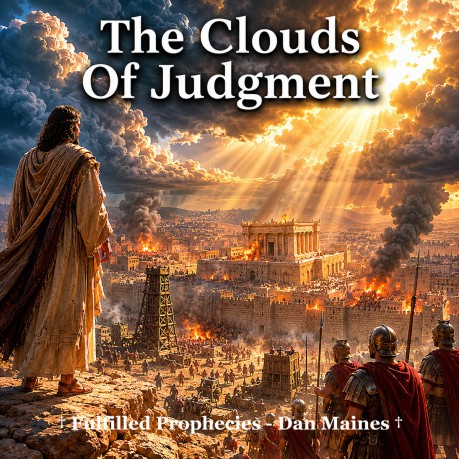
context. (Matthew 24:30) † Christ came
in covenant judgment against apostate Israel through the Roman armies
in AD 70, exactly as He warned that generation. (Matthew 23:36-38) † Just as God
came on clouds against Egypt without a visible bodily descent, Christ
came in judgment against Jerusalem using the same prophetic language.
(Isaiah 19:1) Matthew 26:64-65 Jesus said
to him, "You have said it yourself. But I tell you, from now on
you will see the Son of Man sitting at the right hand of power, and
coming on the clouds of heaven." Then the
high priest tore his robes and said, "He has blasphemed! What
further need do we have of witnesses? See, you have now heard the
blasphemy;
† The high
priest understood exactly what Jesus was claiming. He recognized the
cloud-coming language of Daniel 7 as divine authority and judgment
language. (Daniel 7:13-14) † Caiaphas
tore his garments because Jesus claimed the heavenly authority of the
Son of Man who would judge that covenant system. (Matthew 26:65) † Jesus told
the very men standing before Him that they would see this judgment
authority manifested. (Matthew 23:36) Revelation 1:7
Behold, He
is coming with the clouds, and every eye will see Him, even
those who pierced Him; and all the tribes of the earth will mourn
over Him. So it is to be. Amen. † John
connected this prophecy directly to those who pierced Christ, which
was the first century generation responsible for His death. (Matthew
23:35-36) † The phrase
tribes of the land again points to Israel and echoes Zechariah's
judgment prophecy against Jerusalem. (Zechariah 12:10-14) † Revelation
was not introducing a brand new meaning for cloud coming language. It
was continuing the Old Testament prophetic pattern of covenant
judgment imagery. (Isaiah 19:1) Historical References † Josephus
recorded terrifying signs, armies, chariots in the clouds, and
catastrophic judgment surrounding Jerusalem before AD 70, showing how
apocalyptic imagery surrounded the destruction of the city. (Matthew
24:29-34) † Eusebius
connected Christ's warnings in Matthew 24 directly to the Roman
destruction of Jerusalem and the temple. (Matthew 24:1-3) † Early
Christians understood the judgment against Jerusalem as the
fulfillment of Christ's covenant warnings upon that generation.
(Matthew 23:36) How It Applies To Us
Today † We must stop
forcing modern literalism into ancient prophetic language. (Isaiah
19:1) † Understanding
Old Testament cloud imagery unlocks many misunderstood New Testament
passages. (Daniel 7:13-14) † Jesus
fulfilled exactly what He promised concerning the judgment coming
upon that generation. (Matthew 24:34) † The
consistency of scripture proves the Bible interprets itself when we
allow Old Testament language to define New Testament prophecy. (2
Peter 1:20-21) Q & A Appendix Q:
Does coming on clouds always mean judgment in scripture? A:
In prophetic language, cloud coming consistently represented divine
authority, judgment, power, and covenant intervention against
nations. Isaiah 19:1 shows God coming on clouds against Egypt without
a visible bodily appearance. Q:
Did the Jews understand cloud language symbolically? A:
Yes. The prophets had used this imagery for centuries. That's why the
high priest accused Jesus of blasphemy when He claimed the Son of Man
cloud-coming authority of Daniel 7:13-14. Q:
Why does Matthew 24 say all tribes would mourn? A:
Jesus was echoing Zechariah 12 concerning the tribes of Israel
mourning during covenant judgment upon Jerusalem. The context was
Judea and the temple, not the modern globe. Q:
Was Jesus physically visible in AD 70? A:
The judgment was visible through the destruction of Jerusalem and the
temple, just as God's judgments were visible against Egypt and
Babylon in the Old Testament. The cloud-coming language represented
divine judgment and authority. Q:
If Jesus did not physically appear in the sky in AD 70, how was His
coming fulfilled? A:
His coming was fulfilled the same way Yahweh came against Egypt in
Isaiah 19:1, through visible covenant judgment carried out in
history. Jerusalem's destruction proved Christ was reigning in
authority exactly as Daniel 7 declared. Q:
Why do many people believe Christ's coming had to be physically
visible to the entire world? A:
Many people read modern ideas into ancient prophetic language without
comparing scripture with scripture. Throughout the Old Testament, God
was said to come on clouds in judgment against nations, yet those
events were fulfilled through historical judgments, not by a visible
bodily appearance in the sky. Jesus used that same established
covenant judgment language in Matthew 24 and Revelation 1. (Isaiah
19:1; Daniel 7:13-14; Matthew 24:30) Q:
If cloud-coming language was symbolic in the Old Testament, why do
many interpret it literally in the New Testament? A:
Because many approach New Testament prophecy without first
understanding how the Old Testament prophets used apocalyptic
imagery. The Bible consistently uses heavenly signs, clouds,
darkness, earthquakes, and falling stars as symbolic language for
covenant judgment and the collapse of nations. Jesus and John
continued using the same prophetic language already established in
scripture. (Isaiah 13:10; Ezekiel 32:7-8; Revelation 1:7) † This is the fulfilled
perspective we proclaim at Fulfilled Prophecies † © Fulfilled Prophecies - Dan Maines. Source Index † Isaiah 19:1;
Nahum 1:3; Psalm 104:3; Psalm 18:7-12; Daniel 7:13-14; Matthew 24:30;
Matthew 26:64-65; Revelation 1:7 † Josephus,
Wars of the Jews, Book 6; Eusebius, Ecclesiastical History, Book 3
By Dan Maines
The
idols of Egypt will tremble at His presence,
And the heart of
the Egyptians will melt within them.
And the Lord
will by no means leave the guilty unpunished.
In the gale and
the storm is His way,
And clouds are the dust beneath His feet.
He makes
the clouds His chariot;
He walks on the wings of the wind;
And the foundations of the
mountains were trembling
And were shaken, because He was
angry.
Smoke went up out of His nostrils,
And fire from His
mouth was devouring;
Coals burned from it.
He also bowed
the heavens down low, and came down
With thick darkness under
His feet.
He rode on a cherub and flew;
And He sped on the
wings of the wind.
He made darkness His hiding place, His canopy
around Him,
Darkness of waters, thick clouds.
From the
brightness before Him passed His thick clouds,
Hailstones and
coals of fire.
And behold, with the clouds
of heaven
One like a son of man was coming,
And He came up
to the Ancient of Days
And was presented before Him.
And to
Him was given dominion,
Honor, and a kingdom,
So that all
the peoples, nations, and populations of all languages
Might
serve Him.
His dominion is an everlasting dominion
Which
will not pass away;
And His kingdom is one
Which will not
be destroyed.
Links