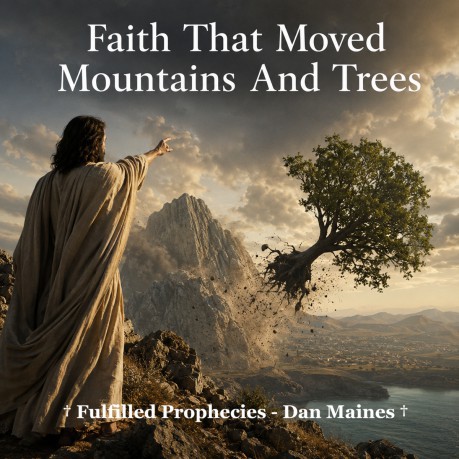
Faith
That Moved Mountains And Trees Introduction † Many people
read the words of Jesus about moving mountains and uprooting trees
and assume He was teaching that believers would perform endless
supernatural stunts throughout history. But Jesus was speaking in
prophetic covenant language that His audience understood. He was
describing the unstoppable power of faith during the transition from
the old covenant world into the kingdom of God. (Hebrews 12:26-28) † Throughout
scripture, mountains represented kingdoms, governments, nations, and
covenant systems. Jesus was not promising circus miracles. He was
declaring that through faith the apostles would participate in the
removal of the old covenant order and the establishment of His
everlasting kingdom. (Daniel 2:34-35; Isaiah 2:2-3) † The language
of trees, mountains, seas, and shaking was common prophetic imagery
in the Old Testament. Jesus used the same style of language when
speaking about the coming judgment upon Jerusalem and the passing
away of the old covenant system. (Matthew 24:34; Hebrews 8:13) Matthew 17:20
And He said to them, "Because of your meager faith; for truly I
say to you, if you have faith the size of a mustard seed, you will
say to this mountain, 'Move from here to there,' and it will move;
and nothing will be impossible for you." † Jesus
connected the moving of the mountain directly to faith and kingdom
authority. The point was not physical geology being rearranged, but
the power of God's purpose working through faithful believers. (Mark
11:22-23) † Mountains in
scripture often symbolized kingdoms and covenant powers. Jesus was
standing in Israel under the shadow of the temple system that was
about to be removed in judgment. (Isaiah 40:4; Jeremiah 51:25) † The apostles
through faith helped bring about the greatest covenant transition in
history, the passing of the old covenant age and the establishment of
Christ's kingdom. (Hebrews 12:26-28) Matthew 21:21
And Jesus answered and said to them, "Truly I say to you, if you
have faith and do not doubt, you will not only do what was done to
the fig tree, but even if you say to this mountain, 'Be taken up and
cast into the sea,' it will happen. † The fig tree
represented unfruitful Israel, just as it did throughout the prophets
and in the teachings of Jesus. (Hosea 9:10; Luke 13:6-9) † The mountain
being cast into the sea points to covenant judgment. The old covenant
system centered in Jerusalem would soon fall and be swept away.
(Revelation 8:8; Daniel 2:35) † Jesus was
preparing His disciples for the coming judgment generation when the
temple and city would be destroyed exactly as He foretold. (Matthew
23:36-38) Mark 11:22-23 And Jesus answering saith unto them,
Have faith in God. Verily I say unto you, Whosoever shall
say unto this mountain, Be thou taken up and cast into the sea, and
shall not doubt in his heart, but shall believe that what he saith
cometh to pass, he shall have it; therefore shall he have it. † Jesus spoke
these words right after judging the fig tree and while standing near
Jerusalem and the temple system. † The mountain
context fits covenant judgment upon unbelieving Israel and the
removal of the old covenant order. (Matthew 21:18-19) † The sea in
prophetic language often represented the nations and chaos into which
kingdoms were cast in judgment. (Daniel 7:2-3; Revelation 17:15) Luke 17:6
But the Lord said, "If you had faith the size of a mustard seed,
you could say to this mulberry tree, 'Be uprooted and be planted in
the sea'; and it would obey you. † Trees in
scripture often symbolized nations, rulers, and covenant people.
Jesus again used prophetic imagery familiar to His audience. (Ezekiel
31:3-6; Daniel 4:20-22) † The
uprooting of the tree symbolized judgment and removal. Israel as an
unfruitful covenant nation was about to be uprooted because of
unbelief. (Matthew 3:10) † Christ was
teaching that even faith as small as a mustard seed would accomplish
God's covenant purpose during that generation. Nothing would stop the
establishment of His kingdom. (Matthew 16:27-28) Daniel 2:34-35
You continued watching until a stone was broken off without hands,
and it struck the statue on its feet of iron and clay, and crushed
them. Then the iron, the clay, the bronze, the silver, and the gold
were crushed to pieces all at the same time, and they were like chaff
from the summer threshing floors; and the wind carried them away so
that not a trace of them was found. But the stone that struck the
statue became a great mountain and filled the entire earth. † God's
kingdom itself is pictured as a mountain filling the earth. † This
connects directly with Jesus using mountain imagery for kingdom
authority and covenant transition. † The old
kingdoms were removed while Christ's kingdom became everlasting.
(Daniel 2:44) Jeremiah 51:25 "Behold, I am
against you, mountain of destruction † This proves
mountains symbolized kingdoms and ruling powers in prophetic
language. † Jesus and
the apostles used the same covenant judgment imagery found throughout
the prophets. † The first
century audience would have understood this symbolic language far
better than modern readers often do. Hebrews 12:26-28
And His voice shook the earth then, but now He has promised, saying,
"Yet once more I will
shake not only the earth, but
also the heaven." This expression, "Yet once more,"
denotes the removing of those things which can be shaken, as of
created things, so that those things which cannot be shaken may
remain. Therefore, since we receive a kingdom which cannot be shaken,
let's show gratitude, by which we may offer to God an acceptable
service with reverence and awe; † Hebrews
directly explains that God was removing the old covenant system so
the unshakable kingdom of Christ would remain. † The shaking
language came from the prophets and referred to covenant judgment,
not the destruction of the physical planet. (Haggai 2:6-7) † The kingdom
believers received was already arriving in that first century
transition period and could not be stopped. (Colossians 1:13) Acts 17:6
When they did not find them, they began dragging Jason and some
brothers before the city authorities, shouting, "These men who
have upset the world have come here also; † The apostles
did exactly what Jesus said they would do. Through faith they shook
the covenant world of their day. † The gospel
overturned the old order and spread throughout the Roman world before
Jerusalem fell. (Colossians 1:5-6) † This was not
about believers physically moving mountains and trees. It was about
the unstoppable victory of Christ's kingdom. (Matthew 28:18-20) Historical References † Eusebius
wrote that the destruction of Jerusalem fulfilled the warnings spoken
by Christ against that generation and marked the end of the old
covenant order. † Josephus
described the fall of Jerusalem in AD 70 with language of national
catastrophe and covenant devastation exactly matching the warnings of
Jesus. † Clement of
Alexandria spoke of the passing away of the old system and the
establishment of the new covenant through Christ. How It Applies To Us
Today † Faith is not
about performing entertainment miracles to impress people. † Faith is
trusting completely in Christ and His kingdom promises even when the
world stands against us. † The kingdom
of God has already overcome the old covenant world and continues
advancing through the gospel. † We don't
need to move literal mountains because Christ has already established
His unshakable kingdom. † Believers
today still participate in kingdom work as the gospel changes lives
throughout the earth. Q & A Appendix Q:
Was Jesus teaching that Christians would literally throw mountains
into the ocean? A:
No. Jesus was using prophetic hyperbolic language common throughout
scripture. Mountains symbolized kingdoms and covenant systems. The
old covenant order was about to be removed through God's judgment.
(Matthew 21:21; Hebrews 12:26-28) Q:
Why did Jesus mention trees being uprooted? A:
Trees often represented nations and rulers in scripture. Jesus used
the image to describe covenant judgment and removal. (Ezekiel 31:3-6;
Matthew 3:10) Q:
Did the apostles fulfill these promises? A:
Yes. Through faith and the preaching of the gospel they turned the
world upside down during that generation and helped establish
Christ's kingdom throughout the Roman world. (Acts 17:6; Colossians
1:23) Q:
Does this mean miracles never happened? A:
No. The apostles performed miracles during the transition period to
confirm the message of Christ. But the language about mountains and
trees primarily pointed to covenant judgment and kingdom victory, not
endless physical demonstrations. (Hebrews 2:3-4) Q:
Why do many people today misunderstand the mountain language? A:
Many modern readers interpret the language literally and miss the
prophetic symbolism used throughout the Old Testament. Jesus was
speaking the same covenant language used by the prophets concerning
kingdoms, judgment, and covenant transition. (Jeremiah 51:25; Daniel
2:35) † This is the fulfilled
perspective we proclaim at Fulfilled Prophecies † © Fulfilled Prophecies - Dan Maines. Source Index † Matthew
17:20; Matthew 21:21; Mark 11:22-23; Luke 17:6; Daniel 2:34-35;
Jeremiah 51:25; Hebrews 12:26-28; Acts 17:6 † Eusebius,
Ecclesiastical History; Josephus, Wars of the Jews; Clement of
Alexandria, Stromata
By Dan Maines
That destroys the whole
earth," declares the Lord,
"And
I will stretch out My hand against you,
And roll you down from
the rocky cliffs,
And I will make you a burnt out mountain.
Links