The
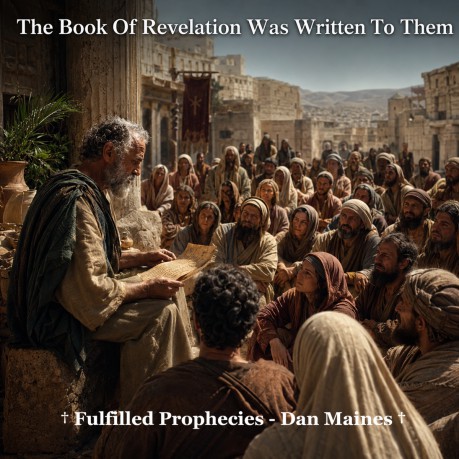
Book Of Revelation Was Written To Them Introduction Revelation 1:1 † The phrase
must shortly happen destroys the idea of a 2000 year delay.
(Revelation 1:1) Revelation
1:3 † John didn't
say the time was thousands of years away. He said it was at hand.
(Revelation 1:3) Revelation 1:9 † John said he
was already in the kingdom with the first century believers.
(Revelation 1:9) Revelation
2:10 † Jesus told
the church at Smyrna they were about to suffer. (Revelation 2:10) Revelation
3:11 † Jesus said I
come quickly. (Revelation 3:11) Matthew
24:34 † Jesus placed
all the events of the Olivet Discourse within the lifetime of His
generation. (Matthew 24:34) Revelation
17:10 † John said
one king presently is, proving Revelation was anchored in John's own
time. (Revelation 17:10) Revelation
22:6 † Revelation
closes exactly the same way it opens. (Revelation 1:1; Revelation
22:6) Revelation 22:7 † Jesus again
declared that He was coming quickly. (Revelation 22:7) Revelation 22:10 † John was
specifically told not to seal the prophecy because the time was at
hand. (Revelation 22:10) Daniel
12:4 † Daniel was
told to seal his prophecy because fulfillment was far away. (Daniel
12:4) Historical References How It Applies To Us
Today Q & A Appendix † This is the fulfilled
perspective we proclaim at Fulfilled Prophecies † † Josephus,
Wars of the Jews, Book 6; Eusebius, Ecclesiastical History, Book 3;
Tacitus, Annals, Book 15; Clement of Alexandria, Stromata
By Dan Maines
†
One of the biggest mistakes people make when reading Revelation is
ignoring who the book was written to and when the events were said to
happen. (Revelation 1:1-3)
†
Modern prophecy teachers push Revelation thousands of years into the
future even though the book itself repeatedly says the events were
near, at hand, and about to happen soon. (Revelation 22:6-10)
†
If God wanted believers to understand Revelation as events 2000 years
away, then the words shortly, near, and at hand would have no honest
meaning. (Matthew 24:34)
†
Revelation was written to real first century churches facing real
first century persecution under Rome, before the destruction of
Jerusalem in AD 70. (Revelation 1:4, 11)
†
The time statements aren't accidental. They're repeated over and over
because God wanted the original audience to know judgment was
approaching in their generation. (Matthew 24:34)
The
Revelation of Jesus Christ, which God gave Him to show to His
bond-servants, the things which must soon take place; and He sent and
communicated it by His angel to His bond-servant John,
†
Shortly means quickly, soon, near in time, not thousands of years
later. (Luke 18:8; Romans 16:20)
†
God wasn't misleading the seven churches of Asia into believing
events were near if they were actually meant for people living in the
21st century. (Revelation 1:4)
†
The same Greek word for shortly is used in other places where it
clearly means soon in time. (Acts 12:7; Romans 16:20)
†
Revelation opens with urgency because covenant judgment against
apostate Israel and persecuting Rome was approaching rapidly.
(Matthew 23:36; Matthew 24:2)
Blessed is
the one who reads, and those who hear the words of the prophecy and
keep the things which are written in it; for the time is near.
†
At hand means near, close, about to arrive. (Philippians 4:5)
†
Jesus used the exact same language before the destruction of
Jerusalem. (Matthew 24:33)
†
If at hand can mean thousands of years away, then language loses all
meaning. (Matthew 16:27-28)
†
The first century churches were told to keep the prophecy because
they were about to live through the events described. (Revelation
1:11)
I,
John, your brother and fellow participant in the tribulation and
kingdom and perseverance in Jesus, was on the island called Patmos
because of the word of God and the testimony of Jesus.
†
The kingdom wasn't something delayed thousands of years into the
future. (Colossians 1:13)
†
The early church was already sharing in the tribulation and kingdom
together. (Acts 14:22)
†
Revelation was written to suffering believers living in that present
reality. (Revelation 1:9)
Do not
fear what you are about to suffer. Behold, the devil is about to
throw some of you into prison, so that you will be tested, and you
will have tribulation for ten days. Be faithful until death, and I
will give you the crown of life.
†
He wasn't warning Christians living 2000 years later. (Revelation
1:11)
†
These were real churches facing immediate persecution under Roman
authority. (Revelation 2:8-10)
†
Revelation was practical and urgent for them because they were
entering the tribulation period of their time. (Matthew 24:21;
Revelation 1:9)
I am
coming quickly; hold firmly to what you have, so that no one will
take your crown.
†
Futurism turns quickly into thousands of years, but the original
audience would've understood it exactly as written. (Revelation
22:7)
†
Christ came quickly in covenant judgment against Jerusalem exactly as
He promised. (Matthew 16:27-28)
†
The coming language throughout scripture often refers to judgment
comings, not physical appearances. (Isaiah 19:1)
†
Jesus came in power and judgment in that generation just as He said
He would. (Matthew 24:30-34)
Truly I
say to you, this generation will not pass away until all these things
take place.
†
He didn't say a future race, future nation, or future generation
thousands of years later. (Matthew 23:36)
†
Generation always means the people living at that time when used
normally in the Gospels. (Matthew 11:16; Matthew 12:41-42)
†
The destruction of the temple in AD 70 proved Jesus told the truth
exactly as spoken. (Matthew 24:2)
†
Revelation expands on the same judgment Jesus described in Matthew
24. (Revelation 6:12-17)
and they
are seven kings; five have fallen, one is, the other has not yet
come; and when he comes, he must remain a little while.
†
The prophecy concerned rulers existing during the first century Roman
Empire, not modern nations 2000 years later. (Revelation 17:10)
†
Revelation was written during the reign of a current Caesar, not
about distant future governments. (Revelation 13:18)
†
The audience would've understood exactly which rulers John was
describing. (Revelation 17:18)
And he
said to me, "These words are faithful and true"; and the
Lord, the God of the spirits of the prophets, sent His angel to show
His bond-servants the things which must soon take place.
†
God repeated shortly happen because He wanted there to be no
confusion about timing. (Revelation 22:6)
†
The prophecy was relevant to the original audience living before
Jerusalem's fall. (Revelation 1:4)
†
The repetition destroys the claim that the timing statements mean
something different. (Revelation 22:10)
"And
behold, I am coming quickly. Blessed is the one who keeps the words
of the prophecy of this book."
†
The repetition of quickly throughout Revelation proves the timing was
urgent and near. (Revelation 1:1; Revelation 3:11)
†
Christ was warning the first century churches to remain faithful
because judgment was approaching rapidly. (Matthew 24:42-44)
†
The blessing was for those who kept the prophecy because they were
about to experience those events. (Revelation 1:3)
And
he said to me, Do not seal up the words of the prophecy of this book,
for the time is near.
†
This directly contrasts Daniel who was told to seal his prophecy
because the fulfillment was far off. (Daniel 12:4)
†
Daniel looked hundreds of years ahead, John looked at events near in
his own lifetime. (Daniel 8:26; Revelation 1:1)
†
God wouldn't tell John not to seal the book if fulfillment was still
thousands of years away. (Revelation 22:10)
†
Revelation was unsealed because the judgment events were ready to
begin. (Matthew 24:33-34)
But as for
you, Daniel, keep these words secret and seal up the book until the
end of time; many will roam about, and knowledge will increase.
†
John was told not to seal Revelation because fulfillment was near.
(Revelation 22:10)
†
The contrast between Daniel and Revelation destroys the idea that
Revelation was about events thousands of years later. (Revelation
1:1-3)
†
God made a clear distinction between prophecies that were distant and
prophecies that were near. (Habakkuk 2:3)
†
Eusebius recorded the destruction of Jerusalem as the fulfillment of
Christ's warnings concerning that generation. (Matthew 24:34)
†
Josephus described the Roman siege, famine, civil war, false
prophets, and destruction of the temple exactly as Jesus predicted in
Matthew 24. (Matthew 24:6-22)
†
Clement of Alexandria and other early writers understood Revelation
within the context of Roman persecution and first century events.
(Revelation 1:9)
†
Tacitus confirmed the intense persecution under Nero during the exact
time period Revelation describes. (Revelation 13:18)
†
We should trust Christ's words exactly as He spoke them instead of
changing the meaning to fit modern systems. (Matthew 24:35)
†
Revelation proves Jesus was faithful to every promise He made
concerning that generation. (Matthew 24:34)
†
The kingdom isn't waiting to arrive because Christ already reigns
now. (Ephesians 1:20-23)
†
Believers today live in the fulfilled New Covenant age where access
to God has already been established through Christ. (Hebrews
10:19-22)
†
The destruction of Jerusalem ended the Old Covenant world exactly as
Jesus promised. (Hebrews 8:13)
†
Revelation never says the events were thousands of years away, but it
repeatedly says they were near. The real question is whether we will
believe the timing statements God actually gave. (Revelation 1:1-3;
Revelation 22:6-10)
Q
If Revelation was fulfilled, why does it talk about Christ coming
quickly?
A
Because He did come quickly in covenant judgment against Jerusalem
and apostate Israel within that generation. Coming language
throughout scripture often refers to judgment, not a visible bodily
descent. (Isaiah 19:1; Matthew 24:30-34)
Q
Why would God say shortly and at hand if He meant thousands of years
later?
A
He wouldn't. The language is clear and honest. Revelation was written
to first century believers facing events that were near in their
lifetime. (Revelation 1:1-3)
Q
Was Revelation written to us?
A
It was written for our learning, but it was written to them. The
seven churches of Asia were the original audience experiencing the
approaching tribulation and judgment. (Revelation 1:4, 11)
Q
Did Jesus really fulfill His coming promises in the first century?
A
Yes. Jesus repeatedly promised His coming would happen before that
generation passed away. Jerusalem fell in AD 70 exactly as He said.
(Matthew 16:27-28; Matthew 24:34)
Q
Why does the traditional church place Revelation into the future?
A
Because many modern systems ignore the audience relevance and timing
statements found throughout the book. Revelation repeatedly says the
events were shortly to happen, at hand, and coming quickly, yet
futurism pushes those events thousands of years away. (Revelation
1:1-3; Revelation 22:6-10)
Q
If Revelation was for the first century churches, why do people still
fear it today?
A
Because many have been taught to read Revelation as a future
end-of-the-world prophecy instead of a covenant judgment book written
to first century believers facing persecution and the fall of
Jerusalem. (Revelation 1:4, 11; Matthew 24:1-34)
Q
Why do so many churches teach a future antichrist and future
tribulation?
A
Because tradition often overrides the actual time statements in
scripture. Jesus and the apostles placed these events in their
generation, but later systems moved them into the distant future.
(Matthew 24:34; Revelation 17:10)
Q
Did the first century believers understand Revelation was about their
time?
A
Yes. The book was written directly to the seven churches of Asia and
addressed events they were about to face. The warnings, persecution,
tribulation, and promises were all relevant to them. (Revelation 1:4,
9, 11; Revelation 2:10)
Q
Why is Revelation so misunderstood today?
A
Because people often begin with modern prophecy systems instead of
letting the book define its own timing and audience. Once the time
statements are taken seriously, the fulfilled perspective becomes
clear. (Revelation 1:1-3; Revelation 22:10)
©
Fulfilled Prophecies - Dan Maines.
Source
Index
†
Revelation 1:1; Revelation 1:3; Revelation 1:9; Revelation 2:10;
Revelation 3:11; Matthew 24:34; Revelation 17:10; Revelation 22:6;
Revelation 22:7; Revelation 22:10; Daniel 12:4
Links