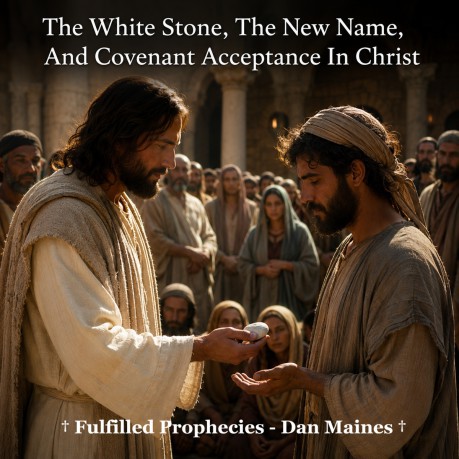
The
White Stone, The New Name, And Covenant Acceptance In Christ Introduction † Most people
read about the white stone in Revelation 2:17 and think it's
mysterious symbolism with no clear meaning. But the people living in
the first century would've immediately understood the covenant and
cultural imagery Jesus was using. (Revelation 2:17; Revelation 1:1-3) † In the
ancient world, white stones were connected to acquittal in judgment,
acceptance, invitation to feasts, victory, and entrance into special
gatherings. Jesus used this imagery to show the overcomers that they
were accepted into the New Covenant kingdom. (Romans 8:1; Matthew
8:11-12; Revelation 19:9) † The white
stone wasn't about a future mystical object handed out in heaven
thousands of years later. It was covenant language spoken to real
first century believers facing persecution and rejection from
apostate Israel and pagan Rome. (Revelation 2:13; Revelation 22:6-7;
Hebrews 8:13) † Jesus
connected the white stone to hidden manna and a new name because He
was revealing a new covenant identity that was found only in Him. The
old covenant system was passing away, but believers were receiving
entrance into the everlasting kingdom. (John 6:48-51; Isaiah 62:2;
Hebrews 12:27-28) † Pergamum
itself was filled with emperor worship, pagan feasts, and pressure to
compromise. Jesus was assuring His people that they already possessed
acceptance and entrance into the true kingdom of God, not Rome's
counterfeit kingdom. (Revelation 2:12-13; Philippians 3:20) Revelation 2:17
17 The one who has an ear, let him hear what the Spirit says to
the churches. To the one who overcomes, I will give some of the
hidden manna, and I will give him a white stone, and a new name
written on the stone which no one knows except the one who receives
it.' † Jesus was
speaking directly to the church in Pergamum, a city filled with
emperor worship, pagan temples, and pressure to compromise with the
world system around them. The overcomers were those who remained
faithful to Christ during that covenant transition period.
(Revelation 2:12-17; Hebrews 8:13) † Pergamum was
called the place where Satan's throne was because of its deep
connection to emperor worship and pagan religious power. Christians
who refused participation were viewed as traitors and outsiders.
(Revelation 2:13; John 15:18-19) † The hidden
manna pointed back to God's provision in the wilderness, but now
fulfilled in Christ Himself. Jesus had already declared that He was
the true bread from heaven. The old covenant manna sustained physical
Israel temporarily, but Christ gives eternal covenant life. (John
6:48-51; Exodus 16:14-15) † Israel ate
manna in the wilderness and still died physically and spiritually in
unbelief. But believers in Christ received the true heavenly bread
that brought covenant life and fellowship with God. (John 6:49-58; 1
Corinthians 10:1-5) † The white
stone carried the meaning of acquittal and acceptance. In ancient
courts, white stones were often used to declare innocence, while
black stones signified condemnation. Jesus was declaring His people
justified and accepted before God through Him. (Romans 8:1; Romans
5:1; Acts 13:38-39) † This
judicial imagery becomes powerful in light of apostate Israel
condemning believers and pagan Rome persecuting them. Christ Himself
declared the overcomers acquitted before the heavenly court. (Luke
21:12-15; Romans 8:33-34) † White stones
were also used as invitation tokens to feasts and banquets. In the
Roman world, tessera stones functioned as admission tokens into
festivals, public feasts, and special gatherings. (Matthew 22:1-14;
Revelation 19:9) † This
connects directly to covenant fellowship and the marriage supper
imagery. The overcomers were being welcomed into the New Covenant
kingdom while unbelieving Israel was being cast out. (Matthew
8:11-12; Revelation 19:9; Matthew 21:43) † Jesus was
essentially telling persecuted believers that they already possessed
entrance into the true covenant feast of God even while the world
rejected them. (Luke 12:32; Colossians 1:13) † The new name
written upon the stone represented covenant identity and belonging.
Under the old covenant, Israel carried the covenant name outwardly,
but in Christ believers received a new covenant identity known
intimately between Christ and the believer. (2 Corinthians 5:17;
Galatians 3:26-29) † The name
known only to the receiver shows personal covenant relationship. This
wasn't merely external religion or temple membership. It was direct
union and fellowship with Christ Himself. (John 10:14-15; John
17:20-23) † The
statement that no one knows the name except the receiver doesn't
teach mystical secret knowledge like later Gnostic systems. It speaks
of intimate covenant belonging and personal relationship between
Christ and His people. (John 17:3; 1 John 2:20-21) Isaiah 62:2
2 The nations will see your righteousness, † Isaiah had
already prophesied that God's covenant people would receive a new
name. This prophecy wasn't about ethnic Israel remaining under the
old covenant forever. It pointed to the New Covenant people formed in
Christ. (Isaiah 62:2; Galatians 3:26-29) † The new name
represented transformation and covenant transition. Abram became
Abraham, Jacob became Israel, and believers in Christ became a new
creation people under a better covenant. (Genesis 17:5; Genesis
32:28; Hebrews 8:6-13) † Revelation
2:17 fulfills this covenant promise. Jesus wasn't inventing new
imagery randomly. He was drawing directly from Old Testament covenant
promises that were reaching fulfillment in that generation.
(Revelation 2:17; Matthew 5:17; Luke 21:22) Isaiah 65:15
15 You will leave your name as a curse to My chosen ones, † Isaiah again
prophesied of a covenant separation between unbelieving Israel and
God's true covenant people. (Isaiah 65:15; Matthew 21:43) † The old
covenant name connected to rebellious Israel would pass away, but
God's servants in Christ would receive another name tied to the
everlasting covenant kingdom. (Hebrews 8:13; Hebrews 12:28) † This fits
perfectly with Revelation where faithful believers inherit the
kingdom while apostate Jerusalem faces judgment. (Revelation 11:8;
Revelation 18:20-24) Isaiah 56:5
5 To them I will give in My house and within My walls a
memorial, † This promise
included Gentiles being brought into covenant fellowship with God.
Under the New Covenant, believers from every nation would receive an
everlasting covenant identity in Christ. (Isaiah 56:5-8; Ephesians
2:11-19) † The white
stone and new name showed permanence. Unlike the old covenant system
that was vanishing away, this covenant relationship would never be
removed. (Hebrews 12:27-28; Daniel 2:44) † Jesus was
assuring persecuted believers that even if the world rejected them,
He accepted them fully into His kingdom. (Romans 8:31-39; John 6:37) Exodus 28:9-12
9 And you shall take two onyx stones and engrave on them the
names of the sons of Israel, 10 six of their names on the one
stone and the names of the remaining six on the other stone,
according to their birth. 11 As a jeweler engraves a signet, you
shall engrave the two stones according to the names of the sons of
Israel; you shall set them in filigree settings of gold. 12 And
you shall put the two stones on the shoulder pieces of the ephod, as
stones of memorial for the sons of Israel, and Aaron shall carry
their names before the Lord
on his two shoulders as a memorial. † The imagery
of engraved names upon stones was already deeply connected to
covenant representation and priesthood in the Old Testament. (Exodus
28:9-12; Exodus 39:6-7) † The high
priest bore the names of God's covenant people before the presence of
God, symbolizing covenant acceptance and representation. (Exodus
28:29-30; Leviticus 16:30) † Jesus
fulfilled and surpassed this imagery as the greater High Priest who
permanently brings His people before God. (Hebrews 4:14-16; Hebrews
7:24-27) Exodus 28:36-38
36 "You shall also make a plate of pure gold and engrave on
it, like the engravings of a signet, 'Holy to the Lord.'
37 You shall fasten it on a violet cord, and it shall be on the
turban; it shall be at the front of the turban. 38 It shall be
on Aaron's forehead, and Aaron shall take away the guilt of the holy
things which the sons of Israel consecrate, regarding all their holy
gifts; and it shall always be on his forehead, so that they may be
accepted before the Lord.
† The engraved
priestly imagery connects directly to the white stone and new name in
Revelation. (Exodus 28:36-38; Revelation 2:17) † The white
stone symbolized acceptance before God through Christ's priesthood,
not through temple sacrifices or Levitical rituals. (Hebrews
10:11-18; Hebrews 7:18-19) † This becomes
even more powerful when remembering Revelation was written during the
final years before the destruction of the temple in AD 70. The old
priesthood was about to disappear forever. (Hebrews 8:13; Matthew
24:1-2) † Christ's
people now carried covenant acceptance through Him rather than
through the earthly temple system. (Ephesians 2:18-22; 1 Peter 2:5) 1 Peter 2:9
9 But you are a chosen
people, a royal
priesthood, a
holy nation, a
people for God's own possession, so that you may proclaim the
excellencies of Him who has called you out of darkness into His
marvelous light; † Believers
themselves became the royal priesthood in Christ. Covenant identity
was no longer tied to genealogy, temple membership, or earthly
Jerusalem. (1 Peter 2:9; Galatians 3:28-29) † The white
stone represented entrance into this priestly covenant standing
before God. (Hebrews 10:19-22; Revelation 1:6) † The
overcomers were receiving what apostate Israel was losing, covenant
fellowship, acceptance, and kingdom inheritance. (Matthew 21:43;
Hebrews 12:28) Revelation 3:12
12 The one who overcomes, I will make him a pillar in the temple
of My God, and he will not go out from it anymore; and I will write
on him the name of My God, and the name of the city of My God, the
new Jerusalem, which comes down out of heaven from My God, and My new
name. † Revelation
itself explains the covenant meaning of the new name imagery.
(Revelation 2:17; Revelation 3:12) † The
overcomers received the name of God, the New Jerusalem, and Christ
Himself because they belonged fully to the New Covenant kingdom.
(Hebrews 12:22-24; Galatians 4:26) † This wasn't
about future geography or earthly nationalism. It was covenant
identity tied directly to Christ and His fulfilled kingdom. (John
18:36; Luke 17:20-21) Historical References † Ignatius
spoke repeatedly about believers possessing a new life and identity
in Christ that separated them from the old world and old covenant
order. (2 Corinthians 5:17; Hebrews 8:13) † Irenaeus
connected the promises to the overcomers in Revelation with the
inheritance of the church as God's covenant people. (Revelation 2:17;
Galatians 3:29) † Clement of
Alexandria described the white stone as representing divine approval
and acceptance from God. (Romans 8:1; Acts 13:38-39) † Tertullian
referred to believers receiving heavenly citizenship and covenant
recognition through Christ rather than through earthly temple
systems. (Philippians 3:20; Hebrews 12:22-24) † Victorinus,
one of the earliest commentators on Revelation, connected the white
stone with victory, divine approval, and heavenly acceptance.
(Revelation 2:17; Revelation 3:5) How It Applies To Us
Today † The white
stone reminds us that our acceptance is found completely in Christ
and not in religious systems, denominations, buildings, or outward
rituals. (Ephesians 1:6; Colossians 2:16-17) † Believers
today still possess that covenant identity and priestly standing
before God through Jesus Christ. (1 Peter 2:9; Hebrews 10:19-22) † The world
may reject us, but Christ has already declared His people accepted
and acquitted. (Romans 8:33-39; John 16:33) † Our new name
in Christ means we've been transferred from the old realm of death
into the kingdom of life. (Colossians 1:13; 2 Corinthians 5:17) † The hidden
manna reminds us that Christ Himself is our continual source of
covenant life, strength, and fellowship. (John 6:35; John 15:4-5) † The white
stone also reminds us that Christianity was never about maintaining
the old covenant world. It was about entering the fulfilled kingdom
established through Christ. (Hebrews 12:27-28; Luke 16:16) † We don't
need the world's approval because we've already received acceptance
from the King of kings. (Galatians 1:10; Romans 5:1) Q & A Appendix Q:
What did the white stone mean in the first century world? A:
White stones were commonly associated with acquittal in judgment,
acceptance, victory, and admission to feasts or special gatherings.
Jesus used familiar first century imagery to show believers they were
accepted into His covenant kingdom. (Revelation 2:17) Q:
What were tessera stones? A:
Tessera stones were admission tokens used in the Roman world for
entrance into festivals, feasts, games, and important public events.
This helps explain the covenant banquet imagery connected to the
white stone. (Matthew 22:1-14; Revelation 19:9) Q:
Why was the new name important? A:
The new name represented covenant identity and belonging in Christ.
It fulfilled Old Testament promises that God's people would receive a
new covenant name from Him. (Isaiah 62:2; Isaiah 65:15; Isaiah 56:5) Q:
What is the hidden manna? A:
The hidden manna points to Christ as the true bread from heaven and
the fulfillment of God's provision. Believers feed spiritually upon
Christ Himself under the New Covenant. (John 6:48-51) Q:
Was the white stone a future heavenly reward only? A:
No. Jesus gave this promise to real first century believers facing
persecution. The promise concerned covenant acceptance and kingdom
entrance during the transition from the old covenant to the New
Covenant age. (Hebrews 8:13) Q:
How does this connect to priesthood imagery? A:
The engraved name imagery connects to the high priest bearing
covenant representation before God. In Christ, believers became a
royal priesthood accepted before God permanently. (Exodus 28:9-12;
Exodus 28:36-38; 1 Peter 2:9) Q:
Does the secret name teach mystical hidden knowledge? A:
No. The name known only to the believer points to intimate covenant
relationship and belonging with Christ, not mystical secret
teachings. (John 10:14-15; John 17:3) † This is the fulfilled
perspective we proclaim at Fulfilled Prophecies † © Fulfilled Prophecies - Dan Maines. Source Index † Revelation
2:17; Isaiah 62:2; Isaiah 65:15; Isaiah 56:5; Exodus 28:9-12; Exodus
28:36-38; Revelation 3:12; John 6:48-58; Romans 8:1; Hebrews 8:13;
Hebrews 12:27-28; 1 Peter 2:9 † Ignatius,
Letter to the Magnesians; Irenaeus, Against Heresies, Book 4; Clement
of Alexandria, Stromata; Tertullian, Against Marcion; Victorinus,
Commentary on the Apocalypse
By Dan Maines
And all kings
your glory;
And you will be called by a new name
Which the
mouth of the Lord will
designate.
And
the Lord God will put
you to death.
But My servants will be called by another name.
And a name better than that of sons and daughters;
I
will give them an everlasting name which will not be eliminated.
Links