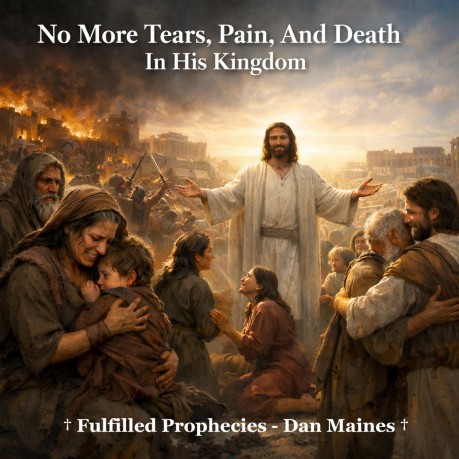
No More Tears, Pain, And
Death In His Kingdom Introduction † From the fulfilled perspective, no more
tears, pain, and death is not describing the end of the physical
world, it's describing the end of the Old Covenant system that
produced sorrow, separation, and death (Hebrews 8:13; Revelation
21:4). † Under the Law, Israel lived in a constant
state of guilt, judgment, and fear because sin was never truly taken
away, it was only covered year by year (Hebrews 10:1-3). † The promises of no more tears and no more
pain are covenantal, they point to the completed work of Christ and
the full arrival of His kingdom by AD 70 (Isaiah 65:17-19; Matthew
24:34). Genesis 3:16-19 To the woman He said, † From the beginning, pain, toil, and death
entered because of sin, this set the stage for the entire Old
Covenant world, a system defined by curse and separation (Romans
5:12; Romans 8:20). † The ground being cursed shows the whole
covenant world of man was affected, not just physical soil, but the
condition of life under sin and law (Romans 8:20-21; Galatians 3:10). † Death here is more than physical, it is
separation from God, the very problem the Law could never fix (Isaiah
59:2; Hebrews 10:1-4). Lamentations 3:48-49 My eyes run down with streams of water † Israel lived in continual sorrow because of
covenant judgment, their tears were tied to the consequences of
breaking the Law (Deuteronomy 28:65-67). † The destruction of Jerusalem brought literal
weeping, showing that tears were part of the Old Covenant reality
(Jeremiah 9:1; Lamentations 2:11). † This sorrow was not removed because the
system itself could not remove sin, it only reminded them of it
(Hebrews 10:3-4; Hebrews 9:9-10). Isaiah 65:17-19 "For behold, I create new heavens and a new earth; † God promised a new heavens and a new earth
where weeping would end, this is clearly tied to Jerusalem, not the
end of the physical planet (Isaiah 51:15-16; Hebrews 12:22-24). † The removal of weeping is covenantal, it
comes with the creation of a new covenant people, not a new physical
universe (2 Corinthians 5:17; Galatians 6:15-16). † This promise was future to them, but
fulfilled in Christ when the Old Covenant system passed away (Hebrews
8:13; Matthew 24:34). Isaiah 25:8 He will swallow up death for all time, † This directly connects the removal of death
with the wiping away of tears, showing both are covenant realities
being fulfilled together (1 Corinthians 15:54-57). † This is not new language in Revelation, it's
fulfillment of what Isaiah already promised (Revelation 21:4; 2
Corinthians 1:20). † The reproach being removed shows the end of
covenant shame and judgment under the Law (Hebrews 9:9-10; Romans
8:1). Revelation 21:3-4 And I heard a loud voice from the throne, saying, "Behold,
the tabernacle of God is among the people, and He will dwell among
them, and they shall be His people, and God Himself will be among
them, and He will wipe away every tear from their eyes; and there
will no longer be any death; there will no longer be any mourning, or
crying, or pain; the first things have passed away." † This is the fulfillment of Isaiah, the
removal of tears happens when the first things pass away, meaning the
Old Covenant system (Isaiah 65:17-19; Hebrews 8:13). † Death being no more is not physical death
ending, it's the end of covenant separation, the spiritual death that
came through the Law (1 Corinthians 15:56-57; Romans 7:9-11). † God dwelling with His people is the completed
reality of the New Covenant, not something still waiting in the
future (Ephesians 2:19-22; 2 Corinthians 6:16). John 16:20 Truly, truly I say to you, that you will weep and mourn, but the
world will rejoice; you will grieve, but your grief will be turned
into joy. † Jesus told His disciples their sorrow would
be turned into joy, not removed instantly, but transformed through
His completed work (John 16:22; Hebrews 12:2). † Their weeping was tied to the transition
period, the passing of the Old Covenant and the coming of the New
(Hebrews 9:8-10; Galatians 4:24-26). † That sorrow ended when the kingdom was fully
established, not thousands of years later (Matthew 16:27-28; Matthew
24:34). Hebrews 10:1-2 For the Law, since it has only a shadow of the good things to come
and not the very form of things, can never, by the same sacrifices
which they offer continually year by year, make perfect those who
draw near. Otherwise, would they not have ceased to be offered,
because the worshipers, having once been cleansed, would no longer
have had consciousness of sins? † The reason they still had sorrow is because
they still had a constant reminder of sin under the Law (Hebrews
10:3; Hebrews 9:9). † No more consciousness of sins connects
directly to no more mourning, crying, and pain (Revelation 21:4;
Romans 8:1). † This proves the removal of tears is tied to
the removal of sin guilt, not physical conditions (Colossians
2:13-14; Hebrews 10:14). 1 Corinthians 15:56 The sting of death is sin, and the power of sin is the law. † This defines death as tied directly to sin
and the Law, not physical biology (Romans 5:12; Romans 7:11). † Once the Law is removed, the sting is gone,
meaning covenant death is removed (Hebrews 8:13; Ephesians 2:15). † This perfectly explains how death can be no
more in Christ's kingdom while physical death still exists (John
5:24; 2 Timothy 1:10). Historical References † Josephus records the immense suffering,
famine, and sorrow during the destruction of Jerusalem, confirming
the reality of covenant judgment in that generation (Matthew 24:21;
Luke 23:28-30). † Eusebius writes that the fall of Jerusalem
marked the end of the old system and the vindication of Christ's
words (Matthew 24:2; Matthew 24:34). † Tacitus describes the destruction and
mourning in Judea, aligning with the biblical record of weeping and
judgment (Luke 19:41-44; Lamentations 1:12). † Clement of Alexandria taught that the
transition into life in Christ removed the burden of the Law and its
condemnation (Romans 8:1-2; 2 Corinthians 3:6-11). How It Applies To Us Today † We are not living under a system of sorrow
and condemnation, we're living in the completed kingdom where God
dwells with His people (Romans 8:1; Ephesians 2:22). † The tears, pain, and death tied to the Law
are gone, we are no longer separated from God, we are united in
Christ (Colossians 1:13-14; Ephesians 2:13). † This means we live in joy, not fear, because
the covenant that produced sorrow has been removed (Hebrews 10:14-18;
1 John 4:18). Q & A Appendix Q If there is no more death, why do people still
die physically? A The death removed is covenant death, separation
from God, not physical death, which has always existed. Paul said the
sting of death is sin and the power of sin is the law, so the death
in view is the death brought by the Law's condemnation (1 Corinthians
15:56; Romans 5:12; Romans 7:9-11). Q Why do people still experience pain today? A Physical pain still exists in the world, but
the covenantal pain of sin, guilt, judgment, and separation has been
removed in Christ. Revelation 21 is speaking about the passing of the
first things, the Old Covenant order, not the end of all human
sensation (Revelation 21:4; Hebrews 8:13; Romans 8:1). Q When were tears wiped away? A When the Old Covenant passed away and the New
Covenant was fully established. Jesus placed that fulfillment in His
generation, not thousands of years later (Matthew 24:34; Hebrews
12:26-28; Revelation 21:4). Q Why did they have tears and pain in the Old
Testament, but not in His kingdom? A They had tears and pain because they lived
under a covenant that exposed sin, brought judgment, and could never
cleanse the conscience. In Christ's kingdom, that covenant is gone,
access to God is open, and the conscience is cleansed (Hebrews
9:9-10; Hebrews 10:1-2, 14-18; Ephesians 2:18). Q Does "no more tears" mean believers
will never cry emotionally today? A No, the context is covenantal, not emotional.
The tears removed are tied to mourning, judgment, and separation
under the Law, not everyday human emotion. God removed the cause of
covenant sorrow, not human feelings (Revelation 21:4; Hebrews 10:1-3;
Ecclesiastes 3:4). Q If death is defeated, why does the Bible still
talk about people dying after Christ? A Because physical death was never the enemy
Christ came to destroy. Scripture defines death as sin empowered by
the Law, and that is what was removed. Physical death continues, but
covenant death has been defeated (1 Corinthians 15:56; Romans 7:9-11;
John 11:25-26). Q Is Revelation 21 describing heaven or something
happening on earth? A It describes God dwelling with His people,
which is New Covenant reality, not relocation to a different place.
The focus is on relationship, not location, God with man, not man
leaving earth (Revelation 21:3; Ephesians 2:19-22; 2 Corinthians
6:16). Q What are the "first things" that
passed away? A The first things are the Old Covenant system,
the Law, the temple, sacrifices, and everything tied to sin, death,
and separation. When that system ended, the sorrow connected to it
ended as well (Hebrews 8:13; Hebrews 9:8-10; Revelation 21:4). † This is the fulfilled perspective we proclaim at
Fulfilled Prophecies † © Fulfilled Prophecies - Dan Maines. Source Index † Genesis 3:16-19; Lamentations 3:48-49; Isaiah
25:8; Isaiah 65:17-19; Matthew 16:27-28; Matthew 24:34; Luke
19:41-44; Luke 23:28-30; John 16:20; John 16:22; John 5:24; Romans
5:12; Romans 7:9-11; Romans 8:1; Romans 8:20-21; 1 Corinthians
15:54-57; 1 Corinthians 15:56; 2 Corinthians 5:17; 2 Corinthians
6:16; Galatians 3:10; Galatians 4:24-26; Galatians 6:15-16; Ephesians
2:13, 15, 18-22; Colossians 1:13-14; Colossians 2:13-14; 2 Timothy
1:10; Hebrews 8:13; Hebrews 9:8-10; Hebrews 10:1-4, 14-18; Hebrews
12:2, 22-28; 1 John 4:18; Revelation 21:3-4 † Josephus, Wars of the Jews, Book 5-6;
Eusebius, Ecclesiastical History, Book 3; Tacitus, Histories, Book 5;
Clement of Alexandria, Stromata
By Dan Maines
"I will greatly multiply
Your
pain in childbirth,
In pain you shall give birth to
children,
Yet your desire will be for your husband,
And he
will rule over you."
Then to Adam He said, "Because
you have listened to the voice of your wife, and have eaten from the
tree about which I commanded you, saying, 'You shall not eat from
it';
Cursed is the ground because of you,
With hard labor
you shall eat from it
All the days of your life.
Both
thorns and thistles it shall grow for you,
Yet you shall eat the
plants of the field;
By the sweat of your face
You shall
eat bread,
Until you return to the ground,
Because from it
you were taken;
For you are dust,
And to dust you shall
return."
Because of the
destruction of the daughter of my people.
My eyes pour down
unceasingly,
Without stopping,
And
the former things will not be remembered or come to mind.
But be
glad and rejoice forever in what I create;
For behold, I create
Jerusalem for rejoicing
And her people for gladness.
I will
also rejoice in Jerusalem and be glad in My people;
And there
will no longer be heard in her
The sound of weeping and the
sound of crying.
And the Lord God will
wipe away tears from all faces,
And He will remove the disgrace
of His people from all the earth;
For the Lord has spoken.
Links