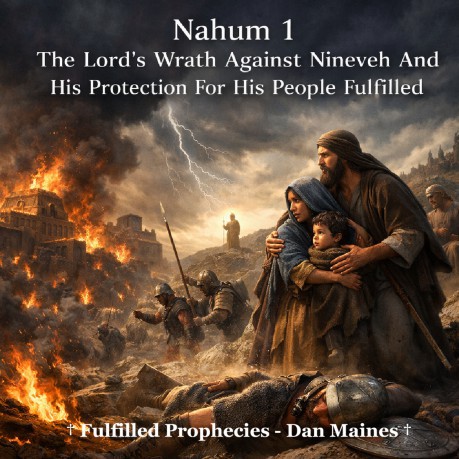
Nahum 1 The Lord's Wrath
Against Nineveh And His Protection For His People Fulfilled Introduction † Nahum opens with a clear declaration, God is
not passive toward evil, He judges it fully and righteously, and this
is tied to real covenant history. † From the fulfilled perspective, this judgment
against Nineveh sets a pattern that reaches its ultimate expression
in the judgment of Jerusalem in that generation, God deals with
covenant breakers in real time. † This chapter shows both sides of God's
character, His wrath against His enemies and His protection for His
people, and both are fulfilled in Christ and the end of the old
covenant system. Nahum 1:1 † This is a real prophetic burden against a
real nation, Nineveh, the capital of Assyria, known for violence and
oppression. † God had shown mercy to Nineveh in Jonah's
time, but now judgment is coming because they returned to wickedness. † This shows the pattern, God is patient, but
persistent rebellion always leads to judgment. Nahum 1:2 † God being jealous means He defends His
covenant, He doesn't share His glory with idols or rebellious
nations. † His vengeance is righteous justice, not
uncontrolled anger. † This same justice is seen in the first
century when Christ brings judgment on Jerusalem in that generation. Nahum 1:3 † God is patient, but His patience has an end
when repentance is rejected. † Justice is certain, He will not leave the
guilty unpunished. † The storm imagery is prophetic language used
for divine judgment throughout scripture. Nahum 1:4 † God has authority over creation, showing His
power over all things. † The drying up of fertile land represents the
removal of blessing and prosperity. † This same imagery is used when covenant
blessings are taken away. Nahum 1:5-6 † This is prophetic language describing the
fall of nations and systems, not literal mountains melting. † No one can stand in judgment apart from God's
mercy. † This points to the shaking and removal of the
old covenant world. Nahum 1:7 † Even in judgment, God protects His people. † He knows those who trust Him, this is
relational, not external religion. † This is fulfilled in Christ, where believers
are kept safe in Him. Nahum 1:8 † The flood imagery shows total destruction,
nothing of the old order remains. † Darkness represents judgment and removal. † This parallels the complete end of the old
covenant system. Nahum 1:9 † No plan against God succeeds, His judgment is
final. † Distress not rising again means the judgment
is complete and decisive. † This connects to the final end of the old
covenant age. Nahum 1:10-11 † The wicked are easily consumed, like dry
stubble in fire. † Their pride blinds them to the coming
judgment. † This same blindness was seen in those who
rejected Christ. Nahum 1:12 † Strength and numbers don't protect against
God's judgment. † God promises an end to affliction for His
people. † This points to the peace established in
Christ. Nahum 1:13 † God delivers His people from oppression. † This points beyond political freedom to
spiritual freedom. † Fulfilled in Christ where the burden is
removed. Nahum 1:14 † This is total removal of the enemy and their
system. † Idolatry is judged and destroyed completely. † This reflects the complete removal of the old
system in fulfillment. Nahum 1:15 † Good news follows judgment, this is the
pattern. † Peace is proclaimed because the enemy is
removed. † This is fulfilled in Christ and the
proclamation of the gospel. Historical References † Josephus records the destruction of cities
and nations under divine judgment, confirming the reality behind
prophetic language. † Eusebius connects prophetic judgment to the
fall of Jerusalem, showing early Christian understanding of
fulfillment. † Tacitus describes the overwhelming
destruction of nations, aligning with the language used in prophecy. How It Applies To Us Today † God still judges sin, His character hasn't
changed. † He knows those who belong to Him and protects
His people. † The old covenant system is gone, we live in
the fulfillment where peace has been established. † There's no future wrath to fear, judgment has
already come. † We live in the reality of that finished work
and walk in that peace. Q & A Appendix Q How do we know this was fulfilled? Q What does God's vengeance mean? Q Why use storm and fire imagery? Q What does distress not rising again mean? Q How is this fulfilled in Christ? † This is the fulfilled perspective we proclaim at
Fulfilled Prophecies † Source Index † Nahum 1
By Dan Maines
The pronouncement of Nineveh. The
book of the vision of Nahum the Elkoshite.
A jealous and avenging God is the
Lord; The Lord is avenging and wrathful. The Lord takes vengeance on
His adversaries, And He reserves wrath for His enemies.
The Lord is slow to anger and
great in power, And the Lord will by no means leave the guilty
unpunished. In whirlwind and storm is His way, And clouds are the
dust beneath His feet.
He rebukes the sea and makes it
dry; He dries up all the rivers. Bashan and Carmel wither; The
blossoms of Lebanon wither.
Mountains quake because of Him,
And the hills come apart; Indeed the earth is upheaved by His
presence, The world and all the inhabitants in it. Who can stand
before His indignation? And who can endure the burning of His anger?
His wrath is poured out like fire And the rocks are broken up by Him.
The Lord is good, A stronghold in
the day of trouble, And He knows those who take refuge in Him.
But with an overflowing flood He
will make a complete end of its site, And will pursue His enemies
into darkness.
Whatever you devise against the
Lord, He will make a complete end of it. Distress will not rise up
twice.
Like tangled thorns, And like
those who are drunken with their drink, They are consumed As stubble
completely withered. From you has gone out One who plotted evil
against the Lord, A wicked counselor.
This is what the Lord says:
Though they are at full strength and likewise many, Even so, they
will be eliminated and pass away. Though I have afflicted you, I will
afflict you no longer.
So now, I will break his yoke bar
from upon you, And I will tear off your shackles.
The Lord has issued a command
concerning you: Your name will no longer be perpetuated. I will
eliminate the carved image and the cast metal image From the house of
your gods. I will prepare your grave, Because you are contemptible.
Behold, on the mountains the feet
of him who brings good news, Who announces peace! Celebrate your
feasts, Judah; Pay your vows. For never again will the wicked one
pass through you; He has been eliminated completely.
A
Nineveh was historically destroyed, showing God's word came to pass,
Luke 21:22
A
It is righteous justice against evil, not uncontrolled anger, Romans
12:19
A
It is prophetic language for judgment and the fall of nations, Isaiah
13:10-13
A
It shows final judgment, the system judged does not return, Hebrews
8:13
A
Christ brings judgment and peace, ending the old covenant and
establishing the new, Matthew 23:36
© Fulfilled Prophecies - Dan
Maines.
† Josephus,
Wars of the Jews
† Eusebius, Ecclesiastical
History
† Tacitus, Histories
Links