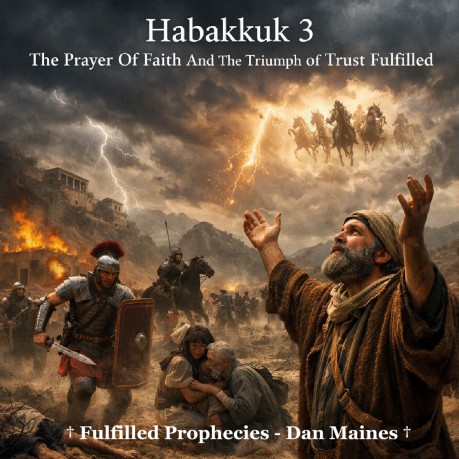
Habakkuk 3 The Prayer Of
Faith And The Triumph Of Trust Fulfilled Introduction † Habakkuk begins with confusion and ends with
confidence, this chapter is the turning point where fear gives way to
faith (Habakkuk 3:16-19) † The prophet no longer questions God's plan,
he now rests in it, even when circumstances haven't changed (Habakkuk
3:17-18) † From the fulfilled perspective, this chapter
shows us how the righteous lived through the coming judgment that was
fulfilled in their generation (Habakkuk 2:4; Matthew 24:13) Habakkuk 3:1 A prayer of Habakkuk the prophet, according to Shigionoth. † This is not just prophecy, it's worship,
Habakkuk shifts from questioning to praying (Habakkuk 3:1) † True understanding leads to humility before
God, not more arguments (Job 42:5-6) † This shows the proper response when we see
God's sovereignty, we bow, not debate (Romans 11:33-36) Habakkuk 3:2 LORD, I have heard the report about You and I fear. O LORD, revive
Your work in the midst of the years, In the midst of the years make
it known; In wrath remember mercy. † Habakkuk now fears God, not the
circumstances, this is the beginning of wisdom (Proverbs 9:10) † He asks for revival and mercy in the middle
of judgment, showing God always preserves a remnant (Isaiah 10:22) † This was fulfilled in the first century,
judgment came on Jerusalem, yet mercy was given to those who believed
(Luke 21:20-22) Habakkuk 3:3 God comes from Teman, And the Holy One from Mount Paran. Selah.
His splendor covers the heavens, And the earth is full of His praise. † This describes God's coming in judgment
language, not a physical descent, but covenant action (Isaiah 19:1) † Teman and Paran point back to God's past
deliverance, showing He acts consistently in history (Deuteronomy
33:2) † This same language is used of Christ's coming
in judgment against Jerusalem (Matthew 24:30) Habakkuk 3:4 His radiance is like the sunlight; He has rays flashing from His
hand, And there is the hiding of His power. † God's power is overwhelming yet often hidden,
people don't recognize it until judgment falls (Isaiah 26:11) † This reflects how Christ came in power in AD
70, though many didn't see it as divine judgment (Luke 19:41-44) † The flashing rays symbolize unstoppable
authority, nothing can resist His decree (Psalm 97:4) Habakkuk 3:5 Before Him goes pestilence, And plague comes after Him. † Judgment is described in terms of disease and
destruction, just like the siege of Jerusalem (Luke 21:11) † Josephus records pestilence and suffering
during the Roman siege, matching this imagery † God uses natural and historical means to
carry out divine judgment (Amos 3:6) Habakkuk 3:6 He stood and surveyed the earth; He looked and startled the
nations. Yes, the perpetual mountains were shattered, The ancient
hills collapsed. His ways are everlasting. † Nations are shaken when God acts, this is
covenantal upheaval, not literal mountains collapsing (Isaiah 13:13) † The mountains represent kingdoms and powers
being brought down (Daniel 2:35) † This was fulfilled when the old covenant
system was removed and replaced with the everlasting kingdom (Hebrews
12:26-28) Habakkuk 3:7 I saw the tents of Cushan under distress, The tent curtains of the
land of Midian were trembling. † The surrounding nations are affected by God's
actions, showing His authority over all peoples (Jeremiah 25:29) † Fear spreads when God's judgment is revealed,
no one is untouched (Revelation 6:15-17) † This reflects the fear that came upon the
Roman world during the upheaval of that time Habakkuk 3:8 Did the LORD rage against the rivers, Or was Your anger against
the rivers, Or was Your wrath against the sea, That You rode on Your
horses, On Your chariots of salvation? † This is symbolic language, God is not angry
at nature, but uses imagery to describe His power (Psalm 18:7-15) † The chariots represent divine warfare, God
coming to judge and deliver (2 Kings 6:17) † This shows both judgment and salvation
happening together, destruction for the wicked, deliverance for the
righteous (Malachi 4:1-2) Habakkuk 3:9 Your bow was made bare, The rods of chastisement were sworn.
Selah. You cleaved the earth with rivers. † God reveals His weapons, meaning His judgment
is now active and visible (Ezekiel 21:3-5) † The rods represent discipline, covenant
judgment against disobedience (Leviticus 26:28) † This was fulfilled when judgment came upon
Jerusalem for rejecting Christ (Matthew 23:37-38) Habakkuk 3:10 The mountains saw You and quaked; The downpour of waters swept by.
The deep uttered forth its voice, It lifted high its hands. † Creation imagery reflects the shaking of
nations and systems (Haggai 2:6-7) † The deep responding shows total upheaval,
nothing remains untouched (Psalm 77:16-18) † This aligns with the language Jesus used
about the destruction of that generation (Matthew 24:29) Habakkuk 3:11 Sun and moon stood in their places; They went away at the light of
Your arrows, At the radiance of Your gleaming spear. † This is prophetic language, not literal
cosmic events, it represents the fall of ruling powers (Isaiah 13:10) † Sun and moon symbolize authority structures
being darkened (Genesis 37:9-10) † Jesus used this same language to describe the
fall of Jerusalem (Matthew 24:29) Habakkuk 3:12 In indignation You marched through the earth; In anger You
trampled the nations. † God is portrayed as a warrior, executing
judgment on nations (Isaiah 63:3) † This trampling represents total defeat,
nothing escapes His justice (Psalm 110:5-6) † This was fulfilled in the judgment of the
Jewish nation and its rejection of Christ (1 Thessalonians 2:14-16) Habakkuk 3:13 You went forth for the salvation of Your people, For the salvation
of Your anointed. You struck the head of the house of the evil, To
lay him open from thigh to neck. Selah. † Judgment and salvation happen together, God
delivers His people while destroying the wicked (Exodus 14:13-14) † The anointed points to Christ and His people,
protected through the coming judgment (Luke 21:28) † The striking of the head represents the
defeat of leadership and authority opposed to God (Psalm 2:9) Habakkuk 3:14 You pierced with his own spears The head of his throngs. They
stormed in to scatter us; Their exultation was like those Who devour
the oppressed in secret. † The enemy is destroyed by his own weapons,
showing God's justice is fitting (Esther 7:10) † Those who oppressed God's people are judged
by the very means they used (Psalm 7:15-16) † This reflects how Rome and apostate Israel
turned on each other during the siege Habakkuk 3:15 You trampled on the sea with Your horses, On the surge of many
waters. † The sea represents chaos and nations, God has
authority over all of it (Psalm 65:7) † His control over the waters shows complete
sovereignty over history (Isaiah 17:12-13) † Nothing is outside His control, even the rise
and fall of empires (Daniel 4:35) Habakkuk 3:16 I heard and my inward parts trembled, At the sound my lips
quivered. Decay enters my bones, And in my place I tremble. Because I
must wait quietly for the day of distress, For the people to arise
who will invade us. † Habakkuk still feels fear, but now he waits
in trust, this is mature faith (Psalm 37:7) † Waiting quietly shows submission to God's
timing (Lamentations 3:26) † This mirrors the believers who endured until
the judgment of Jerusalem (Hebrews 10:36-37) Habakkuk 3:17 Though the fig tree should not blossom And there be no fruit on
the vines, Though the yield of the olive should fail And the fields
produce no food, Though the flock should be cut off from the fold And
there be no cattle in the stalls, † This describes total economic collapse,
exactly what happened during the siege (Luke 23:29-30) † Everything visible is gone, yet faith remains
(2 Corinthians 5:7) † This shows that true faith is not dependent
on circumstances Habakkuk 3:18 Yet I will exult in the LORD, I will rejoice in the God of my
salvation. † This is the climax of faith, joy in God
regardless of situation (Philippians 4:4) † Salvation is not tied to earthly stability,
but to God's covenant faithfulness (Romans 5:1-2) † This is how the righteous lived during the
end of that age, trusting in Christ Habakkuk 3:19 The Lord GOD is my strength, And He has made my feet like hinds'
feet, And makes me walk on my high places. For the choir director, on
my stringed instruments. † God gives stability and strength even in
chaos (Psalm 18:33) † Walking on high places means victory and
security (Deuteronomy 32:13) † This is the position of believers after
fulfillment, secure in Christ and His finished work (Ephesians 2:6) Historical References † Josephus, Wars of the Jews, Book 5-6, records
famine, pestilence, and collapse during the siege of Jerusalem,
matching Habakkuk's imagery † Tacitus, Histories 5.13, describes the
destruction and fear surrounding Jerusalem's fall † Eusebius, Ecclesiastical History 3.5, records
the escape of Christians before the destruction, showing mercy in
judgment How It Applies To Us Today † We don't walk by sight, we walk by faith,
just like Habakkuk, trusting God even when circumstances don't make
sense (2 Corinthians 5:7) † Judgment has already come on the old covenant
system, we're not waiting for it, we're living in the fulfilled
kingdom (Hebrews 12:28) † Our joy isn't tied to what we see in the
world, it's rooted in what Christ has already accomplished
(Colossians 2:13-14) † Even when life feels unstable, God is still
our strength and footing, nothing can move us from Him (Romans
8:38-39) Q & A Appendix Q How do we know this was fulfilled and not
future Q Is this talking about a literal cosmic event Q What does it mean that the righteous live by
faith Q Why does Habakkuk rejoice even in loss Q How does this apply after fulfillment † This is the fulfilled perspective we proclaim at
Fulfilled Prophecies † Source Index † Habakkuk 3
By Dan Maines
A Jesus tied these judgment events to
His generation in Matthew 24:34, and the destruction of Jerusalem in
AD 70 matches the language used
A
No, the same language is used in Isaiah 13:10 and Matthew 24:29 for
the fall of nations, not literal stars falling
A Habakkuk 2:4 shows that survival
through judgment depended on trusting God, fulfilled in those who
followed Christ
A
Because his hope is in God, not circumstances, as seen in Habakkuk
3:18 and Philippians 4:4
A
We're not waiting for judgment, we're living in the established
kingdom, resting in what Christ has already completed, Hebrews 12:28
© Fulfilled Prophecies - Dan
Maines.
†
Josephus, Wars of the Jews, Book 5-6; Tacitus, Histories 5.13;
Eusebius, Ecclesiastical History 3.5
Links