The
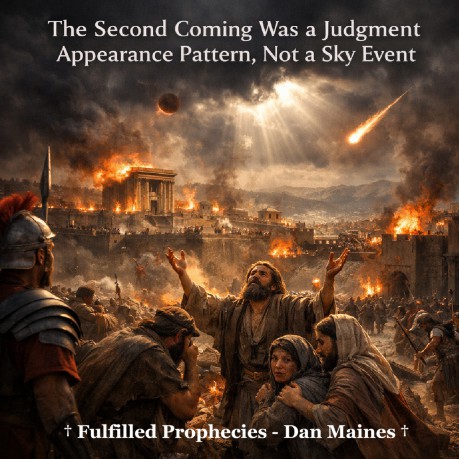
Second Coming Was a Judgment Appearance Pattern, Not a Sky Event Introduction † Most people
argue about when the coming happened, but that misses how God
actually comes throughout scripture. † If we let
the Bible define its own pattern, we'll see that God's "coming"
is consistently described as judgment, not a visible sky event. † This isn't
new language, it's established all through the Old Testament, and
Jesus used that same pattern. Isaiah 19:1 Behold, the Lord
is riding on a swift cloud and is about to come to Egypt; † God is
described as riding on a cloud coming to Egypt, but no one saw a
literal visible Yahweh in the sky (Isaiah 19:1). † This was
fulfilled through judgment on Egypt, showing that "coming on
clouds" is symbolic covenant judgment language, not physical
appearance (Isaiah 19:1). † The language
describes divine authority and judgment, not a visible descent from
heaven (Psalm 104:3; Nahum 1:3).
Isaiah 13:9-13 † This
describes God "coming" in judgment against Babylon using
cosmic language, sun darkened, stars falling, heavens shaken (Isaiah
13:9-13). † None of this
was a literal collapse of the universe, it was prophetic judgment
language against a nation (Isaiah 13:17). † This proves
the pattern, when God "comes," it's describing covenant
judgment, not a visible sky event. Matthew
16:27-28 "Truly I say to you, there are
some of those who are standing here who will not taste death until
they see the Son of Man coming in His kingdom." † Jesus uses
the exact same judgment language as Isaiah, showing continuity with
the Old Testament pattern (Matthew 16:27). † He places
the timing within that generation, saying some standing there
wouldn't die before seeing it (Matthew 16:28). † This cannot
be a future global sky event, because the audience limitation makes
it a first century fulfillment (Matthew 16:28). † The coming
includes judgment and reward, which matches the destruction of
Jerusalem in AD 70 (Matthew 16:27; Luke 21:22). † This is
covenant judgment against Israel, just like Yahweh came against Egypt
and Babylon (Isaiah 19:1; Isaiah 13:9-13). Matthew
24:30-34
"Now learn the parable from the fig tree: as soon as its branch
has become tender and sprouts its leaves, you know that summer is
near; so you too, when you see all these things, recognize that He is
near, right at the door. Truly I say to you, this generation will not
pass away until all these things take place.
† Jesus again
uses cloud-coming language, exactly like the Old Testament judgment
passages (Matthew 24:30). † He clearly
defines the timing, this generation would see all of it fulfilled
(Matthew 24:34). † This
directly confirms what He already said in Matthew 16, removing any
possibility of a distant future fulfillment. Daniel 7:13 † The Son of
Man comes on the clouds, but He comes to the Ancient of Days, not
down to earth (Daniel 7:13). † This shows
that cloud-coming is about receiving authority and kingdom, not a
physical descent. † Jesus is
drawing directly from this passage, showing His coming is about
enthronement and judgment, not a sky event. Historical References † Josephus
records the destruction of Jerusalem as catastrophic, with signs and
judgments that match prophetic language (Josephus, Wars of the Jews,
Book 6). † Eusebius
confirms the fall of Jerusalem as the fulfillment of Jesus' warnings
(Eusebius, Ecclesiastical History 3.5). † Tacitus
describes the same events with overwhelming destruction and
divine-like judgment (Tacitus, Histories 5.13). How It Applies To Us
Today † We don't
look for a physical sky event, we understand how God works through
history in judgment and authority. † This
strengthens our confidence in scripture, because what Jesus said
happened exactly when He said it would. † It shifts
our focus from speculation about the future to recognizing the
fulfilled kingdom we live in now. † It reminds
us that God is faithful to His word, and His judgments and promises
always come to pass. † When people
miss this pattern, they stay stuck waiting for something that has
already been fulfilled. Q & A Appendix Q
If the coming wasn't visible, how could people "see" it? Q
Doesn't Acts 1 say He will return the same way? Q
How do we know this is judgment language? Q
What about Revelation 1:7 where every eye will see Him? Q
What about a bodily return of Jesus? Q
What about angels coming with Him? Q
What about the trumpet sound? Q
Why do people expect a visible sky event then? Q
Does this mean Jesus already returned? Q
I thought the second coming was supposed to be visible and audible? Jesus used that same language and
placed it in their lifetime (Matthew 16:27-28). So the "seeing" and "hearing"
describe experiencing judgment and fulfillment, not a literal global
sky event. † This is the fulfilled
perspective we proclaim at Fulfilled Prophecies † Source Index † Isaiah 19:1;
Isaiah 13:9-13; Matthew 16:27-28; Matthew 24:30-34; Daniel 7:13;
Psalm 104:3; Nahum 1:3; Luke 21:22 † Josephus,
Wars of the Jews, Book 6; Eusebius, Ecclesiastical History 3.5;
Tacitus, Histories 5.13
By Dan Maines
The
pronouncement concerning Egypt:
The
idols of Egypt will tremble at His presence,
And the heart of
the Egyptians will melt within them.
Behold,
the day of the Lord
is coming,
Cruel, with fury and burning anger,
To make the
land a desolation;
And He will exterminate its sinners from
it.
For the stars of heaven and their constellations
Will
not flash their light;
The sun will be dark when it rises
And
the moon will not shed its light.
So I will punish the world for
its evil
And the wicked for their wrongdoing;
I will also
put an end to the audacity of the proud
And humiliate the
arrogance of the tyrants.
I will make mortal man scarcer than
pure gold
And mankind than the gold of Ophir.
Therefore I
will make the heavens tremble,
And the earth will be shaken from
its place
At the fury of the Lord
of armies
In the day of His burning anger.
For
the Son of Man is going to come in the glory of His Father with His
angels, and will
then repay every person according to his
deeds.
And
then the sign of the Son of Man will appear in the sky, and then all
the tribes of the earth will mourn, and they will see the Son
of Man coming on the clouds of the sky
with power and great glory. And He will send forth His angels with a
great trumpet blast,
and they
will gather together
His elect from the four winds, from one end of the sky to the other.
"I
kept looking in the night visions,
And behold, with the clouds
of heaven
One like a son of man was coming,
And He came up
to the Ancient of Days
And was presented before Him.
A
Scripture often uses "seeing" as understanding or
experiencing judgment. Jesus tied this to events they would witness
in their lifetime (Matthew 16:28; Matthew 24:30; Luke 21:20-22).
A
Acts 1:11 refers to His ascension pattern, but Jesus already defined
His coming within that generation using established prophetic
language (Matthew 24:30, 34).
A
The Old Testament repeatedly uses cloud-coming and cosmic language
for national judgment, not physical appearances (Isaiah 19:1; Isaiah
13:9-13).
A
That language comes from Old Testament judgment imagery and covenant
context. "Every eye" refers to those under judgment,
especially Israel, and it was fulfilled in that generation
(Revelation 1:1, 7).
A
Jesus already defined His coming using Old Testament judgment
language, and placed it within that generation. The focus is on His
authority and judgment, not a physical descent (Matthew 16:27-28).
A
Angels are often used as agents of judgment and gathering in
scripture, not necessarily visible beings descending from the sky
(Matthew 13:39-41; Matthew 24:31).
A
Trumpets in scripture announce covenant events, judgment, and
gathering, not necessarily a literal global sound (Isaiah 27:13;
Matthew 24:31).
A
Because they read prophetic language literally instead of recognizing
the Old Testament pattern that defines how God "comes" in
judgment.
A
Yes, in the sense that He came in judgment and kingdom authority
exactly as He said He would within that generation (Matthew 16:28;
Matthew 24:34).
A
That expectation comes from taking prophetic language literally
instead of recognizing the pattern. When God "came" in the
Old Testament, no one physically saw or heard Him in the sky (Isaiah
19:1).
©
Fulfilled Prophecies - Dan Maines.
Links