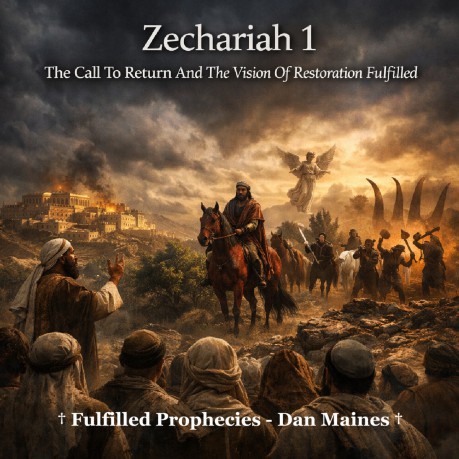
Zechariah 1 The Call To
Return And The Vision Of Restoration Fulfilled Introduction † Zechariah opens in a time when Israel had
returned from Babylon, but their hearts still needed to return to
God, and that's the key issue being addressed (Ezra 5:1). † The message is simple and direct, return to
the Lord, and He will return to you, this is covenant language that
finds its fulfillment in Christ bringing restoration (James 4:8). † This chapter sets the tone, judgment had
already happened, and now restoration is being revealed, pointing
forward to what would be completed in that first century generation
(Matthew 24:34). Zechariah 1:1 In the eighth month, in the second year of Darius, the word of the
LORD came to Zechariah the prophet, the son of Berechiah, the son of
Iddo, saying, † This places the prophecy in real history, not
future speculation, it was during the Medo-Persian period after the
exile (Ezra 5:1). † God is speaking into a real moment, showing
that prophecy always connects to the people living at that time
(Hebrews 1:1-2). † The same pattern holds throughout scripture,
God speaks to a generation and fulfills His word within that
generation (Matthew 24:34). Zechariah 1:2 The LORD was very angry with your fathers. † This is looking back at the judgment that
already came, especially the Babylonian destruction of Jerusalem (2
Kings 25:8-10). † Their fathers experienced the consequences of
breaking covenant, exactly as warned in Deuteronomy 28 (Deuteronomy
28:49-52). † This confirms that judgment is not future
here, it had already taken place, setting the stage for restoration
(Daniel 9:11-12). Zechariah 1:3 Therefore say to them, This is what the LORD of armies says:
Return to Me, declares the LORD of armies, that I may return to you,
says the LORD of armies. † This is covenant language, not individual
salvation language, it's about national restoration (Deuteronomy
30:2-3). † The promise of return finds its full meaning
in Christ, where God dwells with His people again (John 14:23). † James echoes this exact principle, Draw near
to God and He will draw near to you (James 4:8). Zechariah 1:4 Do not be like your fathers, to whom the former prophets
proclaimed, saying, This is what the LORD of armies says, Turn now
from your evil ways and from your evil deeds. But they did not listen
or pay attention to Me, declares the LORD. † The warning is clear, don't repeat the same
rebellion (Jeremiah 25:4). † Israel had a pattern of rejecting prophets,
which ultimately led to judgment (2 Chronicles 36:15-16). † Jesus confirms this same pattern, saying they
killed the prophets (Matthew 23:29-37). Zechariah 1:5 Your fathers, where are they? And the prophets, do they live
forever? † This is a reminder of mortality and
accountability (Psalm 103:15-16). † The previous generation passed away under
judgment (Lamentations 5:7). † It reinforces that God's word outlasts every
generation (Isaiah 40:8). Zechariah 1:6 But did My words and My statutes, which I commanded My servants
the prophets, not overtake your fathers? Then they repented and said,
Just as the LORD of armies planned to do to us in accordance with our
ways and our deeds, so He has dealt with us. † God's word overtook them, meaning it came to
pass exactly as spoken (Zechariah 1:6). † This proves prophetic fulfillment is certain
and not delayed indefinitely (Isaiah 55:11). † The people themselves acknowledged God's
judgment was just (Nehemiah 9:33). Zechariah 1:7 On the twenty-fourth day of the eleventh month, which is the month
Shebat, in the second year of Darius, the word of the LORD came to
Zechariah the prophet, the son of Berechiah, the son of Iddo, as
follows: † Another time marker showing this is grounded
in history (Haggai 1:1). † This reinforces that prophecy isn't vague or
detached, it's tied to real events (Luke 1:1-3). Zechariah 1:8 I saw at night, and behold, a man was riding on a red horse, and
he was standing among the myrtle trees that were in the ravine, with
red, sorrel, and white horses behind him. † This is a vision, symbolic language revealing
spiritual realities (Daniel 7:2). † The horses represent messengers sent
throughout the earth (Zechariah 6:5). † Similar imagery appears in Revelation,
showing divine oversight of the nations (Revelation 6:1-8). Zechariah 1:9 Then I said, My lord, what are these? And the angel who was
speaking with me said to me, I will show you what these are. † Zechariah seeks understanding, showing that
visions require interpretation (Daniel 8:15-16). † God provides explanation, meaning prophecy is
meant to be understood (Amos 3:7). Zechariah 1:10 And the man who was standing among the myrtle trees responded and
said, These are those whom the LORD has sent to patrol the earth. † These are divine agents observing the earth
(Job 1:7). † God is actively aware of all nations and
conditions (Proverbs 15:3). † This shows God's sovereignty over history
(Daniel 4:17). Zechariah 1:11 So they answered the angel of the LORD who was standing among the
myrtle trees and said, We have patrolled the earth, and behold, all
the earth is peaceful and quiet. † The nations appeared at peace under Persian
rule (Ezra 6:15). † But this peace was temporary and superficial
(1 Thessalonians 5:3). † God's concern is not worldly stability but
covenant restoration (Haggai 2:6-7). Zechariah 1:12 Then the angel of the LORD said, LORD of armies, how long will You
have no compassion for Jerusalem and the cities of Judah, with which
You have been indignant these seventy years? † The seventy years refers to the Babylonian
captivity (Jeremiah 25:11-12). † This confirms the timeline already fulfilled
(Daniel 9:2). † Now the focus shifts from judgment to mercy
(Psalm 102:13). Zechariah 1:13 The LORD answered the angel who was speaking with me with gracious
words, comforting words. † God responds with comfort, not continued
judgment (Isaiah 40:1-2). † This points forward to the comfort fulfilled
in Christ (Luke 2:25). Zechariah 1:14 So the angel who was speaking with me said to me, Proclaim,
saying, This is what the LORD of armies says: I am exceedingly
jealous for Jerusalem and Zion. † God's jealousy is covenant love (Exodus
34:14). † He is committed to restoring His people
(Zechariah 8:2). † This ultimately finds fulfillment in the
establishment of the New Covenant people (Hebrews 8:10). Zechariah 1:15 But I am very angry with the nations who are at ease; for while I
was only a little angry, they furthered the disaster. † The nations went beyond what God allowed
(Isaiah 10:5-7). † They would also face judgment (Jeremiah
50:17-18). † This ties into later judgments on Rome and
other powers (Revelation 18:2). Zechariah 1:16 Therefore this is what the LORD says: I will return to Jerusalem
with compassion; My house will be built in it, declares the LORD of
armies, and a measuring line will be stretched over Jerusalem. † This points to the rebuilding of the temple
(Ezra 6:14-15). † But ultimately it points to the true temple,
the people of God (1 Corinthians 3:16). † Fulfillment is not in physical stones, but in
God's dwelling with His people (Ephesians 2:21-22). Zechariah 1:17 Again, proclaim, saying, This is what the LORD of armies says: My
cities will again overflow with prosperity, and the LORD will again
comfort Zion and again choose Jerusalem. † This prosperity is covenant blessing
(Deuteronomy 30:9). † It finds fulfillment in the kingdom
established through Christ (Ephesians 1:3). † Hebrews shows the true Jerusalem is already
present (Hebrews 12:22). Zechariah 1:18-19 Then I raised my eyes and looked, and behold, there were four
horns. So I said to the angel who was speaking with me, What are
these? And he answered me, These are the horns which have scattered
Judah, Israel, and Jerusalem. † The horns represent powers that scattered
Israel (Daniel 7:7). † These include Babylon, Medo-Persia, Greece,
and Rome (Daniel 2:37-40). † God is identifying the forces behind their
scattering (Zechariah 1:19). Zechariah 1:20-21 Then the LORD showed me four craftsmen. And I said, What are these
coming to do? And he said, These are the horns which have scattered
Judah so that no one lifts up his head; but these craftsmen have come
to terrify them, to throw down the horns of the nations who have
raised their horn against the land of Judah in order to scatter it. † The craftsmen represent God's instruments of
judgment (Isaiah 13:5). † Every kingdom that rises against God's people
will fall (Daniel 2:44). † This was fulfilled through successive empires
overthrowing one another, culminating in Rome's fall (Matthew 24:2). Historical References † Josephus records the return from Babylon and
rebuilding efforts in Antiquities of the Jews, Book 11. † Eusebius confirms the fulfillment of
Jerusalem's judgment and restoration themes in Ecclesiastical
History. † Tacitus records the dominance and later
decline of Roman power, aligning with prophetic patterns. How It Applies To Us Today † The call to return still stands, but it's
fulfilled in Christ where we now live in restored fellowship (John
14:23). † We don't wait for restoration, we're already
in it (Hebrews 12:28). † God's word always comes to pass, so we trust
what He's already fulfilled (Isaiah 55:11). † The kingdom isn't future, it's present, and
we're part of it now (Colossians 1:13). Q & A Appendix Q When was the return to God fulfilled? Q Are the seventy years future? Q Is the temple in this chapter physical or
spiritual? Q Who are the horns? Q Has God already returned to His people? † This is the fulfilled perspective we proclaim at
Fulfilled Prophecies † Source Index † Zechariah 1
By Dan Maines
A
It was fulfilled in Christ establishing the New Covenant (Luke
22:20).
A
No, they were fulfilled in the Babylonian captivity (Jeremiah
25:11-12).
A It pointed forward to the
spiritual temple (1 Corinthians 3:16).
A They
are the kingdoms that scattered Israel (Daniel 7:17).
A
Yes, through Christ dwelling with us (John 14:23).
© Fulfilled Prophecies - Dan
Maines.
†
Josephus, Antiquities of the Jews, Book 11; Eusebius, Ecclesiastical
History; Tacitus, Histories
Links