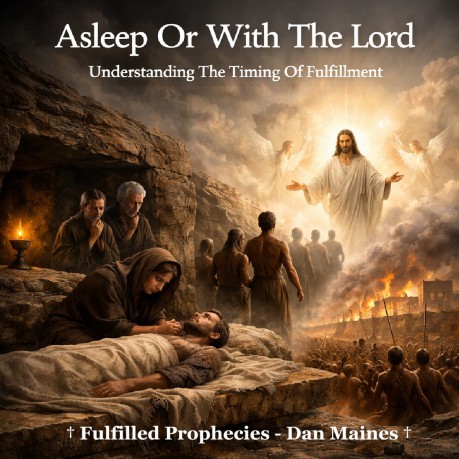
Asleep Or With The Lord
Understanding The Timing Of Fulfillment Introduction † This can sound like a contradiction, but it
makes sense once you keep the timing straight. (1 Thessalonians
4:13-14; 2 Corinthians 5:8; Luke 23:43) † This is exactly where most confusion comes
in, not because the text is unclear, but because the timing of
fulfillment is ignored. (Hebrews 11:39-40; 1 Corinthians 15:54) † When we read these passages in their first
century context, everything lines up without forcing anything.
(Matthew 16:27-28; Matthew 24:34) † Paul was speaking during a period when
fulfillment was right on the edge, so he uses both kinds of language.
(1 Thessalonians 4:13-17; 1 Corinthians 10:11) † This is critical, because we are not reading
Paul after everything was completed, we are reading him before it was
finished. (Hebrews 9:8-10; Hebrews 12:26-28) † That means his language reflects expectation,
not completion. (Romans 13:11-12; Hebrews 10:25, 37) 1 Thessalonians 4:13-14 † When he says believers were asleep, he is
talking about those who had died before everything was fully
completed. (1 Thessalonians 4:13-14) † That language comes from the idea of waiting,
not unconsciousness. They were at rest, but still awaiting the
resurrection that was about to happen in their generation. (Daniel
12:2; John 11:11-14; 1 Corinthians 15:51-54) † Notice the expectation, God will bring with
Him those who have fallen asleep, that is future from Paul's
standpoint. (1 Thessalonians 4:14-17) † This shows they had not yet experienced the
final, completed state. (Hebrews 11:39-40) † If everything was already finished, there
would be no need for this expectation language. (1 Corinthians
15:22-26; Hebrews 10:36-37) † The term asleep is covenantal, tied to
promise not yet fulfilled. (1 Thessalonians 4:13-17; Revelation
6:9-11) 2 Corinthians 5:8 † At the same time, Paul also says this, and it
shows his confidence that being with Christ was real and immediate
upon death. (2 Corinthians 5:6-8; Philippians 1:21-23) † There is no denial of presence with Christ
here at all. (2 Corinthians 5:8) † So Paul holds both truths at the same time,
presence with Christ and awaiting completion. (2 Corinthians 5:8; 1
Thessalonians 4:13-17) † That is not a contradiction, that is timing.
(Hebrews 11:39-40; 1 Corinthians 15:54) † He knew fulfillment was near, not yet fully
realized. (Romans 13:11-12; James 5:8-9; 1 Peter 4:7) Luke 23:43 † Jesus said this to the thief, and it proves
that believers did go to be with the Lord when they died. (Luke
23:43) † Paradise was a real place of presence with
Christ. (Luke 23:43; 2 Corinthians 12:2-4) † So they were with the Lord, but still waiting
for something that had not yet been completed. That is the part
people miss. (Hebrews 11:39-40; Revelation 6:9-11) † Presence does not equal completion. (Hebrews
11:39-40) † Being with Christ does not mean the final
resurrection had already occurred. (1 Corinthians 15:22-26; 2 Timothy
2:18) Luke 16:19-31 † This shows Abraham, Lazarus, and the rich man
all conscious after death, before the resurrection. (Luke 16:19-31) † This proves that asleep never meant
unconscious. (John 11:11-14; Luke 16:19-31) † They were aware, speaking, and experiencing
comfort or torment. (Luke 16:23-25) Hebrews 11:39-40 † Hebrews explains it clearly, they were in His
presence, but the full completion of redemption, the resurrection,
and the defeat of death had not yet been publicly fulfilled. (Hebrews
11:39-40; 1 Corinthians 15:54-57) † That is why Paul could still refer to them as
asleep. It was not about location, it was about fulfillment. (1
Thessalonians 4:13-14; Hebrews 11:39-40) † They had not yet been made perfect. (Hebrews
11:40; Hebrews 12:23) † That perfection is tied to the completed
kingdom reality. (Hebrews 12:22-28; Revelation 21:1-4) † That had to happen together, not individually
before fulfillment. (Hebrews 11:40; 1 Thessalonians 4:15-17) Revelation 6:9-11 † These souls are under the altar, speaking,
aware, and asking how long. (Revelation 6:9-11) † They are clearly with the Lord, yet still
told to rest a little longer. (Revelation 6:10-11) † This is the exact picture of being with
Christ while still awaiting fulfillment. (Revelation 6:9-11; Hebrews
11:39-40) 1 Corinthians 15:54 † Paul points to the moment when that waiting
would end. (1 Corinthians 15:54) † That is the turning point. Once that was
fulfilled, the waiting was over. (1 Corinthians 15:54-57; Revelation
21:4) † Death as the last enemy was dealt with, and
there was no longer any reason to speak of believers as asleep in
that same covenant sense. (1 Corinthians 15:26, 54-57) † This is not describing something thousands of
years later. (1 Corinthians 15:51-52; Matthew 24:34) † This was about to happen in their generation.
(Matthew 16:27-28; Matthew 24:34; Revelation 1:1, 3; Revelation
22:6-7, 10, 12) † Once it happened, everything changed.
(Hebrews 12:26-28; Revelation 21:1-5) Hebrews 10:37 † This ties the resurrection expectation
directly to their timeframe. (Hebrews 10:37) † The coming and fulfillment were not distant,
they were near. (Hebrews 10:37; James 5:8-9) Hebrews 12:28 † This shows we are not waiting anymore, the
kingdom is already received. (Hebrews 12:28) † There is no ongoing expectation of
fulfillment, it has already been established. (Hebrews 12:28;
Revelation 21:1-4) Historical References † Justin Martyr spoke of the faithful as
awaiting the resurrection, showing that early Christians understood a
distinction between being with the Lord and the final consummation.
(Justin Martyr, Dialogue With Trypho) † Irenaeus wrote of the righteous being in a
place appointed by God until the resurrection, showing awareness of
an awaiting period before completion. (Irenaeus, Against Heresies,
Book 5) † Eusebius recorded the destruction of
Jerusalem as the fulfillment of Christ's prophetic words against that
generation, marking the covenantal turning point. (Eusebius,
Ecclesiastical History, Book 3) How It Applies To Us Today † We are not waiting for what they were waiting
for, we are living in what they were expecting. (Hebrews 12:28;
Revelation 21:2-4) † There is no fear in death, because there is
no unfinished promise left. (1 Corinthians 15:54-57; 2 Corinthians
5:8) † Our confidence is complete, because Christ
has already finished everything. (John 19:30; Hebrews 9:26-28;
Hebrews 10:12-14) † We do not live looking for a future defeat of
death, we live in the victory Christ already brought. (1 Corinthians
15:54-57) † That gives believers peace, confidence, and
assurance right now. (Romans 8:38-39; Philippians 1:21-23) Q & A Appendix Q: If they were with the Lord, why call them
asleep? A: Because the term refers to waiting for the
completed resurrection, not their location. They were with Christ,
but the corporate fulfillment had not yet arrived. (1 Thessalonians
4:13-14; Hebrews 11:39-40) Q: Did believers go to heaven before AD 70? A: They were with Christ in Paradise, but not yet
in the fully completed kingdom state that arrived when all things
were fulfilled. (Luke 23:43; Hebrews 11:39-40; 1 Corinthians 15:54) Q: When was death defeated? A: Death was defeated when immortality was put on
and death was swallowed up in victory, which Paul placed as near in
his own generation. (1 Corinthians 15:54; Matthew 24:34; Revelation
21:4) Q: Was Paul contradicting himself? A: No, he was describing two aspects of the same
transitional reality before fulfillment was complete, presence with
Christ, and waiting for the final covenantal victory. (2 Corinthians
5:8; 1 Thessalonians 4:13-17; Hebrews 11:39-40) Q: What is different for believers now? A: Now there is no waiting tied to unfulfilled
prophecy, because the kingdom has been fully established and
believers enter directly into the fullness of life with Christ.
(Hebrews 12:28; Revelation 21:1-4) Q: Does sleep mean unconsciousness? A: No, because people are shown conscious after
death, speaking, aware, and with the Lord. (Luke 16:19-31; Revelation
6:9-11; Luke 23:43) Q: If they were already with Christ, what exactly
were they waiting for? A: They were waiting for the corporate,
covenantal completion of the resurrection and the full defeat of
death, not personal presence with Christ. (Hebrews 11:39-40; 1
Corinthians 15:54) Q: What does Paul mean by God bringing them with
Him? A: It refers to the public vindication and
resurrection at the time of fulfillment, when those already with
Christ would be revealed as part of the completed kingdom. (1
Thessalonians 4:14-17) Q: How do we know this was about their
generation? A: Because the New Testament repeatedly says
these things were near and about to happen. (Matthew 16:27-28;
Matthew 24:34; Revelation 1:1, 3; Hebrews 10:37) Q: Were Old Testament saints also waiting? A: Yes, they were included in the same promise
and were not made perfect apart from the first century believers.
(Hebrews 11:39-40) Q: What changed after AD 70 regarding death? A: Death as the last enemy was defeated, and the
transition into the full presence of Christ was no longer tied to an
unfulfilled promise. (1 Corinthians 15:54-57) Q: Why does Revelation show souls asking how
long? A: Because judgment and fulfillment had not yet
been completed, showing they were aware and still awaiting the final
resolution. (Revelation 6:9-11) Q: Does this mean there is no future resurrection
left? A: Yes, the resurrection Paul spoke of was
fulfilled when death was swallowed up in victory in their generation.
(1 Corinthians 15:54; Matthew 24:34) Q: Why do people still die physically today? A: Because the resurrection Paul spoke of was not
about biological immortality, but about the defeat of death in its
covenantal power and separation from God. (1 Corinthians 15:54-57;
Hebrews 2:14-15) † This is the fulfilled perspective we proclaim at
Fulfilled Prophecies † Source Index † 1 Thessalonians 4:13-14; 2 Corinthians 5:8;
Luke 23:43; Luke 16:19-31; Hebrews 11:39-40; Revelation 6:9-11; 1
Corinthians 15:54; Hebrews 10:37; Hebrews 12:28
By Dan Maines
But we do not want
you to be uninformed, brothers and sisters, about those who are
asleep, so that you will not grieve as indeed the rest of mankind do,
who have no hope. For if we believe that Jesus died and rose from the
dead, so also God will bring with Him those who have fallen asleep
through Jesus.
we are of good courage, I
say, and prefer rather to be absent from the body and to be at home
with the Lord.
And He said to him, Truly I say
to you, today you will be with Me in Paradise.
Now there was a rich man, and
he habitually dressed in purple and fine linen, enjoying himself in
splendor every day. And a poor man named Lazarus was laid at his
gate, covered with sores, and longing to be fed from the crumbs which
were falling from the rich man's table; besides, even the dogs were
coming and licking his sores. Now it happened that the poor man died
and was carried away by the angels to Abraham's arms; and the rich
man also died and was buried. And in Hades he raised his eyes, being
in torment, and saw Abraham far away and Lazarus in his arms. And he
cried out and said, Father Abraham, have mercy on me, and send
Lazarus so that he may dip the tip of his finger in water and cool
off my tongue, for I am in agony in this flame. But Abraham said,
Child, remember that during your life you received your good things,
and likewise Lazarus bad things; but now he is being comforted here,
and you are in agony. And besides all this, between us and you a
great chasm has been set in place, so that those who want to come
over from here to you will not be able, nor will any cross over from
there to us. And he said, Then I request of you, father, that you
send him to my father's house, for I have five brothers, in order
that he may warn them, so that they will not also come to this place
of torment. But Abraham said, They have Moses and the Prophets; let
them hear them. But he said, No, father Abraham, but if someone goes
to them from the dead, they will repent. But he said to him, If they
do not listen to Moses and the Prophets, they will not be persuaded
even if someone rises from the dead.
And all these, having
gained approval through their faith, did not receive what was
promised, because God had provided something better for us, so that
apart from us they would not be made perfect.
When He broke the fifth
seal, I saw underneath the altar the souls of those who had been
killed because of the word of God, and because of the testimony which
they had maintained; and they cried out with a loud voice, saying,
How long, O Lord, holy and true, will You refrain from judging and
avenging our blood on those who live on the earth? And a white robe
was given to each of them; and they were told that they were to rest
for a little while longer, until the number of their fellow servants
and their brothers and sisters who were to be killed even as they had
been, was completed also.
But when this perishable
puts on the imperishable, and this mortal puts on immortality, then
will come about the saying that is written: Death has been swallowed
up in victory.
For yet in a very little
while, He who is coming will come, and will not delay.
Therefore, since we receive a
kingdom which cannot be shaken, let's show gratitude, by which we may
offer to God an acceptable service with reverence and awe;
© Fulfilled Prophecies - Dan
Maines.
†
Justin Martyr, Dialogue With Trypho
†
Irenaeus, Against Heresies, Book 5
†
Eusebius, Ecclesiastical History, Book 3
Links