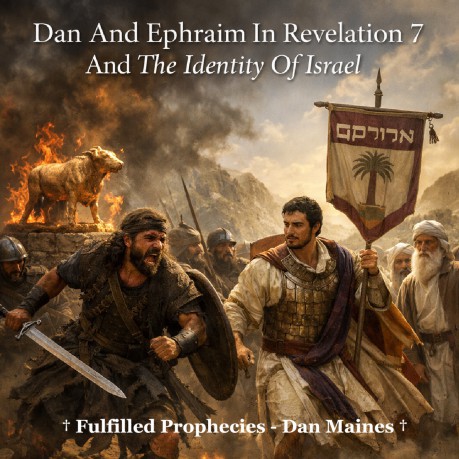
Dan And Ephraim In Revelation
7 And The Identity Of Israel Introduction † Many have noticed that when we come to
Revelation 7:5-8, the tribal list is not the same as the Old
Testament listings, and that is not accidental, it is intentional
(Revelation 7:5-8). † Dan is missing, Ephraim is not named, and yet
Levi appears, and Joseph is listed alongside Manasseh, which
immediately tells us we are not dealing with a simple land-based
tribal registry (Numbers 18:20; Genesis 48:5). † What we are seeing is a covenantal, purified,
and fulfilled Israel, not a geographic or genealogical reconstruction
of Old Covenant tribes (1 Peter 2:5). † This fits perfectly with the fulfilled
reality in AD 70, where the Old Covenant order passed away and the
true Israel of God stood complete in Christ (Hebrews 8:13). Genesis 48:5
By Dan Maines
† Jacob adopted Joseph's two sons as his own,
giving them full tribal status in Israel (Genesis 48:5).
† This is where Ephraim and Manasseh come into
the tribal structure, not as replacements of Israel, but as part of
it (Genesis 48:5; Joshua 14:4).
† This is important because it shows Ephraim
never became Israel itself, he was counted within Israel (Genesis
48:5).
Genesis 48:14, 19
† Ephraim was the younger son, yet received the
greater blessing, which is why he later becomes prominent among the
tribes (Genesis 48:14, 19).
† That prominence is what leads some to say
Ephraim became Israel, but the text never says that, it says he would
become great within Israel (Genesis 48:19).
† The blessing does not change identity, it
establishes influence, not replacement (Genesis 48:19; Genesis
49:22-26).
Hosea 4:17
† In the prophets, especially Hosea, Ephraim is
often used to represent the northern kingdom of Israel (Hosea 4:17;
Hosea 5:3).
† This is where the idea comes from that
Ephraim became Israel, but it is a representational usage, not a
literal renaming of the nation (Hosea 5:3; 2 Kings 17:6-8).
† Ephraim became the leading tribe of the
northern kingdom, so his name stood for the whole, but he never
replaced Israel itself (Hosea 4:17).
† This also explains why Ephraim's name becomes
tied to rebellion and idolatry, leading to judgment (Hosea 4:17;
Hosea 8:8).
Revelation 7:5-8
† Dan is completely absent from this list,
which immediately signals a deliberate omission, not an oversight
(Genesis 49:17).
† Ephraim is not named directly, but is
represented under Joseph, which shows a reshaping of tribal identity
rather than a literal genealogical listing (Genesis 48:5).
† Levi being included proves this is not about
land inheritance, since Levi had no inheritance in the land under the
Old Covenant (Numbers 18:20).
† This list is theological, not territorial,
showing a purified covenant people, not a return to tribal geography
(Galatians 6:15-16).
Genesis 49:17
† Dan is associated with deception and judgment
from the beginning, which becomes significant later in Israel's
history (Genesis 49:17; Judges 18:30-31).
† The tribe of Dan led Israel into idolatry,
setting up graven images, which directly violates covenant
faithfulness (Judges 18:30-31; 1 Kings 12:28-30).
† Because of this, Dan becomes a symbol of
apostasy, which explains why he is excluded from the sealed remnant
in Revelation (Revelation 7:5-8).
Judges 18:30-31
† This shows clearly that Dan established
idolatry within Israel, not temporarily, but as an ongoing practice
(Judges 18:30-31).
† This is not minor error, this is
institutionalized rebellion within the covenant people (Judges
18:30-31).
† This directly explains why Dan is excluded in
Revelation, God does not seal idolatry (Revelation 7:5-8).
1 Kings 12:29
† Dan became one of the central locations of
Jeroboam's golden calf system, making it a headquarters of apostate
worship (1 Kings 12:29).
† This ties Dan directly to the official false
worship system that led Israel into judgment (1 Kings 12:28-30).
† This strengthens the reason for Dan's
omission, he represents organized rebellion against God (Revelation
7:5-8).
1 Peter 2:5
† The New Testament defines Israel as a
spiritual house, not a physical tribal system tied to land (1 Peter
2:5; Ephesians 2:19-22).
† This confirms that Revelation 7 is not about
ethnic tribal restoration, but about the completed people of God in
Christ (Galatians 3:28-29).
† The 144,000 represent the fullness of
covenant Israel brought to completion, not a future literal tribal
census (Revelation 7:4; Romans 9:6-8).
Galatians 6:15-16
† The Israel of God is defined by new creation,
not by physical descent or tribal identity (Galatians 6:15-16).
† This confirms that the true Israel is
spiritual and fulfilled in Christ, not a future ethnic restoration
(Galatians 6:15-16; Romans 9:6-8).
† This aligns perfectly with Revelation 7,
where the list reflects a purified covenant people (Revelation
7:5-8).
2 Kings 17:6-8
† The northern tribes, led by Ephraim, were
judged and scattered because of idolatry (2 Kings 17:6-8; Hosea 8:8).
† This historical judgment explains why their
identity is not preserved in the same way in Revelation (Revelation
7:5-8).
† God is not restoring rebellion, he is
establishing a purified people (Malachi 3:2-3).
Ezekiel 37:19
† The reunification of Israel is shown as a
single people in God's hand, not a divided tribal system restored
later (Ezekiel 37:19).
† This is fulfilled in Christ, where Jew and
Gentile are brought together into one body (Ephesians 2:14-16).
† This again confirms Revelation 7 is about
unity and fulfillment, not tribal restoration (Revelation 7:5-8).
Historical References
† Josephus records the corruption and idolatry
of the northern tribes and their eventual destruction, showing the
seriousness of their apostasy (Antiquities of the Jews, Book 9).
† Irenaeus noted that the tribal listings in
Revelation are symbolic and not strictly genealogical, recognizing
the theological purpose of the list (Against Heresies 5.30).
† Eusebius confirms that the destruction of
Jerusalem in AD 70 marked the end of the Old Covenant system and its
tribal distinctions (Ecclesiastical History 3.5).
How It Applies To Us Today
† We are not looking for a future tribal
restoration, we are living in the fulfilled reality of God's
completed people in Christ (Galatians 3:28-29).
† The omission of Dan and Ephraim shows that
God does not preserve rebellion, he removes it and establishes what
is faithful (Revelation 7:5-8).
† Our identity is not in physical descent but
in Christ, who has brought together all into one spiritual house (1
Peter 2:5).
† The 144,000 is not about future speculation,
it is about the completed covenant people revealed at the end of the
Old Covenant age in AD 70 (Revelation 7:4; Hebrews 12:22-24).
Q & A Appendix
Q Why do some say Ephraim became Israel?
Q Why is Dan missing from Revelation 7?
Q Why is Ephraim not listed?
Q Does this prove the tribes are not literal?
Q Who are the 144,000?
Q If Ephraim became prominent, why would God
avoid using his name?
Q Why is Joseph listed instead of Ephraim?
Q Why is Levi included if this is about tribes?
Q Does the omission of Dan mean he is completely
lost?
Q Why would God remove certain tribal names?
Q Is Revelation 7 about the Old Covenant tribes
returning?
Q How do we know this is not future?
Q Why is Manasseh listed but not Ephraim?
† This is the fulfilled perspective we proclaim at
Fulfilled Prophecies †
Source Index
† Genesis 48:5, 14, 19; Hosea 4:17; Revelation
7:5-8; Genesis 49:17; Judges 18:30-31; 1 Kings 12:29; 1 Peter 2:5;
Galatians 6:15-16; 2 Kings 17:6-8; Ezekiel 37:19
† Josephus, Antiquities of the Jews, Book 9;
Irenaeus, Against Heresies 5.30; Eusebius, Ecclesiastical History 3.5
Links