John 13
Paraphrased
By Dan Maines
Introduction
†
This chapter shows Jesus in the final hours before the cross,
demonstrating love in action, humility, betrayal, and covenant
transition
† What He does here isn't random,
it's fulfillment, showing the end of the old system and the revealing
of true cleansing and fellowship
† The foot
washing, the betrayal, and the command to love all point directly to
what was about to be fulfilled in that generation (John 13:1; Hebrews
9:10)
John 13:1
Jesus knew His hour had
come to leave this world and return to the Father, and having loved
His own, He loved them fully to the end
† His
hour was not distant, it was present, showing imminent fulfillment
(John 12:23)
† His love reaches its full
expression here, not just in words but in action
†
This connects to the covenant transition that was about to be
completed (Hebrews 8:13)
John 13:2
During
supper, the devil had already put it into Judas Iscariot's heart to
betray Him
† The betrayal was already set in
motion, this wasn't unexpected
† Judas
becomes the instrument of what had been foretold (Psalm 41:9)
†
This shows God's plan unfolding, not failing
John
13:3
Jesus, knowing the Father had given all things
into His hands, and that He came from God and was going back to God
†
He acts from full authority, not weakness
†
His identity is fully known, this is not confusion or doubt
†
This ties to His divine origin and authority over all things (John
17:2)
John 13:4
He got up from supper,
laid aside His garments, and took a towel and wrapped Himself
†
Laying aside garments shows voluntary humility
†
This reflects His mission, lowering Himself for others (Philippians
2:7)
† The act itself symbolizes cleansing
and service
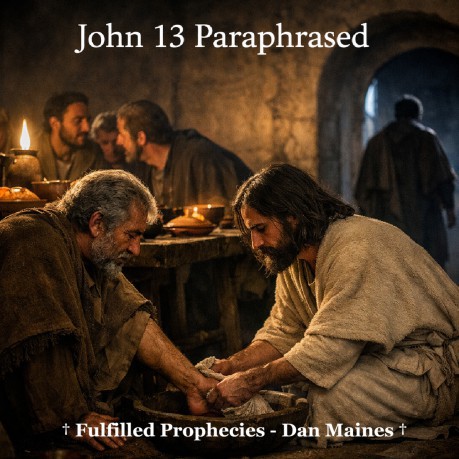
John 13:5
Then He poured water
into a basin and began washing the disciples' feet and drying them
with the towel
† This was a servant's task,
showing true greatness is humility
† It
symbolizes cleansing that only He can provide (John 15:3)
†
It also points to the removal of defilement under the old system
John
13:6
He came to Simon Peter, and Peter said, Lord, are
You going to wash my feet
† Peter resists
because he doesn't understand the meaning
†
This reflects confusion about the nature of the kingdom
†
Many expected power, not humility
John 13:7
Jesus
answered, what I am doing you do not understand now, but you will
understand later
† Understanding would come
after fulfillment
† This ties to the coming
of full revelation after the cross (John 16:13)
†
Timing matters in interpretation
John 13:8
Peter
said, You will never wash my feet, Jesus answered, if I do not wash
you, you have no part with Me
† This shows
cleansing is required for fellowship
† It's
not optional, it comes only through Christ
†
This points to spiritual cleansing, not physical ritual
John
13:9
Simon Peter said, Lord, then not only my feet, but
also my hands and my head
† Peter swings to
the extreme, still misunderstanding
† He
thinks more external washing is better
† This
shows confusion between physical and spiritual cleansing
John
13:10
Jesus said, the one who has bathed only needs to
wash his feet, and is completely clean, and you are clean, but not
all of you
† They were already clean in a
covenant sense
† Judas was the exception,
showing not all were truly part of Him
† This
reflects inward reality over outward appearance (John 15:3)
John
13:11
For He knew the one who was betraying Him, that
is why He said not all of you are clean
†
Again confirms foreknowledge
† Judas
represents those outwardly close but inwardly false
†
This ties to covenant separation
John 13:12
When
He had washed their feet and put His garments back on and sat down
again, He said to them, do you know what I have done to you
†
He now explains the meaning, this was not just an act but a teaching
moment
† The question forces them to think
beyond the physical act
† Understanding comes
through revelation, not assumption
John 13:13
You
call Me Teacher and Lord, and you are right, for that is what I am
†
He affirms His authority clearly
† There is
no denial of His position, only redefining how authority is
expressed
† True lordship includes
humility
John 13:14
If I then, the Lord
and the Teacher, washed your feet, you also ought to wash one
another's feet
† This sets the pattern for
His followers
† Leadership in the kingdom is
service, not dominance
† This directly
opposes worldly systems of power (Matthew 20:26-28)
John
13:15
For I gave you an example that you also should do
as I did to you
† This is a living example,
not just instruction
† It establishes how
covenant people are to live
† Love is
demonstrated through action
John 13:16
Truly
truly I say to you, a slave is not greater than his master, nor one
who is sent greater than the one who sent him
†
This keeps them grounded in their role
† It
reinforces submission to Christ's authority
†
No one rises above the one who sends them
John 13:17
If
you know these things, you are blessed if you do them
†
Knowledge alone is not enough
† Blessing
comes through obedience
† This separates
hearing from doing (James 1:22)
John 13:18
I
do not speak of all of you, I know the ones I have chosen, but it is
that the Scripture may be fulfilled, he who eats My bread has lifted
up his heel against Me
† This directly
fulfills prophecy (Psalm 41:9)
† Judas'
betrayal was not random, it was foretold
†
This shows Scripture being fulfilled exactly as written
John
13:19
From now on I am telling you before it happens,
so that when it does happen, you may believe that I am He
†
He gives prophecy to confirm identity
†
Fulfillment strengthens faith
† This is
evidence, not guesswork
John 13:20
Truly
truly I say to you, the one who receives whomever I send receives Me,
and the one who receives Me receives Him who sent Me
†
This establishes authority through representation
†
Receiving the apostles is receiving Christ
†
This ties to covenant transmission of truth
John
13:21
When Jesus had said this, He became troubled in
spirit, and testified, truly truly I say to you, that one of you will
betray Me
† His humanity is shown here, this
was painful
† Betrayal from within is always
the hardest
† Yet it was still within God's
plan
John 13:22
The disciples began
looking at one another, at a loss to know which one He was speaking
of
† They were unaware, showing Judas blended
in
† External appearance can hide internal
reality
† This warns against assuming outward
faithfulness equals true loyalty
John 13:23
There
was reclining on Jesus' chest one of His disciples, whom Jesus
loved
† This shows close relationship and
trust
† Likely referring to John himself
†
It highlights personal connection, not hierarchy
John
13:24
So Simon Peter gestured to him, and said to him,
tell us who it is of whom He is speaking
†
Peter seeks clarity through another
† This
shows uncertainty among them
† They still
didn't understand fully
John 13:25
He,
leaning back thus on Jesus' chest, said to Him, Lord, who is it
†
Direct question is asked
† This shows
intimacy allowed access
† Close relationship
leads to clearer understanding
John 13:26
Jesus
then answered, that is the one for whom I shall dip the morsel and
give it to him, so when He had dipped the morsel, He took and gave it
to Judas
† Jesus identifies the betrayer
directly
† This act of giving shows even in
betrayal, grace was extended
† Judas was not
excluded, he rejected
John 13:27
After the
morsel, Satan then entered into him, therefore Jesus said to him,
what you do, do quickly
† Judas fully gives
himself over at this point
† This shows a
decisive moment of surrender to evil
† Jesus
remains in control, not reacting but directing
John
13:28
Now no one of those reclining at the table knew
for what purpose He had said this to him
†
The others still did not understand
† This
shows how hidden the betrayal was
†
Fulfillment often happens while people remain unaware
John
13:29
For some were supposing, because Judas had the
money box, that Jesus was saying to him, buy the things we have need
of for the feast
† Judas held responsibility,
yet misused it
† This shows trust can be
abused
† Outward roles do not guarantee
inward faithfulness
John 13:30
So after
receiving the morsel he went out immediately, and it was night
†
Night symbolizes spiritual darkness
† Judas
leaves the light and enters darkness
† This
marks the beginning of final events
John 13:31
When
he had gone out, Jesus said, now is the Son of Man glorified, and God
is glorified in Him
† Judas leaving triggers
the final phase, this is the moment of fulfillment beginning
†
Glorification is tied to the cross, not future delay (John 12:23)
†
This shows the plan moving forward exactly on time
John
13:32
If God is glorified in Him, God will also glorify
Him in Himself, and will glorify Him immediately
†
The glorification is immediate, not thousands of years later
†
This connects to resurrection and exaltation
†
Timing again proves fulfillment within that generation
John
13:33
Little children, I am with you a little while
longer, you will seek Me, and as I said to the Jews, now I also say
to you, where I am going, you cannot come
†
His departure is near, not distant
† This
shows urgency and immediacy
† It parallels
earlier warnings to Israel (John 7:34)
John 13:34
A
new commandment I give to you, that you love one another, even as I
have loved you, that you also love one another
†
The new command is rooted in His example
†
This is covenant identity, love defines His people
†
This replaces external law with internal transformation (Jeremiah
31:33)
John 13:35
By this all men will
know that you are My disciples, if you have love for one another
†
Love becomes the visible sign of belonging
†
Not rituals, not status, but love
† This
marks the new covenant community
John 13:36
Simon
Peter said to Him, Lord, where are You going, Jesus answered, where I
go, you cannot follow Me now, but you will follow later
†
Peter still doesn't understand the timing
†
Following later refers to what comes after fulfillment
†
This shows progression, not delay into distant future
John
13:37
Peter said to Him, Lord, why can I not follow You
right now, I will lay down my life for You
†
Peter is confident but unaware of his weakness
†
This shows human zeal without understanding
†
Good intentions are not the same as faithfulness
John
13:38
Jesus answered, will you lay down your life for
Me, truly truly I say to you, a rooster will not crow until you deny
Me three times
† Jesus reveals what is about
to happen
† This shows foreknowledge and
control
† Even failure is known and accounted
for in the plan
Historical References
†
Josephus records the corruption and betrayal within Israel before its
destruction, Antiquities of the Jews, Book 20
†
Eusebius notes the fulfillment of Christ's warnings leading up to AD
70, Ecclesiastical History, Book 3
† Irenaeus
speaks of betrayal and apostasy within early circles, Against
Heresies, Book 4
† Clement of Alexandria
emphasizes the moral teachings of Christ in humility and service,
Stromata
How It Applies To Us Today
†
True greatness is still measured by humility and service, not
position
† Not everyone close to truth
belongs to it, we must examine ourselves
†
Christ's cleansing is the only true cleansing, not outward forms
†
We are called to live out what He demonstrated, not just believe it
†
Fulfillment reminds us that His word is trustworthy and complete
Q
& A Appendix:
Q: Why did Jesus
wash their feet if He was Lord
A: To
demonstrate that true authority serves, not dominates (John
13:14-15)
Q: Was Judas' betrayal planned or
random
A: It was foretold and fulfilled
according to Scripture (John 13:18)
Q: What
does the washing represent
A: Spiritual
cleansing that comes only through Christ (John 13:8)
Q:
Why didn't the disciples recognize Judas
A:
Because outward appearance can hide inward reality (John 13:22)
Q:
What does the night symbolize when Judas left
A:
Spiritual darkness and separation from Christ (John 13:30)
†
This is the fulfilled perspective we proclaim at Fulfilled Prophecies
†
© Fulfilled Prophecies - Dan Maines.
Source
Index
† John 13
†
Josephus, Antiquities of the Jews
† Irenaeus,
Against Heresies
† Eusebius, Ecclesiastical
History
† Clement of Alexandria, Stromata
Links