Acts 20 Paraphrased Introduction Acts 20:1 Acts 20:2 Acts 20:3 Acts 20:4 Acts 20:5 Acts 20:6 Acts 20:7 Acts 20:8 Acts 20:9 Acts 20:10 Acts 20:11 Acts 20:12 Acts 20:13 Acts 20:14 Acts 20:15 Acts 20:16 Acts 20:17 Acts 20:18 Acts 20:19 Acts 20:20 Acts 20:21 Acts 20:22 Acts 20:23 Acts 20:24 Acts 20:25 Acts 20:26 Acts 20:27 Acts 20:28 Acts 20:29 Acts 20:30 Acts 20:31 Acts 20:32 Acts 20:33 Acts 20:34 Acts 20:35 Acts 20:36 Acts 20:37 Acts 20:38 Historical References How it applies to us today Q & A Appendix † This is the fulfilled perspective we proclaim at
Fulfilled Prophecies † Source Index
By Dan Maines
† This
chapter shows Paul's final journey and warning before judgment fell
on that generation
† It reveals leadership
responsibility, guarding the church, and finishing the mission
†
It shows urgency because the Old Covenant age was about to pass away
(Hebrews 8:13)
After the uproar ended, Paul
called the disciples, encouraged them, said goodbye, and left for
Macedonia
† Paul strengthens believers before
leaving, showing real pastoral care (Acts 14:22)
†
The mission keeps moving, it's not tied to one location
†
This shows urgency as time was short
He traveled through those regions,
giving much encouragement, and came to Greece
†
Encouragement builds endurance in the faith (Romans 15:4)
†
Teaching was constant, not occasional
† The
gospel kept spreading outward
He stayed three months, but when a
plot formed against him, he chose to return through Macedonia
†
Opposition followed Paul everywhere (Acts 17:5)
†
He used wisdom, not recklessness
† God guided
his steps through danger
Several men traveled with him,
Sopater, Aristarchus, Secundus, Gaius, Timothy, Tychicus, and
Trophimus
† This shows unity between Jews and
Gentiles (Ephesians 2:14)
† Leadership was
being developed
† The church was expanding
beyond Israel
These went ahead and waited for us
at Troas
† The mission involved coordination
and teamwork
† Luke is present, showing
eyewitness account
† The church operated with
order
After the days of Unleavened
Bread, we sailed from Philippi and came to Troas, staying seven
days
† Jewish feast timing shows the Old
Covenant still standing but fading
† The
apostles moved within that transition period
†
Fellowship time was intentional
On the first day of the week, we
gathered to break bread, and Paul spoke until midnight
†
The church met on the first day, centered on resurrection
†
Teaching was a priority
† Paul used every
moment knowing his departure was near
There were many lamps in the upper
room
† A real gathering, not symbolic
†
Light represents truth in contrast to darkness
†
The setting was simple and humble
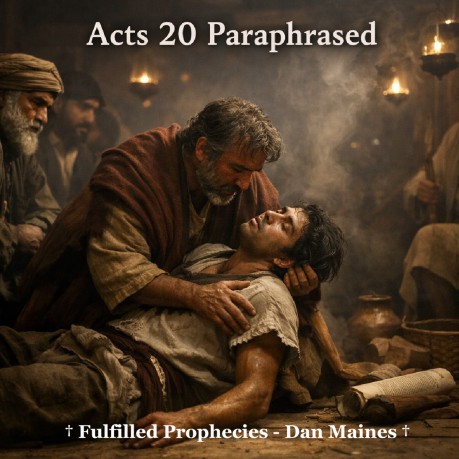
A young man named Eutychus fell
asleep and fell from the third floor and was taken up dead
†
Human weakness is shown clearly
† Long
teaching required endurance
† This sets up
God's power to be shown
Paul went down, embraced him, and
said his life is in him
† God restores life
through His servant (Acts 9:40)
† This
mirrors earlier prophets (1 Kings 17:21)
† It
confirms Paul's authority
He went back up, broke bread,
ate, and continued speaking until morning
†
Fellowship continued after the miracle
†
Teaching remained central
† The church
focused on growth
They brought the boy home alive
and were greatly comforted
† God's power
brings encouragement
† Faith was
strengthened
† Life overcame death
We went ahead to the ship while
Paul traveled by land
† Paul sometimes
separated for the mission
† Flexibility
marked his work
† The mission kept moving
We took him on board and came to
Mitylene
† The journey continues steadily
†
The gospel spreads across regions
† The work
doesn't stop
We sailed and came to Chios, then
Samos, then Miletus
† Real locations confirm
historical truth
† This is real history, not
symbolism
† The gospel moved physically
through the world
Paul hurried to reach Jerusalem
by Pentecost
† He knew time was short (Acts
21:13)
† Pentecost connects to covenant
fulfillment
† Urgency defined his mission
From Miletus he called the elders
of Ephesus
† Church leadership was
established
† Elders had responsibility
†
Paul prepares them for what's coming
You know how I lived among you
the whole time
† Paul points to his life as
an example (1 Corinthians 11:1)
† Leadership
must be lived, not just spoken
† Integrity
matters
Serving with humility, tears, and
trials
† Ministry includes suffering
†
True service isn't easy
† Opposition was
constant
I didn't hold back anything
helpful, teaching publicly and house to house
†
The full truth was taught
† Teaching was both
public and personal
† Nothing was hidden
Testifying to Jews and Greeks
about repentance and faith in Jesus
† The
message was the same for all
† Repentance and
faith are central
† No partial gospel
I go to Jerusalem, bound in
spirit, not knowing what will happen
† Paul
follows the Spirit fully
† Obedience over
comfort
† Trust in God
The Spirit testifies that chains
await me
† Suffering was expected
†
The Spirit prepares, not removes hardship
†
Faith includes endurance
I don't consider my life
valuable, only finishing the mission
†
Finishing the course matters most (2 Timothy 4:7)
†
Eternal focus defines true faith
† This is
real discipleship
You will not see me again
†
This is a final farewell
† The kingdom had
already come (Matthew 12:28)
† Paul knew the
time
I am innocent of all men's
blood
† He fulfilled his responsibility
(Ezekiel 33:6)
† He warned completely
†
Accountability matters
I declared the whole purpose of
God
† Nothing was withheld
†
Truth must be complete
† Partial teaching is
error
Guard yourselves and the flock,
shepherd the church bought with His blood
†
Leaders are accountable to God
† The church
belongs to Christ
† Shepherding requires
vigilance
Savage wolves will come in and
not spare the flock
† False teachers were
expected (Matthew 7:15)
† Danger comes from
within
† Truth must be protected
Men will arise speaking twisted
things
† Corruption starts inside
†
Truth gets distorted
† This was already
happening
Be alert, I warned you for three
years with tears
† Constant warning was
needed
† Paul deeply cared
†
This was serious
I entrust you to God and His word
which builds you up
† God's word sustains
believers
† The inheritance is already given
(Ephesians 1:11)
† Grace builds and secures
I didn't desire anyone's money or
possessions
† Paul wasn't motivated by
greed
† True ministry isn't about gain
†
Integrity matters
I worked with my own hands
†
Paul supported himself
† He modeled
responsibility
† Ministry wasn't for profit
It is more blessed to give than
to receive
† Giving reflects Christ
†
Helping the weak matters
† True blessing is
in giving
He knelt and prayed with them
†
Prayer was central
† Dependence on God
†
Leadership ends in humility
They wept and embraced him
†
Deep love among believers
† True fellowship
†
This was personal
They grieved because they
wouldn't see him again
† Separation was
painful
† Paul left a lasting impact
†
The mission continues
†
Josephus records unrest and false teachers before Jerusalem's fall,
Antiquities Book 20
† Irenaeus describes
leadership guarding truth, Against Heresies
†
Eusebius documents early church structure, Ecclesiastical History
†
Clement of Alexandria speaks on discipline and teaching, Stromata
†
We must guard truth just like they were told
†
We must stay rooted in God's word
† We must
live with urgency
† We must serve with
humility
† We must reject false teaching
Q: Why
did Paul warn about false teachers?
A: Because
deception was already rising (Acts 20:29-30)
Q:
What is the inheritance?
A: Covenant blessings
fulfilled in Christ (Ephesians 1:11)
Q: Why was
Paul urgent?
A: Because that age was ending
(Hebrews 8:13)
Q: What does giving show?
A:
Christ's nature (Acts 20:35)
Q: Why is
leadership serious?
A: They answer to God (Acts
20:28)
© Fulfilled Prophecies - Dan
Maines.
† Acts 20
†
Josephus, Antiquities of the Jews
† Irenaeus,
Against Heresies
† Eusebius, Ecclesiastical
History
† Clement of Alexandria, Stromata
Links