Acts 1 Paraphrased Introduction Acts 1:1 Acts 1:2 Acts 1:3 Acts 1:4 Acts 1:5 Acts 1:6 Acts 1:7 Acts 1:8 Acts 1:9 Acts 1:10 Acts 1:11 Acts 1:12 Acts 1:13 Acts 1:14 Acts 1:15 Acts 1:16 Acts 1:17 Acts 1:18 Acts 1:19 Acts 1:20 Acts 1:21 Acts 1:22 Acts 1:23 Acts 1:24 Acts 1:25 Acts 1:26 Historical References How It Applies To Us Today Q & A Appendix † This is the fulfilled perspective we proclaim at
Fulfilled Prophecies † Source Index
By Dan Maines
† Luke is
continuing the account of what Jesus started, now showing what
carried on through His people
† This chapter
isn't about delay, it's about transition into what was about to be
fulfilled in their generation (Matthew 24:34)
†
The kingdom wasn't postponed, it was already being established and
revealed
In my first writing, I explained
everything Jesus began to do and teach
† This
shows that what Jesus started didn't end, it continued through His
followers (Ephesians 1:22-23)
† The focus is
on ongoing fulfillment, not a future restart
Up until the day He was taken up,
after He had given instructions through the Holy Spirit to the
apostles He had chosen
† Jesus prepared them
before leaving, showing they were ready to carry the message forward
(John 14:26)
† The Holy Spirit guiding them
shows God's active work already present
After His suffering, He showed
Himself alive with many clear proofs, appearing to them over forty
days and speaking about the kingdom of God
†
The resurrection was confirmed openly, not hidden, proving the
reality of what had happened (1 Corinthians 15:5-8)
†
The kingdom was already being explained as something present, not
distant
While gathering them together, He
told them not to leave Jerusalem, but to wait for what the Father
promised, which you heard from Me
† The
promise was about to be fulfilled soon, not thousands of years later
(Joel 2:28)
† Jerusalem remained the center
because that generation would witness the fulfillment
For John baptized with water, but
you will be baptized with the Holy Spirit not many days from now
†
The timing is clear, not many days, showing immediate fulfillment
(Acts 2:1-4)
† This connects directly to
Pentecost, not a future age
So when they had come together,
they were asking Him, Lord, is it at this time You are restoring the
kingdom to Israel
† They still expected a
physical restoration, showing their misunderstanding (John 18:36)
†
The kingdom wasn't political, it was covenantal and already arriving
He said to them, it isn't for you
to know times or seasons which the Father has set by His own
authority
† The exact timing wasn't revealed,
but the nearness was already stated elsewhere (Matthew 16:27-28)
†
This wasn't postponement, just lack of exact detail
But you will receive power when the
Holy Spirit has come upon you, and you will be My witnesses in
Jerusalem, in all Judea and Samaria, and to the ends of the land
†
The mission was immediate and expanding outward, starting with that
generation (Colossians 1:23)
† The phrase
ends of the land refers to the known world of that time, not modern
global scope
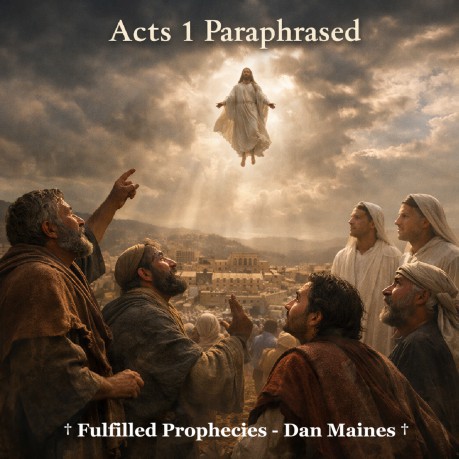
After He said these things, He was
lifted up while they were watching, and a cloud took Him out of their
sight
† The cloud language connects to divine
authority and presence (Daniel 7:13)
† This
isn't about distance, but enthronement
As they were looking intently into
the sky while He was going, two men in white clothing stood beside
them
† These are messengers confirming what
just happened
† God always confirms major
covenant transitions through witnesses
They said, men of Galilee, why do
you stand looking into the sky, this Jesus who has been taken up from
you will come in the same way as you have watched Him go
†
The coming is tied to judgment language, not a physical return
(Matthew 24:30)
† This matches Old Testament
patterns where God comes in judgment through events
Then they returned to Jerusalem
from the mount called Olivet, which is near Jerusalem, a Sabbath
day's journey away
† Everything stays
centered in Jerusalem because that's where fulfillment would happen
(Luke 21:20)
† This keeps the timeline
grounded in that generation
When they had entered the city,
they went up to the upper room where they were staying, Peter, John,
James, Andrew, Philip, Thomas, Bartholomew, Matthew, James son of
Alphaeus, Simon the Zealot, and Judas son of James
†
The named witnesses show historical reliability
†
These are the ones entrusted with carrying the fulfilled message
forward
All these were continually
devoting themselves with one mind to prayer, along with the women,
and Mary the mother of Jesus, and His brothers
†
Unity and expectation marked this moment
†
Even Jesus' family now believed, showing the impact of the
resurrection
At that time Peter stood up among
the brothers, a group of about one hundred twenty persons, and said
†
The early assembly was already formed
†
Leadership is now shifting to the apostles
Brothers, the Scripture had to be
fulfilled which the Holy Spirit spoke beforehand by the mouth of
David concerning Judas
† Judas' betrayal was
part of fulfillment, not an accident (Psalm 41:9)
†
This reinforces that everything was unfolding according to plan
For he was counted among us and
received his share in this ministry
† Judas
had a real role, showing even betrayal served a purpose
†
This highlights God's control over events
Now this man acquired a field with
the price of his wrongdoing, and falling headfirst, he burst open and
all his insides came out
† This shows the
consequence of betrayal
† It also confirms
the historical reality of what happened
It became known to all who were
living in Jerusalem, so that the field was called in their own
language Field of Blood
† Public knowledge
confirms the event
† This ties the account to
real locations and witnesses
For it is written in the Psalms,
let his place be made desolate, and let no one dwell in it, and let
another take his office
† Scripture was being
fulfilled exactly as written (Psalm 69:25; Psalm 109:8)
†
Replacement wasn't random, it was prophetic fulfillment
Therefore it's necessary that of
the men who have accompanied us all the time that the Lord Jesus went
in and out among us
† The requirement ensures
true eyewitness testimony
† This guards the
integrity of the message
Beginning from the baptism of John
until the day that He was taken up from us, one of these must become
a witness with us of His resurrection
† The
resurrection is the central message
†
Eyewitnesses confirm its truth
So they put forward two men,
Joseph called Barsabbas, who was also called Justus, and Matthias
†
The selection process shows order, not confusion
†
Leadership was handled carefully
And they prayed and said, You
Lord, who know the hearts of all people, show which one of these two
You have chosen
† God is seen as the one who
appoints
† This shows dependence on divine
direction
To take the place in this ministry
and apostleship from which Judas turned aside to go to his own
place
† Judas' end is described as separation
from his role
† The ministry continues
despite failure
And they cast lots for them, and
the lot fell to Matthias, and he was added to the eleven apostles
†
This was a recognized method before the Spirit was poured out
(Proverbs 16:33)
† The number twelve is
restored, showing completeness
†
Josephus records the destruction of Jerusalem in that generation,
confirming the timing of fulfillment
†
Eusebius writes that the early believers understood these events as
fulfillment within their lifetime
† Irenaeus
affirms that the apostles preached the completed work of Christ in
their generation
†
We aren't waiting for a future kingdom, we live in the reality of
what Christ established
† The focus is
faithfulness, not speculation about future timelines
†
The same message of life and truth continues through us today
Q What
does Acts 1 show about timing
A It shows
everything was about to happen soon, not in a distant future (Acts
1:5)
Q Did the apostles expect fulfillment in
their lifetime
A Yes, Jesus told them some
standing there wouldn't die before seeing it (Matthew 16:27-28)
Q
Was the kingdom future or present
A It was
already being revealed and explained during those forty days (Acts
1:3)
Q What does the ascension represent
A
It shows Christ taking authority, not leaving permanently (Daniel
7:13)
Q Why replace Judas
A
To fulfill Scripture and maintain the witness of twelve (Acts 1:20)
© Fulfilled Prophecies - Dan
Maines.
† Acts 1
†
Josephus, Wars of the Jews
† Eusebius,
Ecclesiastical History
† Irenaeus, Against
Heresies
Links