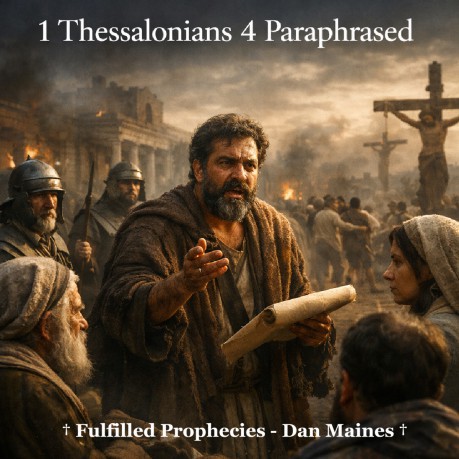
1 Thessalonians 4 Paraphrased Introduction † Paul continues instructing the believers in
Thessalonica about how to live faithfully while they were waiting for
Christ's promised coming in their generation. He wasn't giving
abstract theology, he was guiding real people who were facing
persecution, moral pressure, and confusion about those who had
already died. 1 Thessalonians 4:1 1 Thessalonians 4:2 1 Thessalonians 4:3 1 Thessalonians 4:4 1 Thessalonians 4:5 1 Thessalonians 4:6 1 Thessalonians 4:7 1 Thessalonians 4:8 1 Thessalonians 4:9 1 Thessalonians 4:10 1 Thessalonians 4:11 1 Thessalonians 4:12 1 Thessalonians 4:13 1 Thessalonians 4:14 1 Thessalonians 4:15 1 Thessalonians 4:16 1 Thessalonians 4:17 1 Thessalonians 4:18 Historical References † Irenaeus wrote that the apostles instructed
believers to live holy lives while waiting for the Lord's promised
appearing in their own time (Irenaeus, Against Heresies). How it applies to us today † The call to holiness remains the same for
believers today. We are still called to live lives that reflect God's
character. Q & A Appendix Q: Why were the Thessalonians worried about those
who had died? Q: Did Paul expect the coming of the Lord in his
lifetime? Q: What does being caught up to meet the Lord
mean? Q: Why does Paul emphasize holiness in this
chapter? Q: What is the purpose of this teaching? † This is the fulfilled perspective we proclaim at
Fulfilled Prophecies † Source Index † 1 Thessalonians 4
By Dan Maines
† This chapter deals with holy
living, brotherly love, and the hope concerning those who had died
before the coming of the Lord. Paul wanted them to understand that
death wouldn't cause any believer to miss the fulfillment that Christ
promised.
† The concern about those who had
died was real in the first century because Jesus had promised His
coming within that generation (Matthew 16:27-28; Matthew 24:34). Some
believers were worried that those who died before that event would
somehow be left out.
Finally then, brothers,
we ask and urge you in the Lord Jesus that just as you learned from
us how you should live and please God, you should continue walking
this way more and more.
† Paul reminds them
that the Christian life is a continual walk. It's not a one-time
moment but a life shaped by obedience and growth (Colossians 2:6).
†
The phrase more and more shows that believers were expected to mature
in their conduct and devotion (Philippians 1:9).
You know the
instructions we gave you through the authority of the Lord Jesus.
†
Paul's teaching wasn't based on personal opinion. He was delivering
commands that came through the authority of Christ Himself (1
Corinthians 14:37).
† The apostles were
recognized as authoritative teachers in the early church, entrusted
with delivering Christ's commandments (Acts 2:42).
This is God's will for
you, that you live in holiness and stay away from sexual
immorality.
† Holiness was a defining mark of
the early believers because they had been called out of pagan
cultures filled with immoral practices (1 Peter 1:15-16).
†
The Greek world around them normalized sexual immorality, so Paul's
command was a direct challenge to the culture they lived in (Romans
12:2).
Each of you must learn
to control your own body in holiness and honor.
†
Believers weren't called to follow their desires blindly, they were
called to live with discipline and self-control (Galatians
5:22-23).
† Honoring God with one's body
reflected the truth that believers belong to the Lord (1 Corinthians
6:19-20).
Not in the passion of
lust like the nations who do not know God.
†
Paul contrasts believers with the Gentile world that didn't know the
true God. Their behavior was shaped by ignorance of God (Ephesians
4:17-19).
† The gospel was calling people out
of that darkness into a new way of living (1 Peter 2:9).
No one should exploit or
take advantage of a brother in this matter, because the Lord will
judge all these things, just as we warned you before.
†
Sexual sin isn't just personal, it harms others and violates the
community of believers (Hebrews 13:4).
† Paul
reminds them that God's judgment against such actions was already
declared and well understood (Romans 1:18).
God didn't call us to
impurity, but to live in holiness.
† The
calling of the believer is a calling into a new life separated from
the corruption of the world (2 Timothy 1:9).
†
Holiness wasn't optional, it was the purpose of God's calling
(Ephesians 1:4).
So the one who rejects
this instruction isn't rejecting man, but rejecting God who gives you
His Holy Spirit.
† Rejecting apostolic
teaching meant rejecting God's authority because the Spirit was
guiding the apostles in their instruction (John 16:13).
†
The presence of the Holy Spirit confirmed that believers were under
God's covenant relationship (Ephesians 1:13).
Now concerning brotherly
love, you don't need anyone to write to you because you yourselves
have been taught by God to love one another.
†
Love among believers was one of the clearest marks of the early
church (John 13:34-35).
† Paul recognizes
that the Thessalonians were already demonstrating genuine love in
their community.
You are practicing this
love toward all the brothers throughout Macedonia, but we urge you to
grow even more.
† Their love had already
spread beyond their local congregation, showing the unity of the
early churches (Romans 12:10).
† Yet Paul
still encourages growth, because love should continually increase
among believers.
Make it your goal to
live quietly, mind your own responsibilities, and work with your
hands just as we instructed you.
† Some
believers were becoming distracted by speculation about the Lord's
coming and neglecting daily responsibilities (2 Thessalonians
3:10-12).
† Paul encourages a steady,
disciplined life that reflects good character before others.
Then you will live
properly in the sight of outsiders and won't depend on anyone.
†
The conduct of believers affected how the gospel was viewed by the
surrounding society (1 Peter 2:12).
† Living
responsibly helped remove unnecessary criticism against the Christian
community.
We don't want you to be
uninformed, brothers, about those who have died, so that you won't
grieve like others who have no hope.
† The
Thessalonians were grieving because some believers had died before
Christ's coming, and they feared those believers might miss the
promise.
† Paul corrects their understanding
by explaining that death wouldn't prevent anyone from sharing in
Christ's victory (John 11:25-26).
Since we believe that
Jesus died and rose again, in the same way God will bring with Him
those who have died in Jesus.
† Christ's
resurrection guaranteed that those who belonged to Him would also
share in that victory (1 Corinthians 15:20-23).
†
The phrase bring with Him refers to believers who had already died
being gathered together with the living at Christ's coming.
We tell you this by the
word of the Lord, that we who are alive and remain until the coming
of the Lord will not go ahead of those who have died.
†
Paul clearly includes himself among those who might still be alive at
the Lord's coming, showing that the event was expected within their
lifetime (Philippians 4:5).
† This statement
confirms the nearness of the fulfillment that Jesus had already
promised to that generation (Matthew 24:34).
The Lord Himself will
descend from heaven with a commanding shout, with the voice of an
archangel and the trumpet of God, and the dead in Christ will rise
first.
† This language reflects prophetic
imagery used throughout the Old Testament to describe God's acts of
judgment and deliverance (Isaiah 27:13).
†
The rising of the dead refers to the resurrection hope promised to
believers who had died before the fulfillment (Daniel 12:2).
Then we who are alive
and remain will be caught up together with them in the clouds to meet
the Lord in the air, and in this way we will always be with the
Lord.
† The phrase meet the Lord describes
the ancient custom of going out to greet a king and escort him back
to the city (Matthew 25:6).
† This imagery
reflects the vindication and gathering of Christ's people when His
kingdom was fully revealed.
So encourage one
another with these words.
† The purpose of
Paul's explanation wasn't speculation or fear but encouragement for
believers facing grief and persecution.
† The
fulfillment of Christ's promise meant hope and assurance for the
early church.
†
Clement of Alexandria described the early Christian life as one of
discipline, purity, and love among the brethren (Clement of
Alexandria, Stromata).
† Eusebius recorded
that the early church endured persecution but remained steadfast in
hope because they believed Christ's promises would soon be fulfilled
(Eusebius, Ecclesiastical History).
† Brotherly love remains the
defining mark of Christ's followers. Our love for one another shows
the world who we belong to.
† The hope that
Paul gave the Thessalonians reminds us that Christ keeps His
promises. Everything Jesus said about that generation was fulfilled
exactly as He declared.
A: They believed Christ's coming
was near and feared those who died first might miss it. Paul
reassured them they would rise first (1 Corinthians 15:51-52).
A: Yes. He included himself among
those who might still be alive when the Lord came (Philippians 4:5).
A: It reflects the ancient custom of
greeting a king and escorting him in triumph (Matthew 25:6).
A: Because God's calling for believers
has always been a life separated from sin and devoted to Him (1 Peter
1:15-16).
A:
Paul said it clearly, to encourage believers with the hope of
Christ's promise (John 11:25-26).
© Fulfilled Prophecies - Dan
Maines.
†
Irenaeus, Against Heresies
† Eusebius,
Ecclesiastical History
† Clement of
Alexandria, Stromata
Links