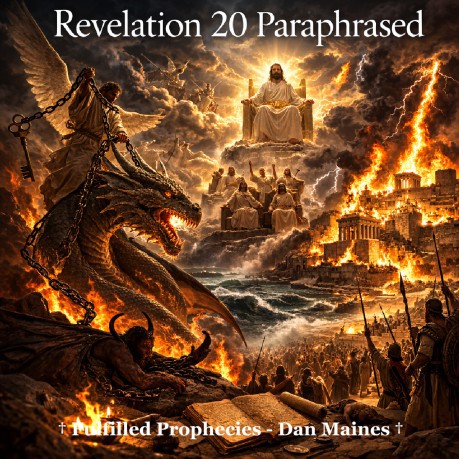
Revelation 20 Paraphrased Introduction † This chapter describes the final collapse of
the persecuting powers that opposed Christ and His people before the
destruction of Jerusalem. Revelation 20:1 Then I saw an angel coming down from heaven, holding the key to
the abyss and a great chain in his hand. † The key represents authority from God to
restrain the power of Satan during the time the gospel was spreading
through the nations (Matthew 28:18-20). Revelation 20:2 He seized the dragon, that ancient serpent who is called the devil
and Satan, and he bound him for a thousand years. † The dragon and serpent imagery reaches back
to Genesis 3:1 and represents the adversary who deceives the
nations. Revelation 20:3 He threw him into the abyss, shut it, and sealed it over him so
that he could no longer deceive the nations until the thousand years
were finished. After that he must be released for a short time. † The sealing language reflects Daniel's
visions where God limits prophetic events until their appointed time
(Daniel 12:9). Revelation 20:4 Then I saw thrones, and people sat on them, and authority to judge
was given to them. I also saw the souls of those who had been
executed because of their testimony about Jesus and because of the
word of God. They had not worshiped the beast or his image, and they
had not received the mark on their foreheads or on their hands. They
came to life and reigned with Christ for a thousand years. † The thrones fulfill Jesus' promise that His
followers would sit on thrones judging the twelve tribes of Israel
(Matthew 19:28). Revelation 20:5 The rest of the dead did not come to life until the thousand years
were finished. This is the first resurrection. † The first resurrection refers to the
spiritual life believers receive through Christ, moving from death
into life (John 5:24). Revelation 20:6 Blessed and holy is the one who shares in the first resurrection.
Over these the second death has no authority, but they will be
priests of God and of Christ and will reign with Him for a thousand
years. † The second death represents final separation
from God, described later as the lake of fire (Revelation 20:14). Revelation 20:7 When the thousand years are finished, Satan will be released from
his prison. † The release reflects a final period of
intense opposition against the church. Revelation 20:8 He will go out to deceive the nations in the four corners of the
earth, Gog and Magog, to gather them together for battle. Their
number is like the sand of the sea. † Gog and Magog language comes from Ezekiel's
prophecy describing hostile nations gathered against God's people
(Ezekiel 38-39). Revelation 20:9 They marched across the broad plain of the earth and surrounded
the camp of the saints and the beloved city, and fire came down from
heaven and consumed them. † The beloved city refers to Jerusalem, the
center of covenant conflict during the first century. Revelation 20:10 And the devil who deceived them was thrown into the lake of fire
and sulfur where the beast and the false prophet are also, and they
will be tormented day and night forever and ever. † The lake of fire represents the final defeat
of the enemies of Christ's kingdom. Revelation 20:11 Then I saw a great white throne and Him who sat on it, from whose
presence earth and heaven fled away, and no place was found for them. † The fleeing heaven and earth reflects the
passing away of the old covenant order centered in Jerusalem (Matthew
24:35). Revelation 20:12 And I saw the dead, great and small, standing before the throne,
and books were opened. Another book was opened, which is the book of
life. The dead were judged by what was written in the books according
to their deeds. † The books symbolize God's record of covenant
faithfulness or rebellion (Malachi 3:16). Revelation 20:13 The sea gave up the dead that were in it, and death and Hades gave
up the dead that were in them, and they were judged, each one
according to their deeds. † The sea often symbolized chaos and the
nations outside Israel in prophetic imagery (Isaiah 57:20). Revelation 20:14 Then death and Hades were thrown into the lake of fire. This is
the second death, the lake of fire. † Death itself being destroyed fulfills the
promise that death would be swallowed up in victory (1 Corinthians
15:54). Revelation 20:15 If anyone's name was not found written in the book of life, he was
thrown into the lake of fire. † Being outside the book of life represents
rejection of Christ and His covenant. Historical References † Josephus recorded the devastation of
Jerusalem and the immense loss of life during the Roman siege in AD
70, showing the fulfillment of the warnings Jesus gave (Josephus,
Wars of the Jews 6.4-6). How it applies to us today † Christ has already defeated the powers that
opposed His kingdom, so believers live in the victory of that
completed work. Q & A Appendix Q If Satan was bound, why do we still see evil in
the world? Q What is the first resurrection? Q What is the second death? Q What does the thousand years represent? Q Who are the ones sitting on thrones in
Revelation 20:4? Q What are the books opened at the judgment? † This is the fulfilled perspective we proclaim at
Fulfilled Prophecies † Source Index † Genesis 3:1; Psalm 50:10; Matthew 12:29;
Matthew 19:28; Matthew 24:35; John 5:24; Luke 8:31; Luke 10:18-20;
Acts 13:47; Romans 6:4-5; 1 Corinthians 15:54; Ephesians 2:6; 1 Peter
2:9; Malachi 3:16; Daniel 7:9-22; Daniel 12:9; Ezekiel 38-39; Isaiah
57:20; Isaiah 66:15-16 † Josephus, Wars of the Jews; Eusebius,
Ecclesiastical History; Tacitus, Histories.
By Dan Maines
† The language of
binding, thrones, judgment, and fire uses prophetic imagery that was
familiar to the Jewish audience reading Revelation (Daniel 7:9-22).
†
John is showing the victory of Christ's kingdom and the defeat of the
enemies who persecuted the early church during the Roman era.
† The
abyss imagery comes from Jewish apocalyptic language describing the
restraint of evil powers (Luke 8:31).
† The
chain is symbolic language, showing limitation rather than a literal
physical chain placed on a spirit being.
† The thousand years is symbolic of
a complete, determined period rather than a literal calendar
millennium, a common prophetic way of describing a full era (Psalm
50:10).
† The binding shows that Satan's
ability to stop the spread of the gospel among the nations was
restrained during the apostolic age (Matthew 12:29).
† Satan being unable to
deceive the nations shows the opening of the gospel to the Gentiles
during the first century (Acts 13:47).
† The
short release reflects the final outbreak of persecution before the
destruction of Jerusalem in AD 70.
† The martyrs represent
believers who suffered under Nero's persecution but remained faithful
to Christ (Revelation 13:7).
† Reigning with
Christ shows their vindication and participation in the kingdom
authority of Christ (Ephesians 2:6).
† It represents
covenant transition from the old system into the life of the kingdom
(Romans 6:4-5).
† Those who remain
spiritually dead outside Christ remain separated until judgment.
†
Believers being priests fulfills the promise that the church is a
royal priesthood (1 Peter 2:9).
† Their reign
reflects the spiritual authority given to the saints through Christ's
kingdom.
† This
corresponds with the final Jewish revolt and Roman war that climaxed
in the destruction of Jerusalem.
† The
temporary release shows that evil powers were allowed one final
attempt before their defeat.
† John uses the imagery to
symbolize the massive opposition that rose against the early
church.
† The phrase sand of the sea reflects
the overwhelming size of the hostile forces.
†
Fire from heaven reflects divine judgment language used throughout
the prophets (Isaiah 66:15-16).
† The
destruction of Jerusalem in AD 70 ended the old covenant system that
persecuted the church.
† The
beast and false prophet symbolize the Roman authority and false
religious leadership that persecuted believers (Revelation
13:1-11).
† Their destruction shows the
complete overthrow of the persecuting system.
† The throne represents the authority
of Christ as judge over the covenant people.
†
This imagery parallels Daniel's vision of divine judgment (Daniel
7:9-10).
†
The book of life contains the names of those belonging to Christ
(Luke 10:20).
† Judgment according to deeds
reflects accountability under God's covenant law.
†
Death and Hades represent the realm of the dead awaiting resurrection
life.
† This shows the complete scope of
God's judgment.
† The lake of fire symbolizes the
removal of the old covenant system that held people in
condemnation.
† This represents the end of
the power of death over God's people.
† The
imagery shows the separation between those who belong to Christ and
those who rejected Him.
† The final outcome
is complete removal from the kingdom blessings.
† Eusebius wrote
that Christians fled Jerusalem before its destruction, recognizing
the signs Jesus had warned about (Eusebius, Ecclesiastical History
3.5).
† Tacitus described the massive Roman
military campaign that crushed the Jewish revolt, confirming the
historical background of Revelation's imagery.
† The judgment language
reminds us that faithfulness to Christ matters, because our lives
still reflect our allegiance to Him.
† The
destruction of the persecuting powers proves that God's promises
always come to pass exactly as He said.
A The binding limited Satan's
ability to deceive the nations from receiving the gospel during the
first century expansion of the church (Matthew 12:29, Luke 10:18).
A
It is the spiritual life believers receive through Christ, passing
from death into life (John 5:24, Romans 6:4-5).
A
It is final separation from God symbolized by the lake of fire
(Revelation 20:14).
A
The thousand years represents a complete appointed period in God's
plan, not a literal calendar millennium. In prophetic language large
numbers often symbolize completeness. During this time the gospel
spread through the nations and Satan could not stop it. Scripture
shows this restraint when Jesus said the strong man must first be
bound before his house can be plundered (Matthew 12:29), and when the
seventy returned saying demons were subject to them and Jesus said He
saw Satan fall like lightning from heaven (Luke 10:17-18).
A These are the faithful
believers and martyrs who remained loyal to Christ during the
persecution of the first century. Jesus promised His disciples they
would sit on thrones judging the twelve tribes of Israel (Matthew
19:28), and Paul also said the saints would judge the world (1
Corinthians 6:2). Their reign with Christ shows their vindication
after suffering for the gospel.
A
The books represent God's record of people's lives and covenant
faithfulness. Scripture often uses this imagery to describe God's
knowledge of every person's deeds. Malachi spoke of a book of
remembrance written before the Lord for those who feared Him (Malachi
3:16). At the same time, the book of life contains the names of those
who belong to Christ and share in His kingdom (Luke 10:20; Revelation
3:5).
© Fulfilled Prophecies - Dan
Maines.
Links