Revelation 19 Paraphrased Introduction † Revelation 19 describes the celebration that
followed the judgment of the harlot city. The fall of Jerusalem in AD
70 marked the end of the Old Covenant system that had persecuted the
prophets and the saints (Matthew 23:34-38, Revelation 18:24). † This chapter shows heaven rejoicing because
God's justice had been revealed. The kingdom of Christ was now fully
established, and the covenant marriage between Christ and His people
was complete (Matthew 22:7, Hebrews 12:22-24). † The imagery of a wedding feast and a
conquering king reveals that Christ's victory was not future. It
happened when the old order was removed and the new covenant kingdom
stood complete (Luke 21:22, Hebrews 8:13). Revelation 19:1 After these things I heard a massive crowd in heaven shouting
praise to God, saying salvation, glory, and power belong to our God. † This praise follows the destruction of the
harlot city described in Revelation 18. Heaven rejoices because God's
judgments are true and just (Revelation 18:20). † The phrase great multitude represents the
redeemed community of saints who had been waiting for God's justice
to be revealed (Hebrews 12:22-23). † Their praise shows that the judgment on
Jerusalem was not tragedy from heaven's view. It was the vindication
of God's covenant faithfulness (Luke 21:22). Revelation 19:2 His judgments are true and righteous because He has judged the
great prostitute who corrupted the earth with her immorality, and He
has avenged the blood of His servants that she shed. † The prostitute is the same city identified
earlier as the one that killed the prophets and saints (Revelation
17:18, Revelation 18:24). † Jesus had already declared this same judgment
on Jerusalem when He said the blood of the prophets would come upon
that generation (Matthew 23:35-36). † The avenging of the saints shows that
Revelation's judgments are covenant judgments against apostate
Israel, not the end of the physical world (Luke 13:33-34). Revelation 19:3 They shouted again saying praise to God, her smoke rises forever
and ever. † The smoke rising forever reflects Old
Testament judgment language used when a city was permanently
destroyed (Isaiah 34:10). † This imagery shows the final end of the Old
Covenant city that rejected its Messiah (Matthew 21:43). † The destruction was irreversible. The temple
system would never return (Hebrews 8:13). Revelation 19:4 The twenty four elders and the four living creatures fell down and
worshiped God who sits on the throne, saying Amen. Praise God. † The twenty four elders represent the united
people of God from both covenants, twelve tribes and twelve apostles
(Revelation 21:12-14). † Their worship confirms that the judgment
fulfilled God's plan revealed through the prophets and apostles
(Ephesians 2:19-22). † Heaven recognizes the completion of God's
covenant transition. Revelation 19:5 Then a voice came from the throne saying praise our God all you
His servants and those who fear Him, both small and great. † The call to praise includes all believers who
trust God, regardless of status (Acts 10:34-35). † The judgment that had just occurred was the
final removal of the persecuting covenant system (Hebrews 12:26-28). † Now all believers stood fully in the new
covenant kingdom. Revelation 19:6 Then I heard something like the voice of a huge crowd, like the
sound of rushing waters and loud thunder saying praise God because
the Lord our God the Almighty reigns. † The proclamation that God reigns reflects the
completion of the kingdom foretold by the prophets (Daniel 7:27). † Christ had already received authority after
His resurrection (Matthew 28:18). † The fall of Jerusalem publicly confirmed His
reign over the covenant people. Revelation 19:7 Let us rejoice and celebrate and give Him glory, because the
marriage of the Lamb has come and His bride has made herself ready. † The marriage imagery represents the union of
Christ with His covenant people (Ephesians 5:25-27). † The bride represents the redeemed community
now fully established after the removal of the old covenant order
(Revelation 21:2). † The timing of the marriage shows fulfillment
in that generation, not thousands of years later (Matthew 22:7). Revelation 19:8 She was given fine linen that was bright and clean to wear,
because the fine linen represents the righteous deeds of the saints. † The bride's clothing represents the
righteousness given through Christ (Philippians 3:9). † The saints were vindicated after enduring
persecution from Jerusalem (Revelation 6:9-11). † Their faithfulness was now publicly honored. Revelation 19:9 Then the angel told me write this down, blessed are those invited
to the wedding feast of the Lamb. He said these are the true words of
God. † The wedding feast represents participation in
the kingdom blessings promised by the prophets (Isaiah 25:6). † Jesus had already spoken about this feast in
His parables (Matthew 22:1-10). † The invitation now extends to all who belong
to Christ. Revelation 19:10 Then I fell down at his feet to worship him, but he said don't do
that. I am a servant like you and your brothers who hold the
testimony of Jesus. Worship God. The testimony of Jesus is the spirit
of prophecy. † The angel refuses worship because worship
belongs to God alone (Exodus 20:3-5). † The message of Jesus fulfills the entire
prophetic story of Scripture (Luke 24:27). † All prophecy ultimately pointed to Christ's
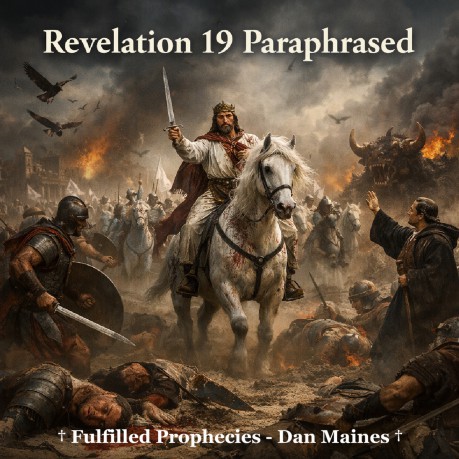
victory. Revelation 19:11 Then I saw heaven opened, and a white horse appeared. The one
riding it is called Faithful and True, and He judges and makes war
with righteousness. † The rider is Christ, portrayed as a
conquering king bringing covenant judgment (Isaiah 63:1-6). † This imagery reflects God's historical
judgments in the Old Testament (Isaiah 19:1). † The judgment was directed against the
rebellious covenant nation. Revelation 19:12 His eyes were like flames of fire, and on His head were many
crowns, and He had a name written that no one knew except Himself. † The fiery eyes represent perfect knowledge
and authority (Revelation 1:14). † The many crowns symbolize complete rule over
every kingdom (Psalm 2:6-9). † Christ's authority had already been given
after His resurrection (Matthew 28:18). Revelation 19:13 He was wearing a robe dipped in blood, and His name is called the
Word of God. † The blood imagery reflects judgment against
His enemies (Isaiah 63:3). † The title Word of God identifies Christ as
the eternal revelation of God (John 1:1). † His victory was accomplished through His
authority and judgment. Revelation 19:14 The armies of heaven followed Him on white horses, dressed in fine
linen that was white and clean. † The armies represent the saints and heavenly
hosts aligned with Christ (Daniel 7:10). † Their white clothing reflects the
righteousness given to believers (Revelation 7:9). † Christ leads the victory over the persecuting
powers. Revelation 19:15 From His mouth comes a sharp sword to strike the nations, and He
will rule them with a rod of iron, and He treads the winepress of the
fierce wrath of God the Almighty. † The sword represents the power of Christ's
word and authority (Hebrews 4:12). † The rod of iron reflects Psalm 2, showing
Christ's authority over the nations. † The winepress imagery represents the crushing
judgment on the rebellious covenant system (Isaiah 63:3). Revelation 19:16 On His robe and on His thigh He has a name written, King of kings
and Lord of lords. † This title declares Christ's absolute
authority over all rulers (1 Timothy 6:15). † Even the Roman empire ultimately operated
under His sovereign rule. † The fall of Jerusalem demonstrated that no
power could resist Him. Revelation 19:17 Then I saw an angel standing in the sun calling loudly to all the
birds flying overhead, come gather for the great feast of God. † This imagery comes directly from prophetic
judgment language in Ezekiel 39:17-20. † The feast of birds symbolizes the total
defeat of God's enemies. † It represents the devastating defeat of the
rebellious powers opposing Christ. Revelation 19:18 So they could eat the flesh of kings, commanders, mighty men,
horses and riders, and the flesh of all people, free and slave, small
and great. † The language symbolizes the complete collapse
of the rebellious leadership structures. † Both political and religious authorities who
opposed Christ were judged. † The imagery shows that no class or rank
escaped the consequences. Revelation 19:19 Then I saw the beast and the kings of the earth and their armies
gathered to wage war against the rider on the horse and His army. † The beast represents the Roman ruler who
demanded worship and persecuted the saints. † The kings represent the political powers
aligned with Rome. † Their opposition ultimately failed against
Christ's authority. Revelation 19:20 The beast was captured, and with him the false prophet who
performed signs in his presence, deceiving those who received the
mark of the beast and worshiped his image. Both of them were thrown
alive into the lake of fire burning with sulfur. † The false prophet represents the religious
system that supported the beast's authority. † The lake of fire symbolizes the complete
destruction of these persecuting powers. † Their judgment marked the end of that
oppressive system. Revelation 19:21 The rest were killed by the sword that came from the mouth of the
rider on the horse, and all the birds were filled with their flesh. † Christ's victory came through His authority
and decree. † The imagery again reflects Old Testament
judgment language for the destruction of enemies. † The persecuting forces were completely
defeated. Historical References † Josephus recorded the destruction of
Jerusalem in AD 70 and the massive slaughter that followed the Roman
siege. † Eusebius noted that the fall of Jerusalem
fulfilled Christ's warnings given in the Gospels. † Tacitus described the devastation of Judea
and the crushing of the Jewish revolt under Rome. How It Applies To Us Today † Revelation 19 reminds us that Christ already
reigns as King over His kingdom. † God's promises never fail, and every prophecy
He gave concerning that generation was fulfilled. † We live in the completed kingdom where Christ
rules and His people belong to Him. Q & A Appendix Q: Did Revelation 19 describe the end of the
physical world? A: No. The chapter describes covenant judgment on
the persecuting system that opposed Christ. Jesus said these events
would occur in that generation (Matthew 24:34). Q: Who is the bride of the Lamb? A: The bride represents the redeemed people of
God united with Christ in the new covenant kingdom (Revelation 21:2,
Ephesians 5:25-27). Q: Who was the beast? A: The beast represents the Roman ruler who
persecuted the saints and demanded worship, fulfilling the warnings
given to the early church (Revelation 13:5-7). Q: Who are the armies of heaven that follow
Christ on white horses? A: The armies represent the heavenly hosts and
the redeemed saints aligned with Christ. Scripture shows both angels
and believers participating in His victory. Daniel 7:10 describes
thousands attending Him, and Revelation 17:14 says those with Him are
the called and chosen and faithful. Q: What does the sharp sword from Christ's mouth
represent? A: The sword represents the authority and power
of Christ's word. His judgments are carried out through His decree
and truth. Hebrews 4:12 describes the word of God as sharper than any
two edged sword, and Isaiah 11:4 says He strikes the earth with the
rod of His mouth. Q: What is the rod of iron mentioned in
Revelation 19:15? A: The rod of iron comes from Psalm 2:9 and
represents the Messiah's authority to rule the nations. Jesus
received this authority after His resurrection, as stated in Matthew
28:18, showing that His kingdom rule was already established. Q: Why are birds invited to the great supper of
God? A: This imagery comes from Ezekiel 39:17-20 where
birds and beasts are called to feast after God's enemies are
defeated. It symbolizes the total defeat and humiliation of the
forces that opposed God and persecuted His people. † This is the fulfilled perspective we proclaim at
Fulfilled Prophecies † © Fulfilled Prophecies - Dan Maines. Source Index † Revelation 19; Matthew 22:7; Matthew
23:34-36; Matthew 24:34; Luke 21:22; Isaiah 63:1-6; Ezekiel 39:17-20;
Psalm 2:6-9; Hebrews 8:13; Hebrews 12:26-28 † Josephus, Wars of the Jews Book 6; Eusebius,
Ecclesiastical History Book 3; Tacitus, Histories Book 5
By Dan Maines
Links