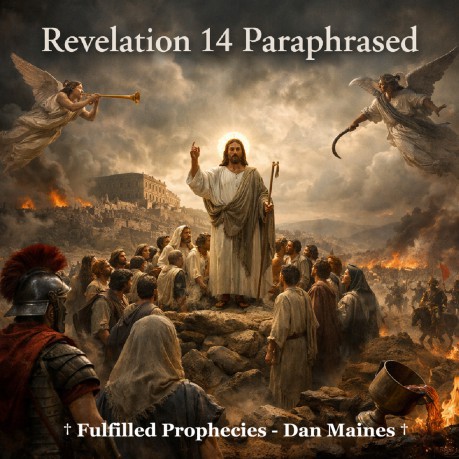
Revelation 14 Paraphrased Introduction † Revelation 14 continues the same first
century judgment context shown throughout the book. The Lamb stands
victorious with His redeemed people while the fall of Babylon,
apostate Jerusalem, is announced. This chapter contrasts two groups,
those sealed by the Lamb and those marked by the beast, showing the
outcome of the coming judgment that Jesus said would happen in that
generation (Matthew 24:34). † The message of this chapter is not about the
distant future. It was written to real churches facing persecution
under Rome and pressure from the corrupt leadership of Jerusalem. The
warnings and promises were urgent because the judgment was near
(Revelation 1:1, Revelation 1:3). † The chapter also reveals the final separation
between the faithful followers of Christ and those who sided with the
beastly authority of Rome and the apostate system that rejected the
Messiah. Revelation 14:1 Then I looked and saw the Lamb standing on Mount Zion, and with
Him were one hundred forty four thousand people who had His Father's
name written on their foreheads. † The Lamb is Jesus Christ standing in victory.
Mount Zion represents the heavenly authority and kingdom of God
already established through Christ (Hebrews 12:22). † The 144,000 symbolize the sealed and
protected servants of God from the earlier vision in Revelation 7.
They represent the faithful remnant who followed Christ during the
coming judgment. † The name on their foreheads contrasts the
mark of the beast. One group belongs to Christ, the other belongs to
the beastly Roman power (Revelation 7:3, Revelation 13:16-17). Revelation 14:2 I heard a sound from heaven like the roar of rushing waters and
like loud thunder, and the sound I heard was like harp players
playing their harps. † The powerful sound coming from heaven
represents divine authority and approval of what is happening. God's
voice often appears in scripture like thunder and rushing waters
(Ezekiel 43:2). † The music shows celebration and worship.
Heaven rejoices because God's plan of redemption and judgment is
being fulfilled. † The contrast is important. While the earth
experiences judgment, heaven celebrates the victory of Christ and the
faithfulness of His people. Revelation 14:3 They sang a new song before the throne and before the four living
creatures and the elders, and no one could learn the song except the
one hundred forty four thousand who had been redeemed from the earth. † The new song represents the completed work of
redemption. Only the redeemed can truly understand and sing about the
deliverance God has given them (Psalm 40:3). † Their redemption from the earth refers to
being delivered from the coming judgment falling on the land of
Israel. † This also echoes the deliverance language
used for Israel during the Exodus, showing Christ bringing a greater
redemption (Exodus 15:1-2). Revelation 14:4 These are the ones who did not corrupt themselves with the woman,
because they remained pure. They follow the Lamb wherever He goes.
They were purchased from among people as the first portion offered to
God and to the Lamb. † The woman here refers to the corrupt
religious system described later as Babylon the great. The faithful
believers refused to join in her spiritual corruption (Revelation
17:5). † Following the Lamb wherever He goes shows
loyalty to Christ even during persecution and suffering. † Being the first portion means they represent
the firstfruits of the new covenant people of God (James 1:18). Revelation 14:5 No lie was found in their mouths, and they were blameless. † This describes their faithful witness during
persecution. Unlike the false leaders of Israel, they spoke the truth
of the gospel. † Their blamelessness refers to their covenant
faithfulness, not sinless perfection (Philippians 2:15). † The language reflects Old Testament
descriptions of faithful servants of God who walk in integrity. Revelation 14:6 Then I saw another angel flying in the middle of the sky with the
everlasting good news to announce to those who live on the earth, to
every nation, tribe, language, and people. † The everlasting gospel had already been
spreading throughout the Roman world during the first century
(Colossians 1:23). † The message is universal. The gospel was
going out to both Jews and Gentiles before the coming judgment on
Jerusalem. † This fulfills Jesus' words that the gospel
would be preached throughout the world before the end of the age
(Matthew 24:14). Revelation 14:7 He said with a loud voice, Fear God and give Him glory because the
hour of His judgment has come. Worship the One who made heaven and
earth and the sea and the springs of water. † The angel declares that the hour of judgment
had arrived. The language is immediate and urgent. † The call to fear God contrasts the worship
demanded by the beastly Roman rulers. † This warning was directed to those living
during that generation who were about to witness the destruction of
Jerusalem. Revelation 14:8 Another angel followed saying, Fallen, fallen is Babylon the
great, she who made all nations drink the wine of her immoral
passion. † Babylon symbolizes the corrupt city
responsible for the blood of the prophets and saints. Jesus
identified Jerusalem as the city that killed the prophets (Matthew
23:37). † The language of drunkenness and corruption
describes the spiritual adultery of Israel's leadership. † The fall of Babylon anticipates the
destruction of Jerusalem in AD 70. Revelation 14:9 Then another angel followed them saying with a loud voice, If
anyone worships the beast and its image and receives a mark on his
forehead or on his hand, † The beast represents the Roman emperor system
that demanded worship and loyalty. † The mark symbolizes allegiance to the
imperial cult and participation in the Roman economic system. † Believers were being pressured to conform to
the empire, and this warning calls them to remain faithful. Revelation 14:10 he will also drink of the wine of God's wrath poured out full
strength into the cup of His anger, and he will be tormented with
fire and sulfur in the presence of the holy angels and in the
presence of the Lamb. † Drinking the cup of wrath echoes Old
Testament language of covenant judgment (Jeremiah 25:15). † The imagery reflects the destruction and
suffering that came during the Jewish War and the fall of Jerusalem. † The presence of the Lamb shows that Christ
Himself oversees the judgment. Revelation 14:11 The smoke of their torment rises forever and ever, and they have
no rest day or night, those who worship the beast and its image and
whoever receives the mark of its name. † Rising smoke symbolizes complete destruction
and lasting judgment, similar to the imagery used for Edom's
destruction (Isaiah 34:10). † The warning again targets those who sided
with the beast and persecuted the followers of Christ. † It emphasizes the seriousness of rejecting
Christ during that generation. Revelation 14:12 This calls for the endurance of the saints, those who keep God's
commands and their faith in Jesus. † Believers were urged to remain faithful
during the intense persecution of the first century. † Endurance was necessary because the judgment
and vindication were near. † Jesus had already warned His followers they
would face persecution but must remain faithful (Matthew 24:13). Revelation 14:13 Then I heard a voice from heaven saying, Write this, blessed are
the dead who die in the Lord from now on. Yes says the Spirit, they
will rest from their work because their deeds follow them. † This comforted believers who were dying
during persecution. † Their faithfulness was not forgotten. God
would reward them for their endurance. † The promise of rest echoes the hope of
entering God's rest through Christ (Hebrews 4:9-10). Revelation 14:14 Then I looked and saw a white cloud, and sitting on the cloud was
someone like a son of man, with a golden crown on His head and a
sharp sickle in His hand. † The Son of Man refers to Jesus and echoes the
prophecy of Daniel 7:13. † The sickle represents the coming harvest of
judgment. † Jesus Himself carries out the judgment
promised in the Gospels (Matthew 16:27-28). Revelation 14:15 Another angel came out of the temple crying out with a loud voice
to the one sitting on the cloud, Swing your sickle and harvest,
because the time to reap has come, because the harvest of the earth
is ripe. † The harvest represents the moment of judgment
that had reached its appointed time. † The phrase the earth often refers to the land
of Israel in prophetic language. † The imagery reflects the gathering of people
for judgment. Revelation 14:16 So the one sitting on the cloud swung His sickle over the earth
and the earth was harvested. † This describes the execution of the coming
judgment. † Jesus warned that this judgment would fall
within that generation (Matthew 24:34). † The harvest imagery shows that the time for
patience had ended. Revelation 14:17 Another angel came out of the temple in heaven, and he also had a
sharp sickle. † The repeated imagery reinforces that the
judgment is certain and divinely ordered. † Multiple angels emphasize the seriousness and
authority of the event. † Heaven directs the entire process. Revelation 14:18 Another angel who had authority over fire came from the altar and
called with a loud voice to the one who had the sharp sickle saying,
Swing your sharp sickle and gather the clusters from the vine of the
earth because its grapes are fully ripe. † Fire from the altar recalls the prayers of
the saints asking for justice (Revelation 6:9-10). † The vine of the earth represents those who
rejected Christ and sided with the corrupt system. † Their ripeness means their judgment had
reached its full measure. Revelation 14:19 So the angel swung his sickle to the earth and gathered the grapes
of the earth and threw them into the great winepress of God's wrath. † The winepress is a common Old Testament
symbol of divine judgment (Isaiah 63:3). † This imagery points to the crushing defeat
that came upon Jerusalem and those aligned with Rome. † It shows the severity of covenant judgment. Revelation 14:20 The winepress was trampled outside the city and blood came out of
the winepress up to the horses' bridles for a distance of one
thousand six hundred stadia. † Outside the city points directly to Jerusalem
where the judgment unfolded. † The graphic imagery emphasizes the scale of
destruction during the Jewish War. † Historical records describe massive bloodshed
during the Roman siege of Jerusalem. Historical References † Josephus recorded the horrific destruction of
Jerusalem in AD 70, describing immense bloodshed and devastation
during the Roman siege. † Eusebius wrote that Christians fled Jerusalem
before the destruction, recognizing the warning signs Jesus gave
(Ecclesiastical History 3.5). † Tacitus also recorded the Roman conquest of
Jerusalem and the massive loss of life during the war. How It Applies To Us Today † This chapter reminds us that God keeps His
promises and fulfills His word exactly as spoken. † It encourages us to remain faithful to Christ
even when pressure from society tries to pull us away from the truth. † It also reminds us that the kingdom of Christ
has already been established and His victory is complete. Q & A Appendix Q: What does the 144,000 represent? A: They represent the sealed and faithful
servants of God who followed Christ during the time leading up to the
destruction of Jerusalem (Revelation 7:3-4; Revelation 14:1). Q: What is Babylon in this chapter? A: Babylon represents the corrupt city
responsible for killing the prophets and rejecting Christ, which
Jesus identified as Jerusalem (Matthew 23:34-37; Revelation 17:18). Q: What is the harvest imagery referring to? A: The harvest represents the judgment that fell
on Jerusalem and the old covenant system in AD 70 (Matthew 13:39-43;
Matthew 24:34). Q: What does Mount Zion represent in Revelation
14:1? A: Mount Zion represents the heavenly kingdom and
authority of Christ that believers were already part of in the first
century. Hebrews 12:22 says, But you have come to Mount Zion and to
the city of the living God, the heavenly Jerusalem, and to myriads of
angels. This shows the Lamb standing in victory with His redeemed
people. Q: Why does the angel say the hour of judgment
has come? A: The angel announces that the judgment was
immediate and near for the people living at that time. Revelation 1:1
and Revelation 1:3 say these things would happen soon, and Jesus said
the judgment would come within that generation in Matthew 24:34. Q: What is the winepress of God's wrath
describing? A: The winepress imagery describes the crushing
judgment that came during the Roman siege of Jerusalem. This language
comes from Isaiah 63:3 where God speaks of trampling the winepress in
judgment, and Revelation 14 uses the same imagery to describe the
destruction that occurred in AD 70. † This is the fulfilled perspective we proclaim at
Fulfilled Prophecies † Source Index † Revelation 14; Matthew 24:34; Matthew
16:27-28; Matthew 13:39-43; Hebrews 12:22; Hebrews 4:9-10; James
1:18; Colossians 1:23; Jeremiah 25:15; Isaiah 34:10; Isaiah 63:3 † Josephus, Wars of the Jews; Eusebius,
Ecclesiastical History; Tacitus, Histories.
By Dan Maines
© Fulfilled Prophecies - Dan
Maines.
Links