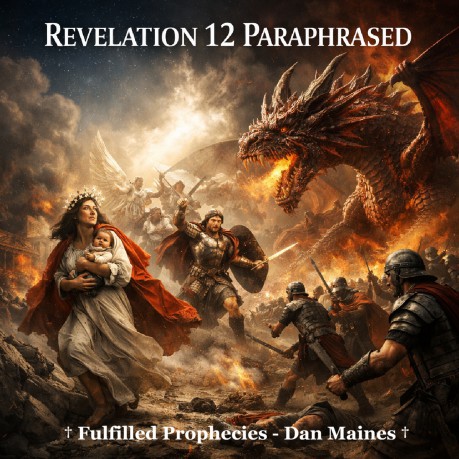
Revelation 12 Paraphrased Introduction † Revelation 12 pulls back the curtain and shows the spiritual
conflict behind the events that led to the destruction of Jerusalem
and the end of the Old Covenant age. (Matthew 24:34) † The imagery of the woman, the dragon, and the child explains
how the Messiah came through Israel and how Satan tried to destroy
Him and His people. (Genesis 3:15) † This chapter is not about the end of the physical world, it is
about the war surrounding the arrival and victory of Christ in that
first century generation. (Hebrews 12:22-28) Revelation 12:1 A great sign appeared in heaven, a woman clothed with the sun, the
moon under her feet, and on her head a crown made of twelve stars. † The woman represents covenant Israel, the people through whom
the Messiah came. (Genesis 37:9-10) † The twelve stars point to the twelve tribes, identifying the
woman with the nation of Israel. (Genesis 49:28) † This vision begins in heaven because prophetic language often
places covenant realities in the heavenly realm. (Isaiah 1:2) Revelation 12:2 She was pregnant and cried out in pain as the time came for her to
give birth. † Israel carried the promise of the Messiah for centuries before
Christ was born. (Isaiah 9:6) † The pain represents the long suffering and expectation leading
to the arrival of the Savior. (Micah 5:2-3) † The prophets repeatedly described Israel as a woman in labor
waiting for deliverance. (Isaiah 26:17) Revelation 12:3 Then another sign appeared in heaven, a huge red dragon with seven
heads and ten horns, and seven crowns on his heads. † The dragon represents Satan working through earthly kingdoms
opposed to God. (Revelation 12:9) † The seven heads and ten horns reflect the power structure of
Rome, which Satan used to persecute Christ and His followers. (Daniel
7:7) † The crowns show political authority exercised through rulers
and kings. (Revelation 17:9-10) Revelation 12:4 His tail swept away a third of the stars from heaven and threw
them to the earth. The dragon stood before the woman who was about to
give birth so he could devour the child as soon as it was born. † The attempt to devour the child reflects Satan's effort to
destroy the Messiah through earthly rulers. (Matthew 2:16) † Herod's slaughter of the infants in Bethlehem was one of those
attempts. (Matthew 2:16) † The stars being cast down symbolizes leaders or authorities
being drawn into rebellion against God's plan. (Daniel 8:10) Revelation 12:5 She gave birth to a son, a male child who would rule all the
nations with a rod of iron, and her child was caught up to God and to
His throne. † The male child is clearly Jesus Christ, the promised Messiah.
(Psalm 2:7-9) † His ruling with a rod of iron comes directly from the
Messianic prophecy in Psalm 2. (Psalm 2:9) † The child being caught up to God summarizes Christ's
resurrection and ascension. (Acts 1:9) Revelation 12:6 Then the woman fled into the wilderness where God had prepared a
place for her so she would be cared for for 1,260 days. † The wilderness represents a place of protection during a time
of persecution. (Exodus 19:4) † The 1,260 days corresponds to the period of intense conflict
leading up to the Jewish War. (Daniel 12:7) † Believers were protected as the gospel spread beyond
Jerusalem. (Acts 8:1) Revelation 12:7 War broke out in heaven, Michael and his angels fought against the
dragon, and the dragon and his angels fought back. † This war symbolizes the spiritual defeat of Satan through the
work of Christ. (John 12:31) † Michael represents God's authority defending His people.
(Daniel 12:1) † The conflict reflects the spiritual shift that happened when
Christ established His kingdom. (Colossians 2:15) Revelation 12:8 But the dragon was not strong enough, and there was no longer a
place for them in heaven. † Satan lost his standing as the accuser once Christ
accomplished redemption. (Revelation 12:10) † The victory of Christ removed the legal ground Satan used to
accuse God's people. (Romans 8:33-34) † The heavenly court no longer recognized his accusations.
(Hebrews 9:24) Revelation 12:9 The great dragon was thrown down, the ancient serpent called the
devil and Satan who deceives the whole world, he was thrown down to
the earth, and his angels were thrown down with him. † The ancient serpent connects this vision directly to Genesis
3. (Genesis 3:1) † Satan's defeat means his authority to hold humanity under
condemnation was broken. (Hebrews 2:14) † The gospel victory stripped him of the power he once exercised
over the nations. (Colossians 2:15) Revelation 12:10 Then I heard a loud voice in heaven saying, now the salvation and
the power and the kingdom of our God and the authority of His Christ
have come, because the accuser of our brothers has been thrown down,
the one who accused them before our God day and night. † Christ's victory brought the full authority of the kingdom
into effect. (Matthew 28:18) † Satan had long been portrayed as an accuser in the heavenly
court. (Job 1:9-11) † With Christ's atonement complete, those accusations no longer
stood. (Romans 8:1) Revelation 12:11 They overcame him because of the blood of the Lamb and because of
the word of their testimony, and they did not love their lives even
when facing death. † The victory of believers comes through Christ's sacrifice.
(Hebrews 9:12) † Their testimony refers to faithful witness even during
persecution. (Acts 4:33) † Early Christians were willing to die rather than deny the
truth of Christ. (Acts 7:55-60) Revelation 12:12 For this reason rejoice, you heavens and you who live in them. But
trouble is coming to the earth and the sea because the devil has come
down to you with great anger, knowing that his time is short. † The phrase his time is short confirms the first century
timeframe of Revelation. (Revelation 1:1) † Satan intensified persecution once he realized his defeat was
certain. (1 Peter 5:8) † This warning matches the growing hostility against believers
before AD 70. (Matthew 24:9) Revelation 12:13 When the dragon saw that he had been thrown down to the earth, he
began to persecute the woman who had given birth to the male child. † Satan turned his attack toward the people through whom the
Messiah came. (Acts 8:1) † Persecution of the early church came primarily from
unbelieving Jewish authorities. (Acts 7:54) † The struggle intensified throughout the first century. (1
Thessalonians 2:14-16) Revelation 12:14 But the woman was given two wings of a great eagle so she could
fly into the wilderness to her place where she was cared for for a
time, times, and half a time away from the presence of the serpent. † The eagle imagery echoes God's protection of Israel during the
Exodus. (Exodus 19:4) † Time, times, and half a time equals the same period as 1,260
days. (Daniel 7:25) † God preserved His people even during the chaos of the Jewish
War. (Matthew 24:16) Revelation 12:15 Then the serpent poured water like a river out of his mouth after
the woman so he could sweep her away with the flood. † The flood represents overwhelming persecution and opposition.
(Isaiah 59:19) † Political and religious forces attempted to destroy the
church. (Acts 12:1-3) † The imagery shows the scale of hostility faced by believers.
(Matthew 24:9) Revelation 12:16 But the earth helped the woman by opening its mouth and swallowing
the river that the dragon poured out of his mouth. † God repeatedly intervened to protect the church during
persecution. (Acts 5:19) † The spread of the gospel into the nations helped relieve
pressure on believers in Jerusalem. (Acts 13:46) † Divine protection preserved the church until the Old Covenant
system ended. (Hebrews 12:27) Revelation 12:17 So the dragon became furious with the woman and went off to make
war with the rest of her children, those who keep the commandments of
God and hold firmly to the testimony of Jesus. † The rest of her children refers to Christians throughout the
Roman world. (Galatians 3:29) † The persecution spread beyond Judea as the church expanded.
(Acts 14:22) † Satan's war against believers continued throughout that
generation. (Revelation 2:10) Historical References † Josephus described the extreme turmoil and persecution
surrounding the Jewish War leading to the destruction of Jerusalem.
(Josephus, Wars of the Jews 5.1) † Eusebius recorded that Christians fled Jerusalem before the
destruction of the city. (Eusebius, Ecclesiastical History 3.5) † Tacitus confirmed the persecution of Christians during the
Roman period. (Tacitus, Annals 15.44) How It Applies To Us Today † Christ has already defeated the accuser, so believers live
under grace and not condemnation. (Romans 8:1) † The victory described in this chapter reminds us that God's
kingdom cannot be stopped. (Hebrews 12:28) † Even when opposition rises, the church continues because
Christ already won the battle. (Matthew 16:18) Q & A Appendix Q: Who is the woman in Revelation 12? Q: Who is the male child? Q: What does the dragon represent? Q: What does the war in heaven mean? Q: What does it mean that the dragon knew his
time was short? Q: Why did the woman flee into the wilderness? Q: Who are the rest of the woman's children? Q: How did believers overcome the dragon? † This is the fulfilled perspective we proclaim at
Fulfilled Prophecies † Source Index † Revelation 12; Genesis 3:15; Genesis 37:9-10;
Psalm 2:7-9; Daniel 7:7; Daniel 12:7; Matthew 2:16; Matthew 24:9, 34;
Matthew 28:18; Acts 1:9; Acts 8:1; Romans 8:1, 33-34; Hebrews 9:24;
Hebrews 12:22-28 † Josephus, Wars of the Jews; Eusebius,
Ecclesiastical History; Tacitus, Annals
By Dan Maines
A:
The woman represents covenant Israel, the people through whom the
Messiah came. (Genesis 37:9-10)
A:
The male child is Jesus Christ, the promised ruler of the nations.
(Psalm 2:7-9)
A:
The dragon represents Satan working through earthly kingdoms like
Rome to oppose Christ and His people. (Revelation 12:9)
A:
It represents the spiritual defeat of Satan through the victory of
Christ. (John 12:31)
A: It means Satan's ability to
accuse and oppose God's covenant plan was coming to an end in that
generation as the Old Covenant system was about to pass away.
(Revelation 12:12; Hebrews 8:13)
A:
The wilderness represents God's protection of His people during the
persecution leading up to the destruction of Jerusalem. Jesus warned
believers to flee when the signs appeared. (Matthew 24:15-16;
Revelation 12:6)
A:
They are believers in Christ who hold to the testimony of Jesus and
obey God, the expanding church throughout the nations. (Revelation
12:17; Galatians 3:29)
A:
They overcame through the sacrifice of Christ and their faithful
testimony, even when facing persecution and death. (Revelation 12:11;
Hebrews 9:12)
© Fulfilled Prophecies - Dan
Maines.
Links