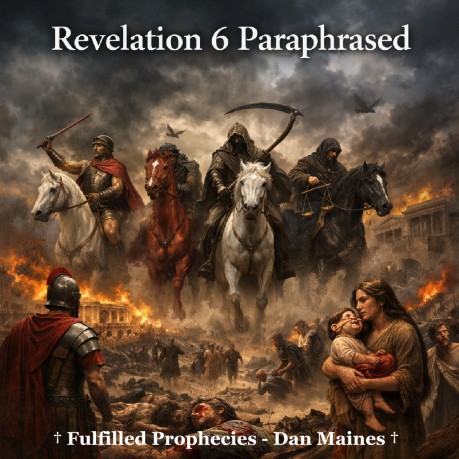
Revelation 6 Paraphrased Introduction † Revelation chapter 6 begins the opening of
the sealed scroll that was introduced in the previous chapter. The
Lamb, Jesus Christ, is the only one worthy to break the seals and
reveal the judgments written within it. These seals describe the
approaching judgment that was about to fall on Jerusalem and the old
covenant system in the first century. † Jesus had already warned about these same
events during His ministry. In Matthew 24 He described wars, famine,
persecution, and cosmic imagery that would occur before the
destruction of the temple. Revelation now shows those same warnings
again, but in symbolic prophetic language. † The seals reveal the escalating troubles that
would come upon Israel before AD 70, confirming that the time of
judgment against the generation that rejected the Messiah had
arrived. Revelation 6:1 Then I watched as the Lamb opened the first seal, and I heard one
of the four living creatures speak with a voice that sounded like
thunder saying, Come and see. † The Lamb opening the seal shows Christ
Himself directing the events of judgment. Nothing happens outside His
authority. (Matthew 28:18) † The command to come and see reveals that what
follows is a prophetic unveiling of events about to unfold in the
Roman world leading to Jerusalem's fall. (Matthew 24:6-8) † The thunder-like voice emphasizes the
seriousness of the judgment being revealed, echoing the voice of God
in prophetic visions. (Ezekiel 1:24) Revelation 6:2 I looked and saw a white horse. The rider held a bow, and a crown
was given to him. He rode out conquering and determined to conquer. † The white horse represents conquest and
military expansion. Rome's growing military power was spreading
across the empire during this time. (Luke 21:9) † The crown being given shows authority granted
for conquest. Rome's emperors ruled with imperial authority over the
nations. (Daniel 7:23) † Many historians record increasing military
campaigns and political struggles leading up to the Jewish war.
Josephus describes the rising tensions throughout Judea during this
period. Revelation 6:3 When the Lamb opened the second seal, I heard the second living
creature say, Come and see. † Each seal continues the unfolding pattern of
judgment that Jesus had already predicted for that generation.
(Matthew 24:7) † The repeated call to come and see shows that
these events were not distant mysteries but unfolding realities. Revelation 6:4 Another horse appeared, bright red. Its rider was given power to
remove peace from the land so people would slaughter one another, and
a large sword was given to him. † The red horse symbolizes bloodshed and war.
Civil unrest and violence increased dramatically in Judea during the
decades before AD 70. † Jesus warned that nation would rise against
nation and kingdom against kingdom. (Matthew 24:7) † Josephus records intense civil conflict among
Jewish factions in Jerusalem even before the Romans fully surrounded
the city. Revelation 6:5 When the Lamb opened the third seal, I heard the third living
creature say, Come and see. I looked and saw a black horse. Its rider
held a pair of scales in his hand. † The black horse represents famine and
economic hardship. † The scales symbolize rationing and scarcity
of food. (Ezekiel 4:16) † Famines were recorded throughout the Roman
world during this time, including the famine mentioned in Acts 11:28. Revelation 6:6 Then I heard what sounded like a voice from among the four living
creatures saying, A quart of wheat for a day's wages, and three
quarts of barley for a day's wages, but do not harm the oil and the
wine. † These prices describe extreme inflation
during famine conditions where basic food becomes very expensive. † The mention of oil and wine not being harmed
reflects uneven economic hardship where luxury goods remain available
while basic necessities become scarce. † Similar famine conditions occurred during the
siege of Jerusalem according to Josephus in The Jewish War. Revelation 6:7 When the Lamb opened the fourth seal, I heard the voice of the
fourth living creature say, Come and see. † The pattern continues showing worsening
judgment. † The unfolding seals mirror the escalating
signs Jesus described leading up to the temple's destruction.
(Matthew 24:7-8) Revelation 6:8 I looked and saw a pale horse. The rider's name was Death, and
Hades followed behind him. Authority was given to them over a fourth
of the land to kill with sword, famine, plague, and wild beasts. † The pale horse represents widespread death
through multiple disasters. † Sword, famine, and plague were common
prophetic descriptions of covenant judgment against Israel. (Ezekiel
14:21) † Josephus records massive death throughout
Judea during the Roman war, including famine, violence, and disease. Revelation 6:9 When the Lamb opened the fifth seal, I saw under the altar the
souls of those who had been killed because of the word of God and the
testimony they held. † These martyrs represent early Christians who
were persecuted by both Jewish authorities and Roman powers. (Acts
7:59-60) † Their position under the altar reflects
sacrificial imagery, showing their deaths as offerings to God. † Jesus had warned that His followers would be
killed and persecuted before the end of that age. (Matthew 24:9) Revelation 6:10 They cried out with a loud voice saying, How long, Lord, holy and
true, will You wait before judging and avenging our blood on those
who live on the land? † The cry for justice echoes the language of
Old Testament martyrs seeking divine judgment. (Psalm 79:10) † Their question shows the expectation that
judgment was near, not thousands of years away. † Jesus promised that the blood of the prophets
would be required of that generation. (Matthew 23:35-36) Revelation 6:11 Each of them was given a white robe and told to rest a little
longer until the number of their fellow servants and brothers who
would be killed as they were was completed. † The white robe represents vindication and
righteousness. † The delay shows that persecution would
continue for a short time until the full measure of suffering was
complete. † Early church history records continued
persecution during the reigns of Nero and other Roman authorities. Revelation 6:12 Then I watched as He opened the sixth seal, and a great earthquake
occurred. The sun became dark like sackcloth made of hair, and the
moon turned like blood. † This language is prophetic imagery used
throughout the Old Testament to describe the fall of nations. (Isaiah
13:10) † The darkened sun and blood moon symbolize the
collapse of Israel's political and religious system. † Jesus used the same language when describing
Jerusalem's coming destruction. (Matthew 24:29) Revelation 6:13 The stars of the sky fell to the earth like a fig tree dropping
its unripe fruit when shaken by a strong wind. † Falling stars symbolize the downfall of
rulers and authorities. (Isaiah 34:4) † The fig tree imagery connects directly with
Jesus' prophecy about Israel in Matthew 24:32. Revelation 6:14 The sky was split apart like a scroll being rolled up, and every
mountain and island was moved from its place. † This imagery describes the removal of the old
covenant world centered around the temple system. † Hebrews 12:26-28 speaks of God shaking heaven
and earth to remove what could be shaken. Revelation 6:15 Then the kings of the earth, the rulers, the commanders, the
wealthy, the strong, and every slave and free person hid themselves
in caves and among the rocks of the mountains. † This describes the terror of leaders and
people during the Roman siege. † Josephus records people hiding in caves and
underground chambers during the war. Revelation 6:16 They said to the mountains and rocks, Fall on us and hide us from
the face of the One seated on the throne and from the wrath of the
Lamb. † This directly echoes Hosea 10:8 where people
cry for the mountains to fall on them during judgment. † Jesus quoted the same passage when warning
about Jerusalem's coming destruction. (Luke 23:30) Revelation 6:17 Because the great day of His wrath has come, and who is able to
stand? † The great day of wrath refers to the judgment
against Jerusalem and the end of the old covenant age. † Jesus had warned that this judgment would
occur within that generation. (Matthew 24:34) † The destruction of the temple in AD 70 marked
the final collapse of the old covenant system. Historical References † Josephus describes famine, civil war, and
massive death during the siege of Jerusalem in The Jewish War, Books
5-6. † Tacitus records the Jewish war and the
destruction of Jerusalem in Histories 5. † Eusebius writes that Christians fled
Jerusalem before the destruction after remembering Jesus' warnings. How It Applies To Us Today † These events remind us that Jesus keeps His
word. Everything He predicted about that generation came to pass
exactly as He said. † The fall of Jerusalem confirmed that the old
covenant system had ended and Christ's kingdom had been fully
established. † Today we live in the fulfilled kingdom where
Christ reigns and His people belong to the everlasting covenant. Q & A Appendix Q Did these events happen in the future? A No. Jesus clearly placed these events in the
first century generation. Matthew 24:34 Q What does the cosmic imagery represent? A The Bible often uses cosmic language to
describe the fall of nations and governments. Isaiah 13:10 Q Why are the martyrs crying for justice? A They were waiting for the promised judgment
against those who persecuted them. Matthew 23:36 Q What do the four horsemen represent? A They represent the same signs Jesus warned
about before the fall of Jerusalem, conquest, war, famine, and death
spreading through the land before the final judgment of that
generation. Matthew 24:6-8 Q Who are the souls under the altar? A They are the faithful believers who were killed
for their testimony during the early persecutions. Their cry for
justice shows they were waiting for the promised judgment against
those who rejected Christ. Revelation 6:9-10 Q What does it mean that the sky was rolled up
like a scroll? A This is prophetic language used in the Old
Testament to describe the collapse of a ruling system. In Revelation
it points to the removal of the old covenant order centered in
Jerusalem and the temple. Isaiah 34:4 Q Why were people hiding in caves and crying for
the mountains to fall on them? A Jesus warned that this exact reaction would
happen during the destruction of Jerusalem. The terror of the Roman
siege drove many people to hide in caves and underground chambers
trying to escape the judgment. Luke 23:30 † This is the fulfilled perspective we proclaim at
Fulfilled Prophecies † © Fulfilled Prophecies - Dan Maines. Source Index † Matthew 23:35-36; Matthew 24:6-9, 29, 34;
Luke 21:9-11, 23; Luke 23:30 † Acts 7:59-60; Acts 11:28; Hebrews 12:26-28;
Ezekiel 4:16; Ezekiel 14:21; Isaiah 13:10; Isaiah 34:4; Psalm 79:10;
Hosea 10:8 † Josephus, The Jewish War, Books 5-6; Tacitus,
Histories 5; Eusebius, Ecclesiastical History 3.5
By Dan Maines
Truly I say to you, this generation will not
pass away until all these things take place.
For the stars of heaven and their constellations
will not flash forth their light, The sun will be dark when it rises
And the moon will not shed its light.
Truly I say to you, all these things will come
upon this generation.
You will be hearing of wars and rumors of
wars. See that you are not frightened, for those things must take
place, but that is not yet the end. For nation will rise against
nation, and kingdom against kingdom, and in various places there will
be famines and earthquakes. But all these things are merely the
beginning of birth pangs.
When the Lamb broke the fifth seal, I saw
underneath the altar the souls of those who had been slain because of
the word of God, and because of the testimony which they had
maintained; and they cried out with a loud voice, saying, How long, O
Lord, holy and true, will You refrain from judging and avenging our
blood on those who dwell on the earth?
And all the host of heaven will wear away, And
the sky will be rolled up like a scroll; All their hosts will also
wither away As a leaf withers from the vine, Or as one withers from
the fig tree.
Then they will begin to say to the mountains, Fall
on us, and to the hills, Cover us.
Links