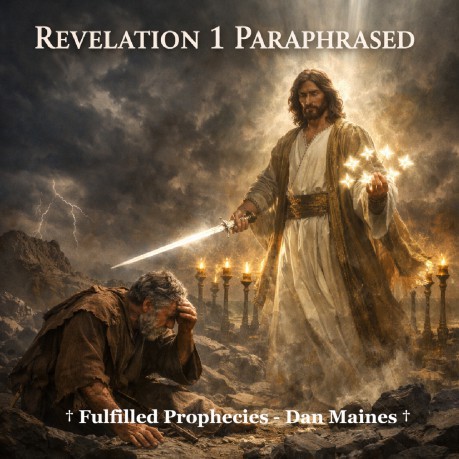
Revelation 1 Paraphrased Introduction † This opening chapter explains the purpose of
the entire book. It wasn't written about distant centuries far
removed from its audience. It was written to reveal what Jesus Christ
was about to bring to pass soon in the lifetime of the people who
first received it (Revelation 1:1, Revelation 22:6). Revelation 1:1 † The word unveiling means a revealing of
something that was previously hidden. The prophecy wasn't meant to
confuse the churches but to make clear what was about to happen soon
(Daniel 2:28-29). Revelation 1:2 † John isn't presenting speculation or
philosophy. He is testifying as a witness of what was shown to him by
God (John 21:24). Revelation 1:3 † The blessing is tied to hearing and obeying
the message, not merely studying it. The prophecy demanded immediate
attention from the churches (Luke 11:28). Revelation 1:4 † The seven churches were real congregations
located in Asia Minor. The message was directed to them because they
were living through the unfolding events described in the prophecy
(Revelation 1:11). Revelation 1:5 † Jesus is called the ruler over the kings of
the earth because His authority extends above every earthly empire,
including Rome (Psalm 2:6-9). Revelation 1:6 † This language comes directly from God's
promise to Israel that they would be a kingdom of priests (Exodus
19:6). Revelation 1:7 † The coming with clouds is prophetic judgment
language taken from the Old Testament. God used this imagery when
describing His judgment against nations (Isaiah 19:1). Revelation 1:8 † Alpha and Omega are the first and last
letters of the Greek alphabet, declaring God's absolute authority
over all history (Isaiah 44:6). Revelation 1:9 † John wasn't speaking from comfort but from
exile. His situation reflected the persecution Christians were facing
under Roman rule (Acts 14:22). Revelation 1:10 † Being in the Spirit means John was receiving
a prophetic vision, similar to the experiences of Old Testament
prophets (Ezekiel 3:12). Revelation 1:11 † These cities formed a circular route through
Asia Minor, meaning the message would travel from church to church
(Revelation 2-3). Revelation 1:12 † The lampstands symbolize the churches
themselves, showing that Christ stands among His people (Revelation
1:20). Revelation 1:13 † The title Son of Man comes from Daniel's
prophecy describing the Messiah receiving authority from God (Daniel
7:13-14). Revelation 1:14 † The white hair imagery echoes the description
of the Ancient of Days in Daniel's vision (Daniel 7:9). Revelation 1:15 † Bronze refined in fire symbolizes strength
and purity. Revelation 1:16 † The seven stars represent the messengers of
the seven churches (Revelation 1:20). Revelation 1:17 † John's reaction mirrors the response of
prophets who encountered the presence of God (Daniel 10:9). Revelation 1:18 † Christ's resurrection proved His authority
over death itself (Romans 6:9). Revelation 1:19 † This verse outlines the structure of the
book: the vision, the present condition of the churches, and the
events about to unfold. Revelation 1:20 † Christ explains the symbolism directly so the
churches wouldn't misunderstand the vision. Historical References † Irenaeus recorded that the early church
treated Revelation as a prophecy given to the churches during the
Roman era and understood it as addressing real historical
persecution. How It Applies To Us Today † Christ still walks among His people. Just as
He examined the seven churches, He sees the condition of believers
today. Q & A Appendix Q What does the word revelation mean in this
book? Q Who was the book originally written to? Q What does coming with the clouds mean? Q Why does Revelation say the events would happen
soon? Q What are the seven lampstands? Q What are the seven stars in Jesus' hand? Q Why did John fall like a dead man when he saw
Christ? Q What does it mean that Jesus holds the keys of
death and Hades? † This is the fulfilled perspective we proclaim at
Fulfilled Prophecies † Source Index † Daniel 2:28-29; Matthew 24:30, 34; Isaiah
19:1; Daniel 7:9, 13-14; Hebrews 4:12; Romans 6:9 † Irenaeus, Against Heresies Book 5; Eusebius,
Ecclesiastical History Book 3; Tertullian, Apology Chapter 5
By Dan Maines
†
The message centers on Christ's authority over kings and nations and
His coming judgment upon the covenant nation that rejected Him. The
language prepares the reader for a prophetic unveiling of events that
would soon shake the first century world.
†
Early Christians understood this book as dealing with their own time
of persecution and crisis. Writers like Irenaeus and Eusebius
recorded that the churches treated Revelation as a warning and
encouragement during the struggles with Rome and the turmoil
surrounding Jerusalem's fall.
This message is the unveiling
given by Jesus Christ. God gave it to Him so He could show His
servants what would soon take place. He sent it through His angel to
His servant John.
† The phrase soon sets the
time frame immediately. The prophecy concerned events close to John's
own generation, not thousands of years later (Revelation 22:6).
†
Jesus Himself delivered this message to strengthen the churches who
were already facing persecution under Roman authority (Matthew
24:34).
John faithfully recorded the
message he received, giving testimony about the word of God and about
the message from Jesus Christ concerning everything he saw.
† Revelation stands as
prophetic testimony in the same line as the Old Testament prophets
who recorded visions and divine messages (Ezekiel 1:1-3).
†
This establishes the authority of the book from the very beginning.
Blessed is the one who reads
these words aloud, and blessed are those who hear them and take
seriously what is written in them, because the time is near.
†
The statement that the time is near confirms again that the
fulfillment was approaching quickly for the original audience (James
5:8-9).
† If the events were thousands of
years away, this warning would have had little meaning for the first
century believers.
John writes to the seven
churches in Asia: Grace and peace to you from the One who is, who
was, and who is coming, and from the seven spirits who stand before
His throne.
† The phrase describing
God emphasizes His eternal nature, showing that the events about to
occur were under His sovereign control (Exodus 3:14).
†
The seven spirits represent the fullness of God's Spirit, echoing
imagery used by the prophet Isaiah (Isaiah 11:2).
Grace and peace also come
from Jesus Christ, the faithful witness, the first to rise from the
dead, and the ruler over the kings of the earth. He loves us and
freed us from our sins by His own blood.
† His
resurrection marked the beginning of the new creation and confirmed
His authority over life and death (Acts 2:32-36).
†
The reference to His blood reminds the churches that their redemption
came through His sacrifice, not through political power.
He has made us to be a
kingdom and priests serving His God and Father. To Him belong glory
and power forever. Amen.
† Through Christ, that calling is now
fulfilled in the people of God who follow Him (1 Peter 2:9).
†
The kingdom was already established, not waiting for a future
millennium.
Look, He is coming with the
clouds, and every eye will see Him, even those who pierced Him, and
all the tribes of the land will mourn because of Him. Yes, this will
surely happen.
†
Those who pierced Him refers to the generation responsible for His
crucifixion (Zechariah 12:10).
† The tribes
of the land mourning connects directly with the judgment that came
upon Jerusalem in AD 70 (Matthew 24:30).
I am the Alpha and the Omega,
says the Lord God, the One who is, who was, and who is coming, the
Almighty.
† The
statement assures believers that the events of Revelation were not
chaos but part of God's divine plan.
† Christ
shares this divine authority with the Father, confirming His full
sovereignty.
I, John, your brother and
partner in the suffering, the kingdom, and the endurance found in
Jesus, was on the island called Patmos because of the word of God and
the testimony of Jesus.
† Patmos was a
Roman penal island used for banishment. John's exile confirms the
historical setting of the prophecy.
† The
churches reading this message would have recognized the same
pressures in their own lives.
I was in the Spirit on the
Lord's day, and I heard behind me a loud voice like the sound of a
trumpet.
† The trumpet
imagery signals a divine announcement, often used in scripture when
God is about to reveal something significant (Exodus 19:16).
†
The Lord's day likely refers to the day dedicated to remembering
Christ's resurrection.
The voice said: Write what
you see in a scroll and send it to the seven churches, to Ephesus,
Smyrna, Pergamum, Thyatira, Sardis, Philadelphia, and Laodicea.
† Each church faced unique
struggles, yet all were connected to the unfolding prophetic
events.
† The instruction to write shows that
this revelation was meant to be preserved and shared.
I turned around to see the
voice speaking with me, and when I turned I saw seven golden
lampstands.
† The imagery echoes the temple
lampstand, representing God's presence among His covenant people
(Exodus 25:31).
† This vision assures
believers that Christ hasn't abandoned them.
Standing among the
lampstands was someone like the Son of Man, dressed in a long robe
with a golden sash across His chest.
† The robe and sash resemble the
garments of a priest, showing Christ's mediating role for His
people.
† The imagery presents Jesus as both
king and priest.
His head and hair were white
like wool, as white as snow, and His eyes were like blazing fire.
†
The fiery eyes represent Christ's ability to see and judge all things
with perfect clarity.
† Nothing in the
churches would remain hidden from His authority.
His feet looked like glowing
bronze refined in a furnace, and His voice sounded like the roar of
many waters.
† The sound of many waters
reflects overwhelming authority and power (Ezekiel 43:2).
†
The vision emphasizes Christ's unstoppable authority over the coming
events.
In His right hand He held
seven stars, and a sharp two-edged sword came out of His mouth, and
His face shone like the sun in full strength.
† The
sword from His mouth symbolizes the power of His word to judge and
expose truth (Hebrews 4:12).
† His shining
face recalls the glory revealed at the transfiguration (Matthew
17:2).
When I saw Him, I fell at
His feet like a dead man. But He placed His right hand on me and
said, Do not be afraid. I am the first and the last.
†
Christ comforting John shows His authority paired with compassion
toward His servants.
† The title first and
last again confirms His eternal authority.
I am the living one. I was
dead, but look, I am alive forever and ever, and I hold the keys of
death and of Hades.
† Holding the
keys means He alone controls the destiny of the dead.
†
This assurance strengthened believers facing persecution.
So write down what you have
seen, what is now happening, and what will take place after these
things.
† The prophecy
addressed both the current struggles and the coming judgment
events.
† Everything recorded served to
prepare the churches for what was approaching.
The mystery of the seven
stars you saw in my right hand and the seven golden lampstands is
this: the seven stars are the messengers of the seven churches, and
the seven lampstands are the seven churches.
†
The message confirms that Christ walks among His people and oversees
their condition.
† The prophecy begins with
the churches because they were the immediate audience living through
the fulfillment.
† Eusebius wrote that John was
exiled to Patmos during the reign of Roman authority and later
returned to Ephesus, confirming the historical setting of the book.
†
Tertullian referred to John being banished for his testimony and
connected the vision to the struggles Christians faced under Rome.
† The message reminds us that Christ
rules over every nation and authority. No government or empire stands
above Him.
† The book begins by showing that
Jesus holds the keys of death and Hades. That truth still gives
believers confidence and hope.
A It means unveiling or revealing
something previously hidden, showing events that were about to unfold
(Revelation 1:1, Revelation 22:6).
A
It was written to seven real churches in Asia Minor that were living
through persecution and coming historical upheaval (Revelation 1:4,
Revelation 1:11).
A
In biblical prophecy clouds often symbolize divine judgment, not a
literal appearance in the sky (Isaiah 19:1, Matthew 24:30).
A The book repeats this time statement
several times so the churches would understand the urgency. The
prophecy concerned events approaching in their own generation, not
distant centuries (Revelation 1:1; Revelation 1:3; Revelation
22:6-7).
A
Jesus explains the symbol directly. The lampstands represent the
seven churches themselves, showing that Christ walks among His
congregations and watches over them (Revelation 1:20).
A
The stars represent the messengers of the seven churches, meaning
those responsible for delivering and teaching the message within each
congregation (Revelation 1:20).
A Encounters with the glory of God
often caused prophets to collapse in fear and awe because of the
overwhelming presence of divine holiness (Daniel 10:8-9; Ezekiel
1:28).
A Keys symbolize authority.
Jesus controls the realm of the dead and has complete power over life
and death because of His resurrection (Revelation 1:18; Romans 6:9).
© Fulfilled Prophecies - Dan
Maines.
Links